


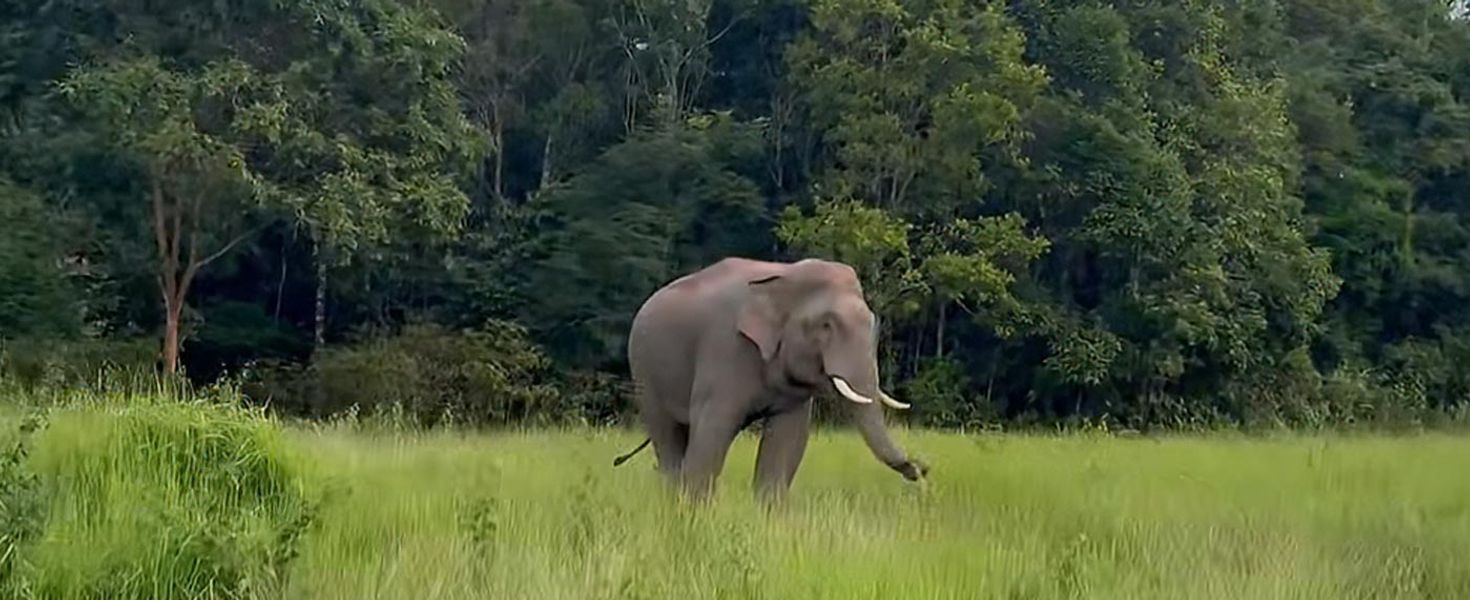
Unveiling the Roster of Khao Yai’s “Community Wild Elephants” – Part 8
Meet “Ranger,” or Bak Choet, Guardian of the Khao Khiao Forest
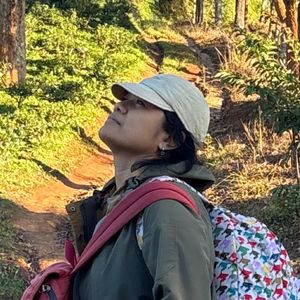
After keeping everyone in suspense since late last year, Plai Ranger—also known as Bak Choet—the young bull elephant with upward-curving tusks from the Khao Khiao forest, has finally ventured beyond the national park boundary to see the wider world of Khao Yai and join the older members of the Mu Si Gang.
Ranger is a young bull from Khao Khiao who previously lived and foraged around the Khao Khiao area. Officials named him Ranger, a name that evokes a guardian of the forest. Bak Choet, meanwhile, is an affectionate nickname given to him by officials on the Khao Yai side.
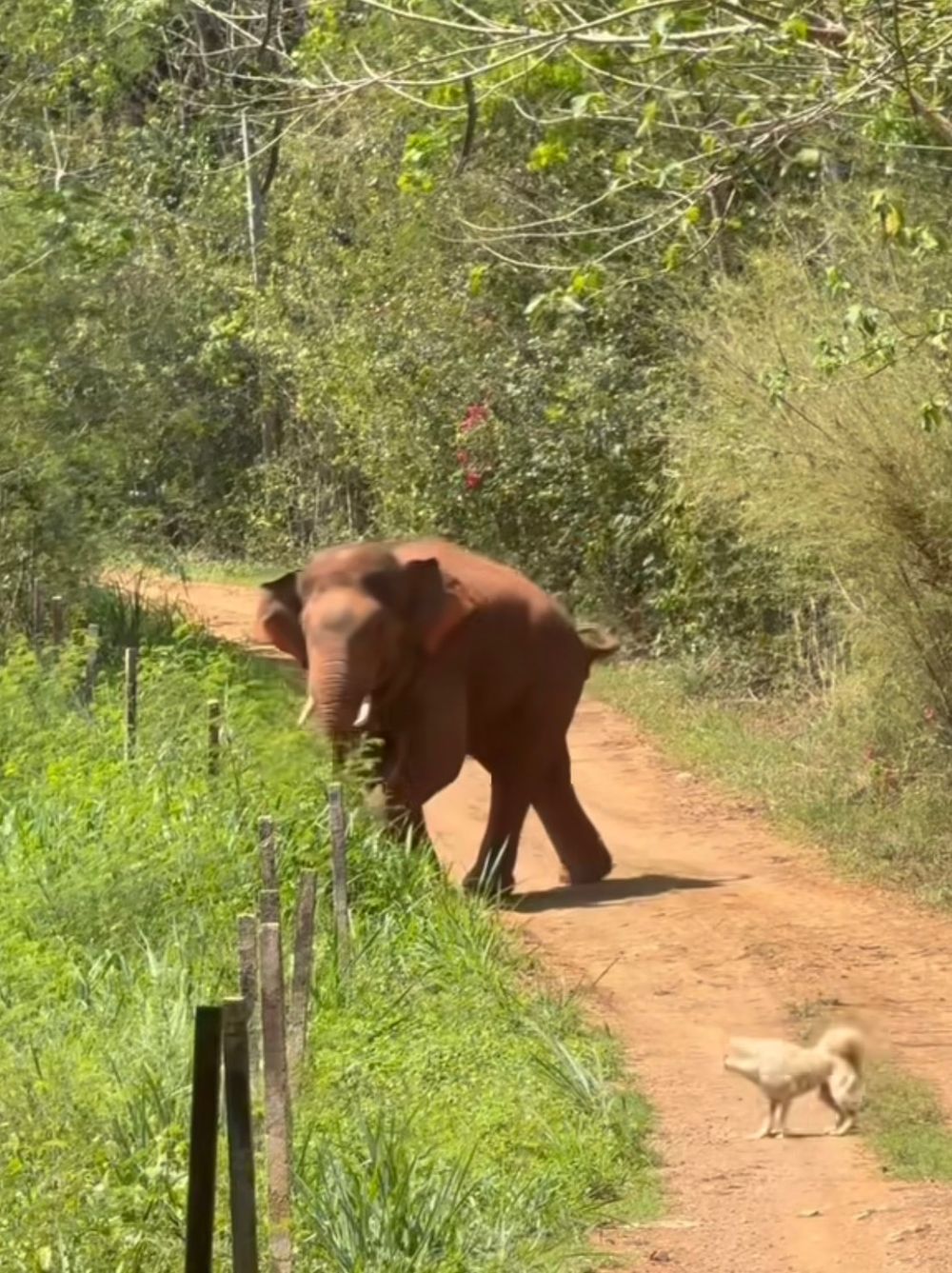
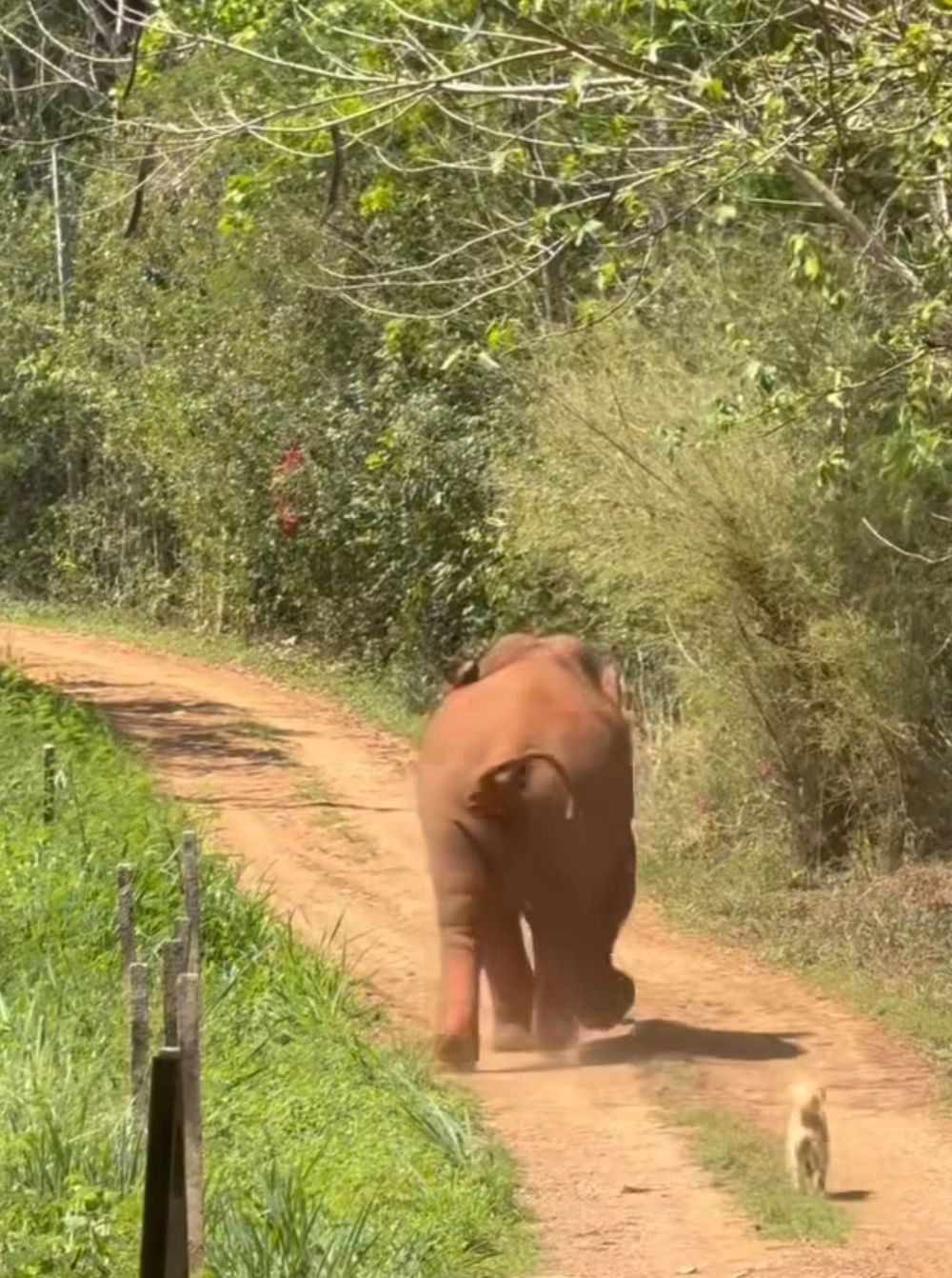
Ranger is a young bull around 16–17 years old. Medium-large in build, he stands just over 2 meters tall. Over the past year, he had been roaming back and forth along the national park boundary near the Khao Yai Forest Fire Control Station, but it was not long before he finally ventured outside the park.
He was first spotted at the Moon Dance Khao Yai Residence project. After roaming that area for about a week, he began ranging farther toward the Mun Headwater Research Station. From there, he crossed the hills to Khao Wong and foraged in villagers’ farms and orchards. The farthest he is known to have traveled was almost as far as the M6 motorway, beyond Mahalap Cockfighting Stadium.
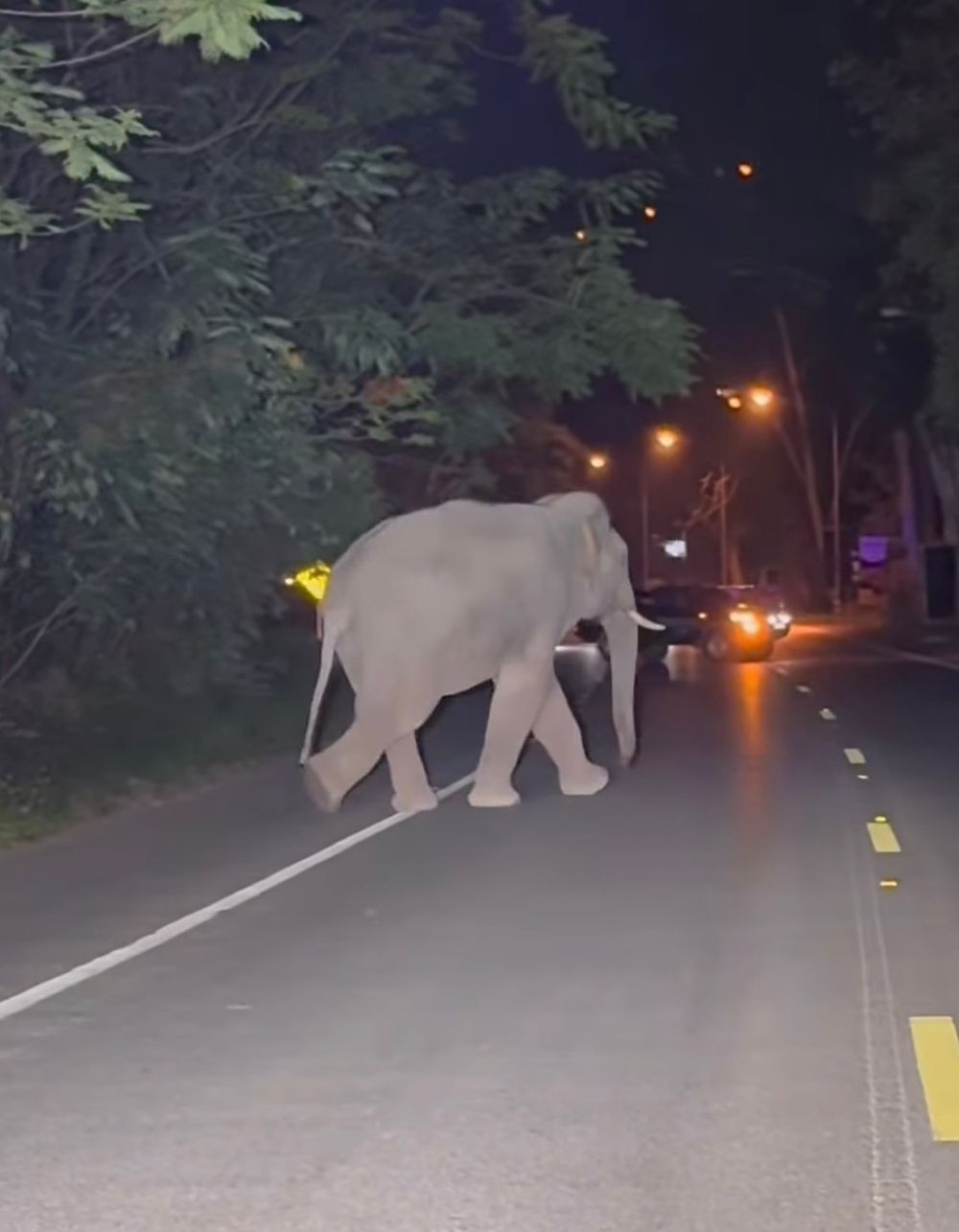
Ranger traveled with the older members of the Mu Si Gang only at first. After that, he has always gone solo.
Plai Ranger’s instantly recognizable feature is his upward-curving tusks. Viewed head-on, the tusks are perfectly parallel before curving upward. His tail was once long enough to touch the ground and had a full tuft of hair. About a month ago, however (in July 2026), people reported that Ranger, while in musth, walked back up to Khao Khiao and may have fought another elephant. By the time he returned to Khao Yai, his tail tuft was gone.
So, if you see upward-curving tusks and a long tail with its tip missing, that is our Bak Choet. The other elephants in the Mu Si Gang have only sparse tail hair, except Phi Duan, whose tail is entirely missing, and Nong Mai, who has a full tail tuft.
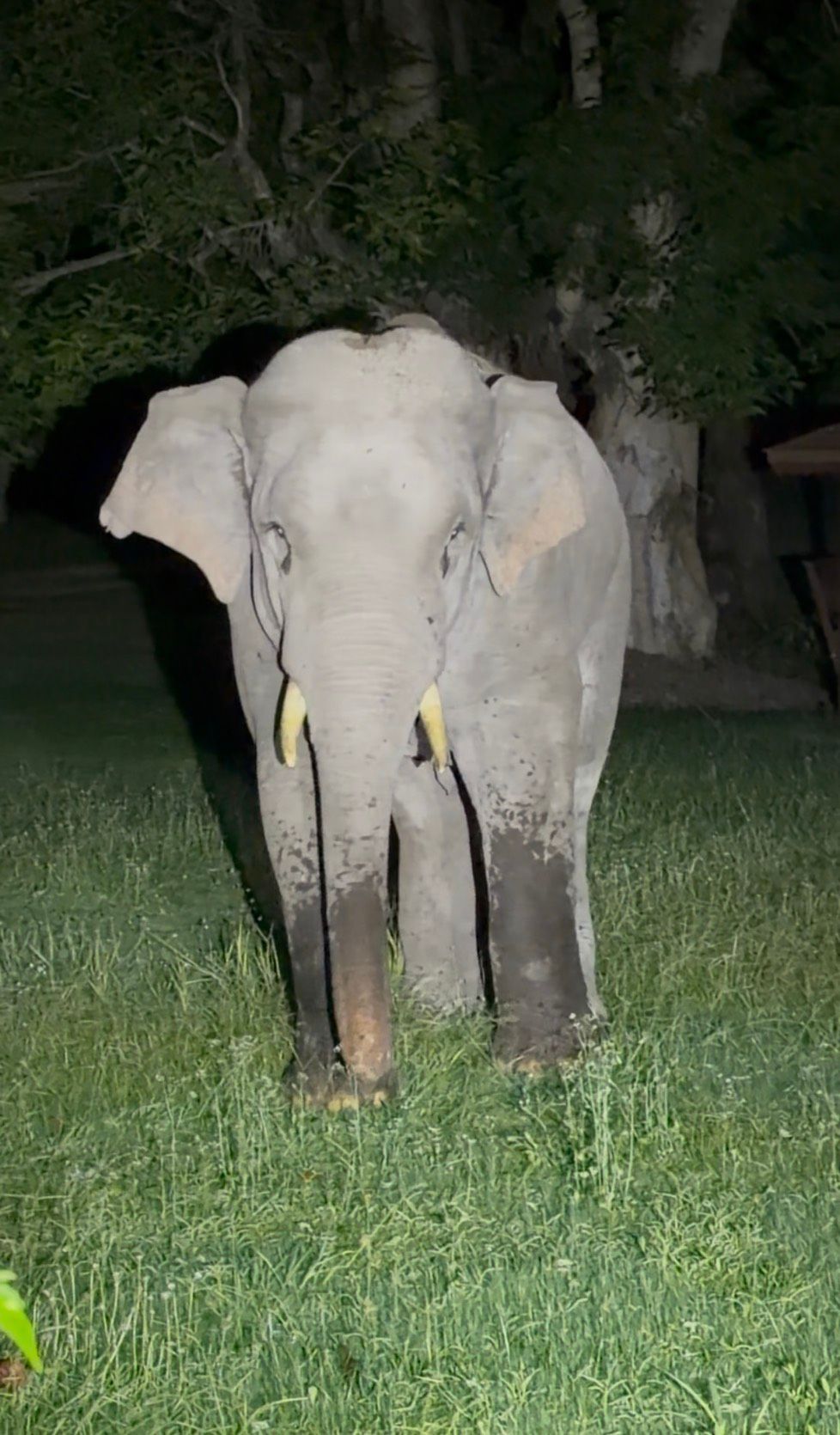
If you are still unsure, look at his left ear. A prominent vein runs along it before branching into prongs like a lightning bolt—another identifying feature to watch for.
As a wild elephant newly venturing beyond the national park boundary, he used to be afraid of lights. If someone shone a light on him, he would walk away; if he saw a large crowd, he would trumpet.
Most recently, a few days ago, officials found him in the open area opposite Chonthong Mookata 88 Khaoyai, near the Moon Dance project. Plai Ranger no longer startled when a light was shone on him. He simply walked away without hurrying, as he was becoming accustomed to people. He is, however, afraid of dogs: if a dog chases and barks at him, he quickly runs away.
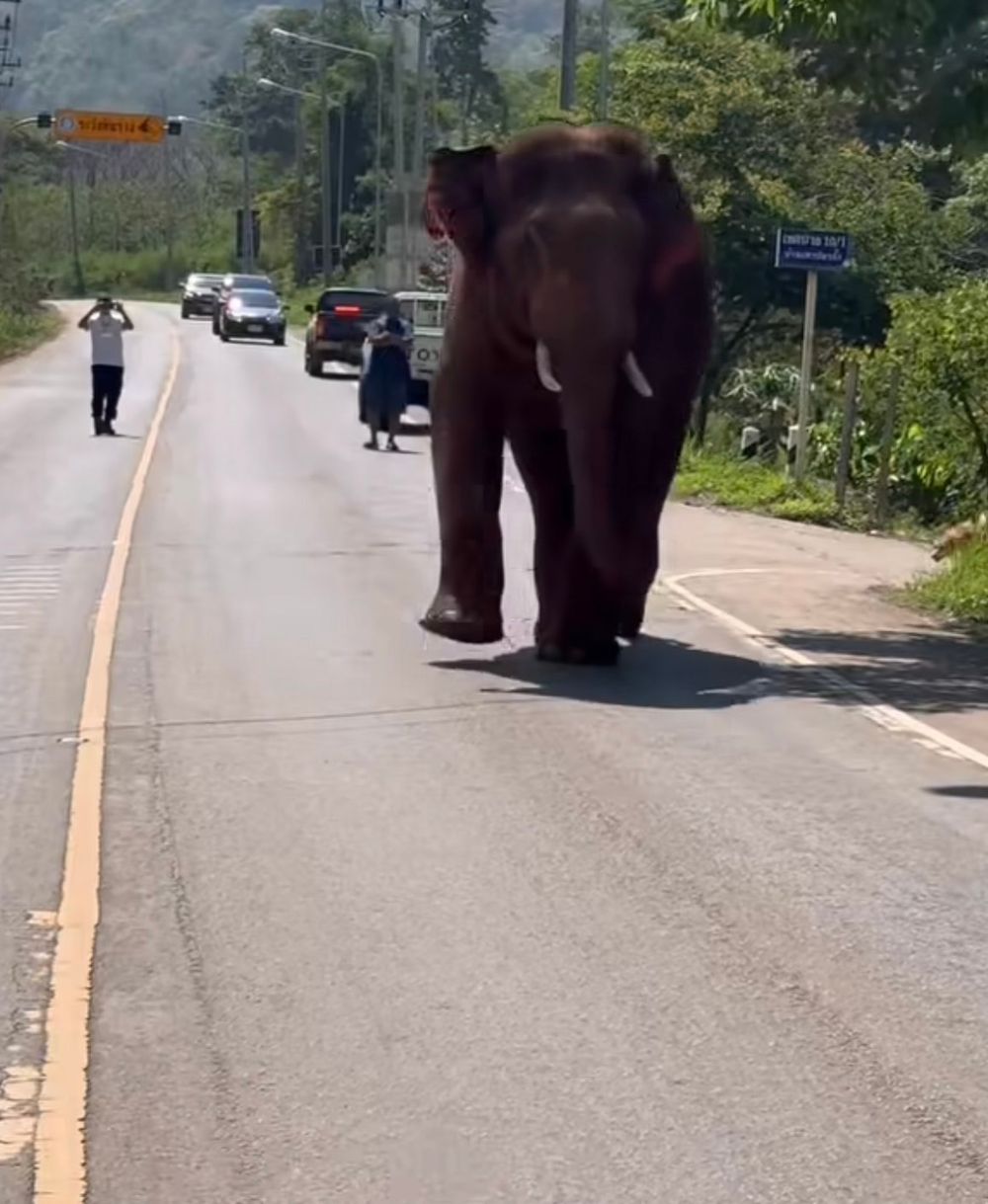
For aggression (when threatened), on a scale of 1–5 stars from lowest to highest, officials and volunteers give him 3 stars. The most they have observed is him becoming visibly irritated or trumpeting.
For the difficulty of pushing him back into the forest, on a scale of 1–5 stars from easiest to hardest, officials and volunteers give him 2 stars—not very difficult.
Although he has left the national park and settled around Kut Khla, Ton Nam Mun, and Heo Pla Kang, Ranger remains a firm favorite among people in Khao Khiao. For officials and volunteers on the Khao Yai side, he is another young bull who has not caused much concern. Even so, they must keep a close watch on him because Ranger tends to wander continuously. Lose sight of him, and the next time he appears, he might already be on Mittraphap Road.
© 2025 Khaoyai Connect. All rights reserved.
No part of this content may be copied, modified, or distributed in any form without prior written permission.
