


Who Owns Creative Work? When Ideas Become Property
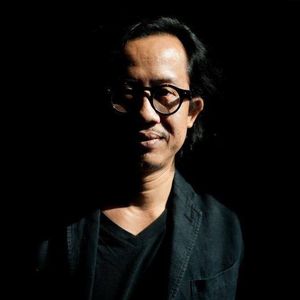
A Conversation on IP and Copyright Every Creator Should Know, with Asst. Prof. Dr. Chongnang Wiputhanupong
Who owns a book?
The straightforward answer is that the book belongs to the person who paid for it. The owner may read it, collect it, give it to someone else, or resell it as a used book. Yet the buyer receives only the physical copy. The story, the words, and the creative works inside carry another layer—something invisible and intangible that does not change hands along with the book. That something is copyright.
This simple question about a single book takes us into the world of intellectual property: a world of assets without physical form, yet of immense value—and potentially far longer-lived than the objects that contain them.
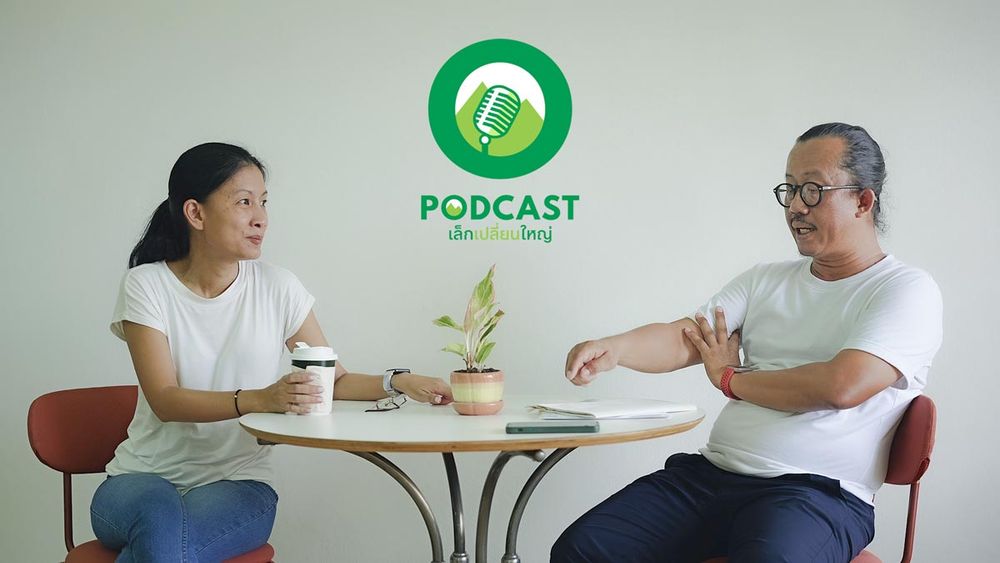
On “Tiny Step, Giant Change,” a Khaoyai Connect podcast, Panlop Samsi invites Asst. Prof. Dr. Chongnang Wiputhanupong—or “Ajarn Gene”—Director of the Sripatum Legal Center, who also oversees intellectual property management at Sripatum University, to unpack IP and copyright in language accessible to creative professionals. Their conversation ranges from when a work begins to receive protection and whether an idea can be copyrighted to the small words in a contract that may cause creators to surrender their rights to someone else without realizing it.
The Property Hidden Inside Things
Taken word by word, intellectual refers to human intellect, knowledge, or wisdom, while property means an asset that can be owned. Together, they form “intellectual property”: property created through human intellect and creativity.
What sets this kind of property apart is that it has no physical form; it is an intangible asset. This distinguishes it from tangible assets such as a house, a car, a table, a chair, or a physical book.
Yet the tangible and the invisible can coexist within the same object. The physical book—its paper and ink—is tangible property, while copyrights in its writing, illustrations, photographs, and other creative elements exist within it at the same time. Likewise, a mobile phone is the buyer’s property, but the technology, operating system, design, and innovations that make up the device may be protected by patents, copyright, or other forms of intellectual property belonging to their respective rights holders.
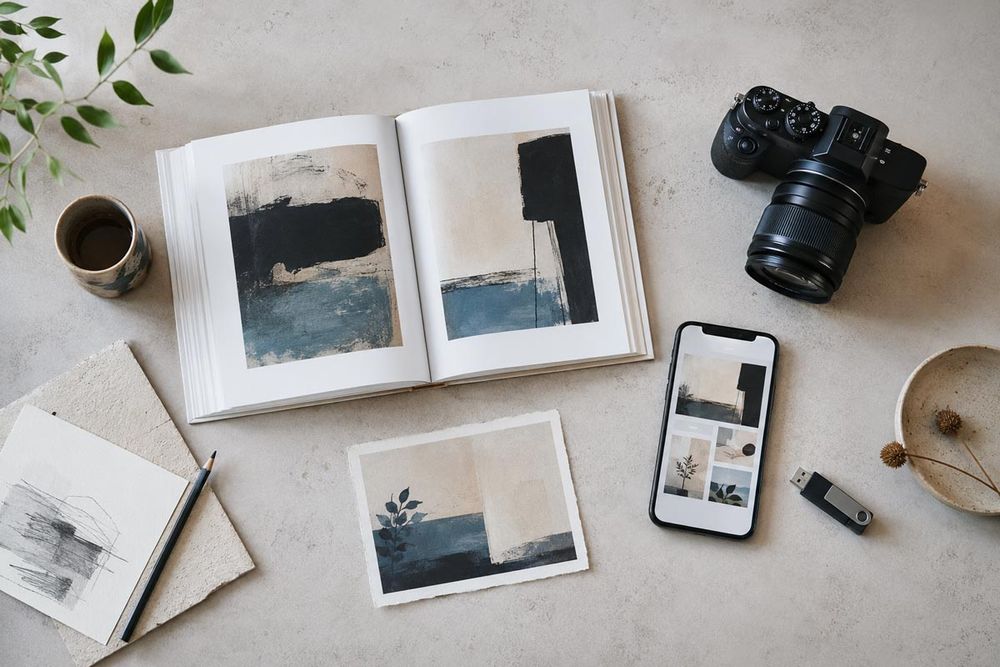
The buyer of a book therefore owns that copy, but not the copyright in its contents. If the book is resold, the physical copy changes hands; the copyright does not. The same is true when buying a painting. We may own the original work and hang it in our home, but that does not automatically give us the right to reproduce the image on shirts, posters, or merchandise for sale.
The same principle applies to a commissioned logo. The client pays the fee and receives the design files for use, but the question of who owns the copyright in the design still depends on the relationship between the creator and the client, as well as the agreement between them. Paying for a deliverable and acquiring its copyright are not the same thing.
This is where creators, clients, and intermediaries often misunderstand one another. We are accustomed to owning what we pay for, but in the world of creative work, the visible object and the invisible rights may have different owners.
Copyright Protects the Work, Not the Idea Alone
One advantage of copyright is that creators do not need to register for the right to arise. Once a work has been created and meets the legal requirements, copyright protection arises automatically. This differs from certain other forms of intellectual property, such as patents and trademarks, which involve a registration process to obtain rights or legal protection.
However, the statement “I thought of it, so the copyright is mine” is only half right. Copyright does not protect the idea itself; it protects the expression of that idea.
Someone may have the idea of drawing an orange cat sitting and gazing at the moon. That idea alone is not a copyrighted work, and it cannot prevent others from drawing an orange cat looking at the moon. But once the idea is expressed as a drawing with its own composition, forms, colors, and distinctive details, the resulting work may qualify for protection.
The same applies to telling a friend a film plot. Saying that you want to create a story about a family returning to its hometown is still only an idea. Once it is written as a synopsis, screenplay, storyboard, or another form that can serve as evidence, the expression begins to take concrete form.
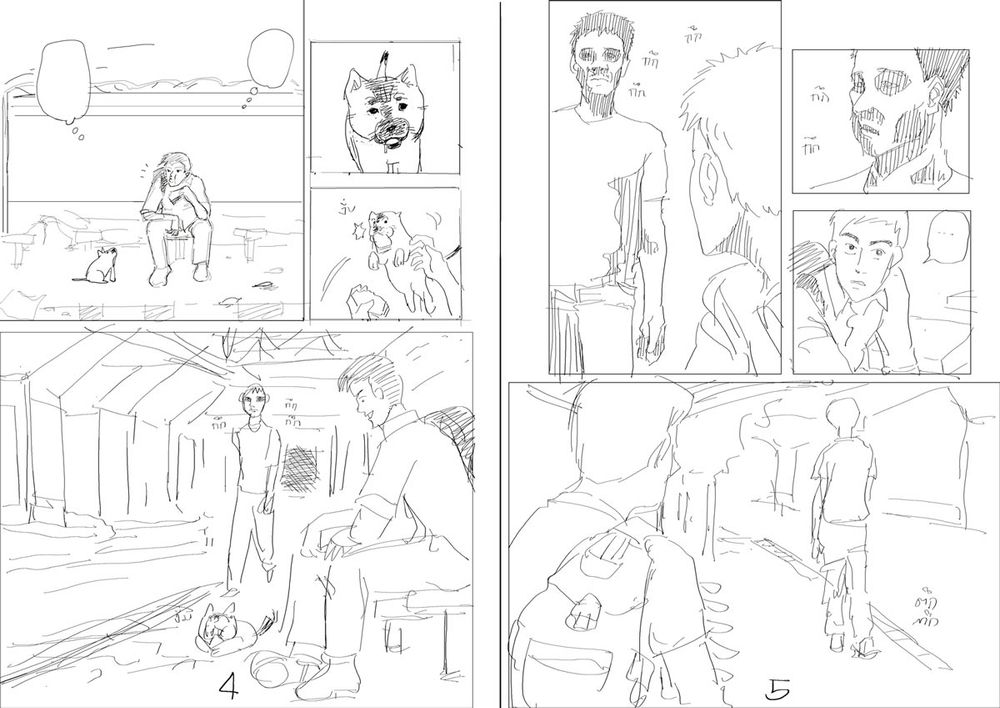
This distinction is crucial for writers, photographers, designers, musicians, directors, cartoonists, architects, and content creators. A creative idea may appear in a matter of seconds, but the law considers the work in which that idea is expressed—not merely the claim, “I thought of it first.”
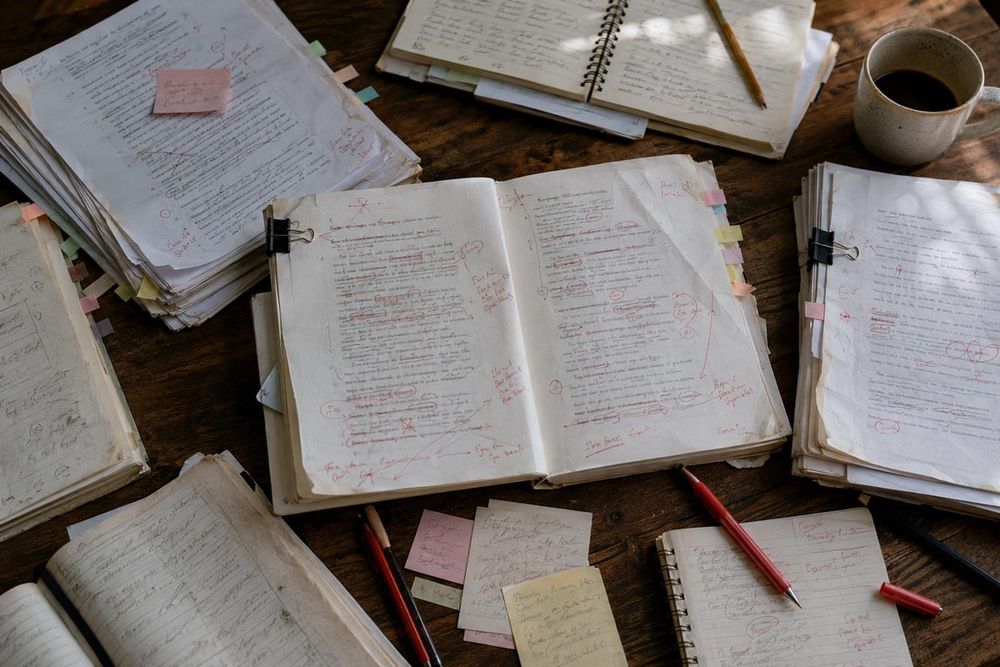
Keeping original files, written drafts, emails, timestamps, and evidence from throughout the creative process is therefore useful. If a dispute later arises over who created the work or when it came into being, this evidence can trace the work’s development far better than memory or oral accounts alone.
When an idea must be pitched to a producer, investor, or client, copyright is not the only consideration. It may also be necessary to protect confidential information through a non-disclosure agreement, or NDA.
An NDA, however, does not turn everything we say into copyrighted material, nor is it a magical shield covering every idea. It must identify what information is confidential, who has a duty to protect it, and how that information may be used. We must therefore distinguish between “a work protected as intellectual property” and “information the parties have agreed not to disclose.”

Don’t Sell What You Can License
One common misunderstanding is the use of the phrase “sell the copyright” for every agreement. In practice, copyright owners do not always need to sell or assign all of their rights. They can instead license the work, defining a scope suited to the intended use.
Licensing is comparable to renting out property. The creator remains the owner while allowing someone else to use the work under agreed conditions. A license might, for example, permit a novel to be made into one film over a five-year period and released only in specified countries. Or it might allow an illustration to appear on the packaging of one category of product, without including the right to produce clothing or merchandise.
A single work can therefore branch out to create value in many ways. A novel may be translated into other languages or adapted into a film, television series, stage play, audiobook, game, or merchandise. If the owner assigns all rights in the first deal, these opportunities may pass into someone else’s hands.
The contract is therefore central. Both parties must agree clearly on what may be done with the work, the media in which it may be used, the territory covered, the term of the agreement, whether adaptation or sublicensing is permitted, and how the owner will be compensated.
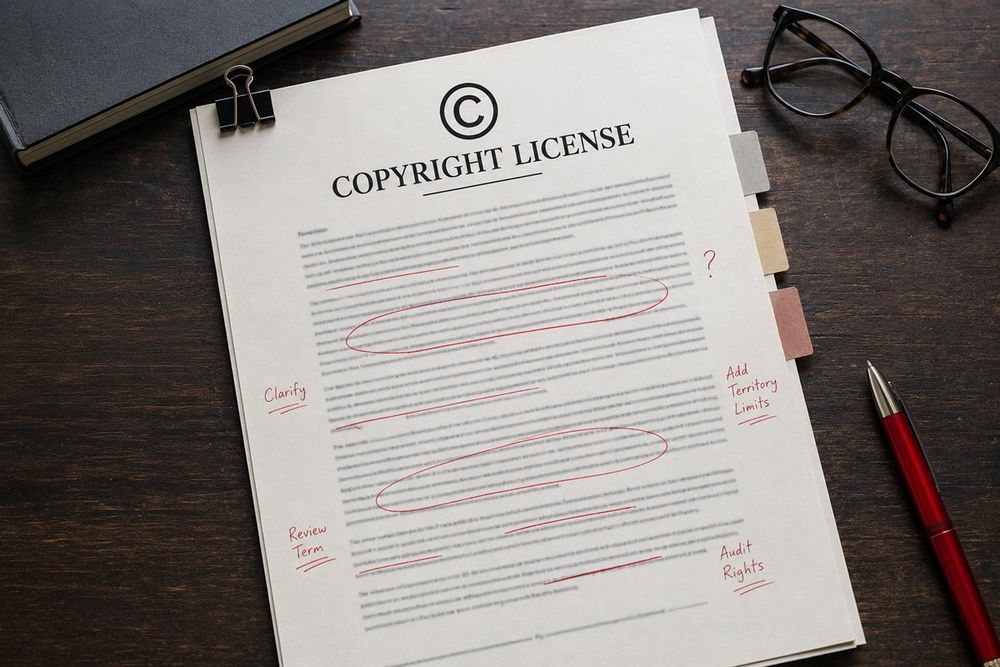
Some words in a contract may look ordinary but have far-reaching effects—for example, “forever,” “without a time limit,” “worldwide,” or the word perpetual in an English-language contract. If these terms are not read carefully, an owner may allow someone else to use the work for the full duration of copyright protection and, contrary to what the owner may have assumed, may be unable to negotiate a new deal involving the same rights in the future.
A contract should therefore not be a template reused simply by changing the parties’ names. Each work has a different nature and business model. A contract suited to publishing a book may not be appropriate for producing a television series, and a logo design agreement should not be reused to license a character for merchandise.
Ajarn Gene explains that a good contract should be designed around the needs of both parties. On one side is the creator, the source of the work. On the other is the producer, publisher, investor, distributor, or intermediary with the ability to bring that work to market. Their relationship does not have to be one in which one side gains at the other’s expense. If they understand the scope of the rights and design a fair agreement, both sides can grow together.
Although an oral agreement may be valid in some circumstances, problems often arise as time passes and the parties remember its details differently. To the owner, “You can use it” may mean permission for a single use; the other party may understand it as permission for unlimited reuse.
An agreement based on trust may therefore be valid, but it is not safe. When what has been agreed carries value, putting the details in writing helps everyone see the same thing and reduces the risk of conflict later.
From Protecting Rights to Creating Value
In the past, conversations about copyright often began with questions about who copied whom, who infringed whose rights, or how to prevent others from using a work. For Ajarn Gene, however, recognizing that the work belongs to us—and that using it without permission may constitute infringement—is only the beginning.
The more important question today is this: once we have created a work, how can we benefit from it? How should we negotiate with people who want to develop or adapt it? And how can it generate income that enables us to keep creating the next work, and the one after that?
Many creators excel at writing, drawing, composing music, designing, or making films but are unfamiliar with the language of business. They are like researchers who are highly capable in the laboratory but may not know how to take an invention to market. This does not mean they must turn themselves into full-time salespeople. It means they need enough knowledge to speak with intermediaries, understand business models, and decide which agreements suit their work.
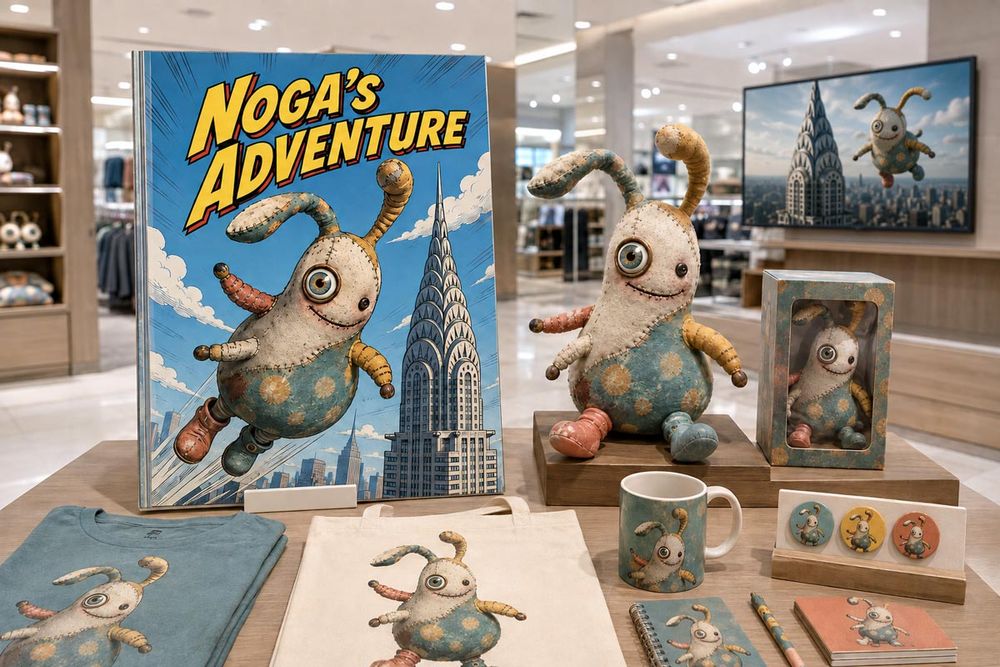
Every branch of the creative industries—books, films, television series, music, art, games, fashion, and digital content—begins with one person or a small group creating something from an idea. Yet that small thing can travel across languages, platforms, and borders, becoming a business of immense value.
As Thailand talks increasingly about the creative economy and soft power, simply encouraging people to create is not enough. We must also build understanding of ownership, licensing, adaptation, negotiation, and contracts. If creators do not recognize that what they have made is property, they may give that property to someone else without knowing its true value.
Intellectual property is therefore neither remote from everyday life nor knowledge that should belong only to lawyers. Every time someone writes a passage, takes a photograph, draws a picture, composes a song, designs a logo, creates a character, or develops a story, they have entered the world of IP—whether they realize it or not.
The first question may be, “Who owns creative work?” But the next question every creator should ask is this: once we know the work is ours, how can we care for it, help it grow, and enable it to sustain the creation of whatever comes next?
Protecting copyright is not simply about preventing someone from taking our work. It is about preserving the opportunity for a small idea to grow into property—and perhaps, one day, to create change greater than its creator.
---
Based on the episode “Who Owns Creative Work? When Ideas Become Property” from “Tiny Step, Giant Change,” a Khaoyai Connect podcast, featuring a conversation with Asst. Prof. Dr. Chongnang Wiputhanupong.
© 2025 Khaoyai Connect. All rights reserved.
No part of this content may be copied, modified, or distributed in any form without prior written permission.
