


The Fun Begins with a Question
Stargaze, Observe, Keep a Journal, and Learn from Nature, Our Teacher
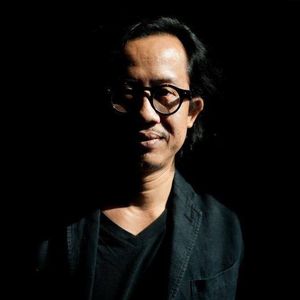
A childhood curiosity, a first 80-millimeter telescope, and a silent, overcast night all helped shape the person Chon Wichaidit would become: a writer who invites us to use our eyes, hands, and hearts to rediscover the world before us at Rai Khao Noi Suwana, a dark-sky site in the heart of Khao Yai.
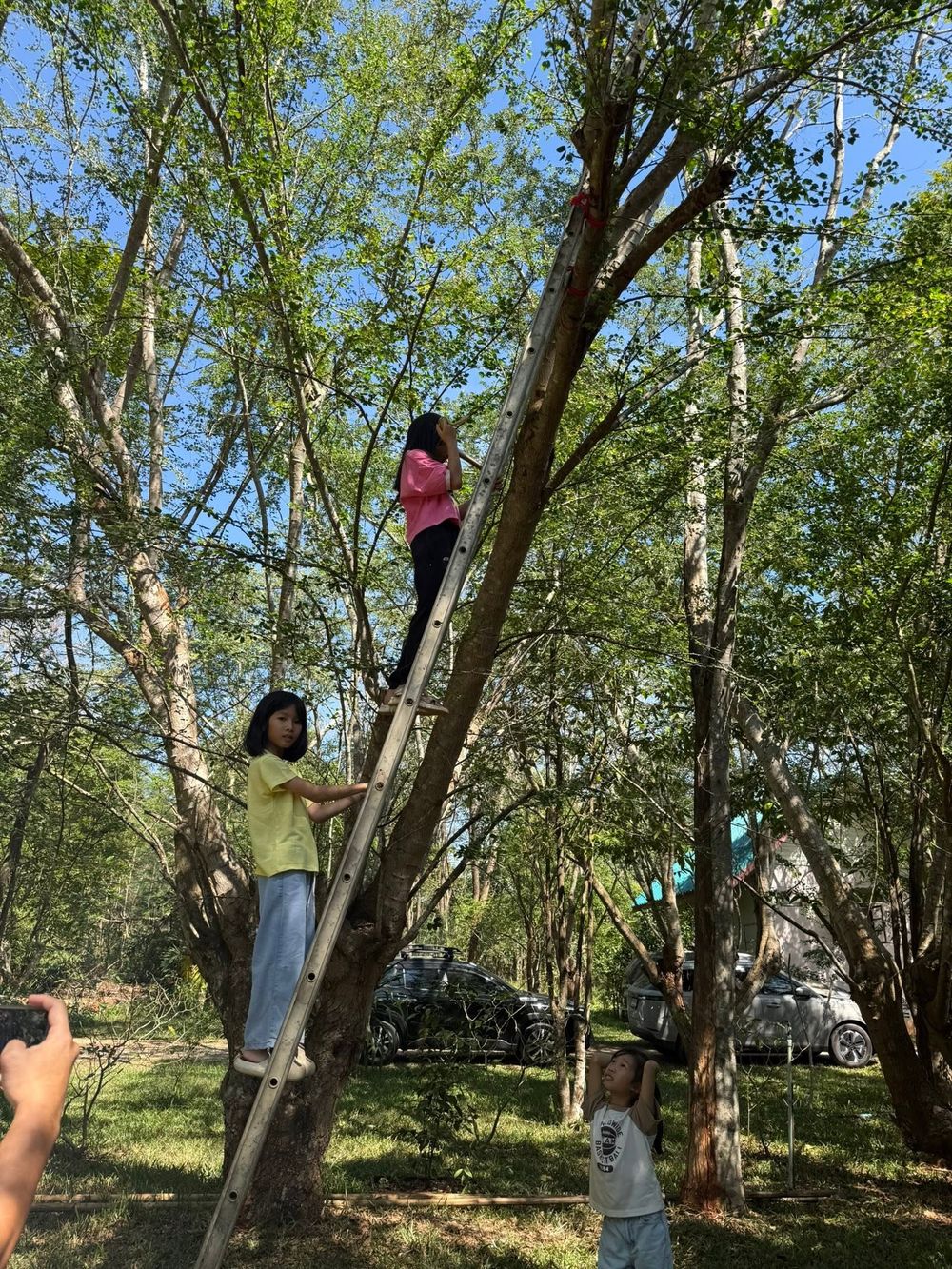
Rai Khao Noi Suwana is not entirely quiet by day. Birdsong threads through the conversation, grass tips sway in the breeze, and anyone who looks closely may spot a tiny grasshopper resting motionless on a leaf. As we walked beneath the shade of the trees, we nearly stepped into the path of a golden tree snake. It stopped. We stopped. Each side waited for the other to pass.
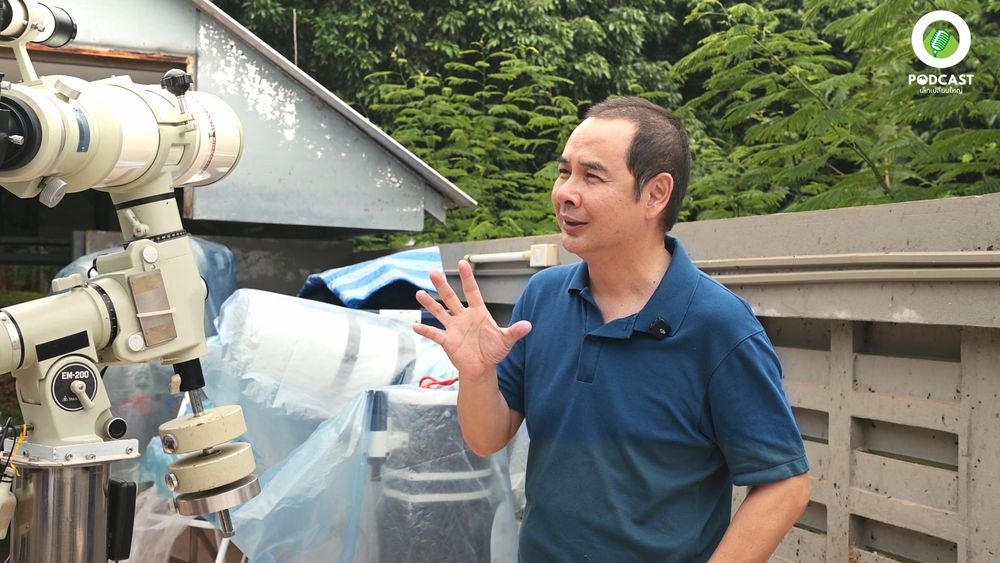
The brief encounter may have seemed insignificant, but to Chon Wichaidit it was a classroom in miniature: one without walls, without a bell to end the lesson, and without ready-made answers. There was only the living creature before us, and the question of whether we had truly seen it well enough.
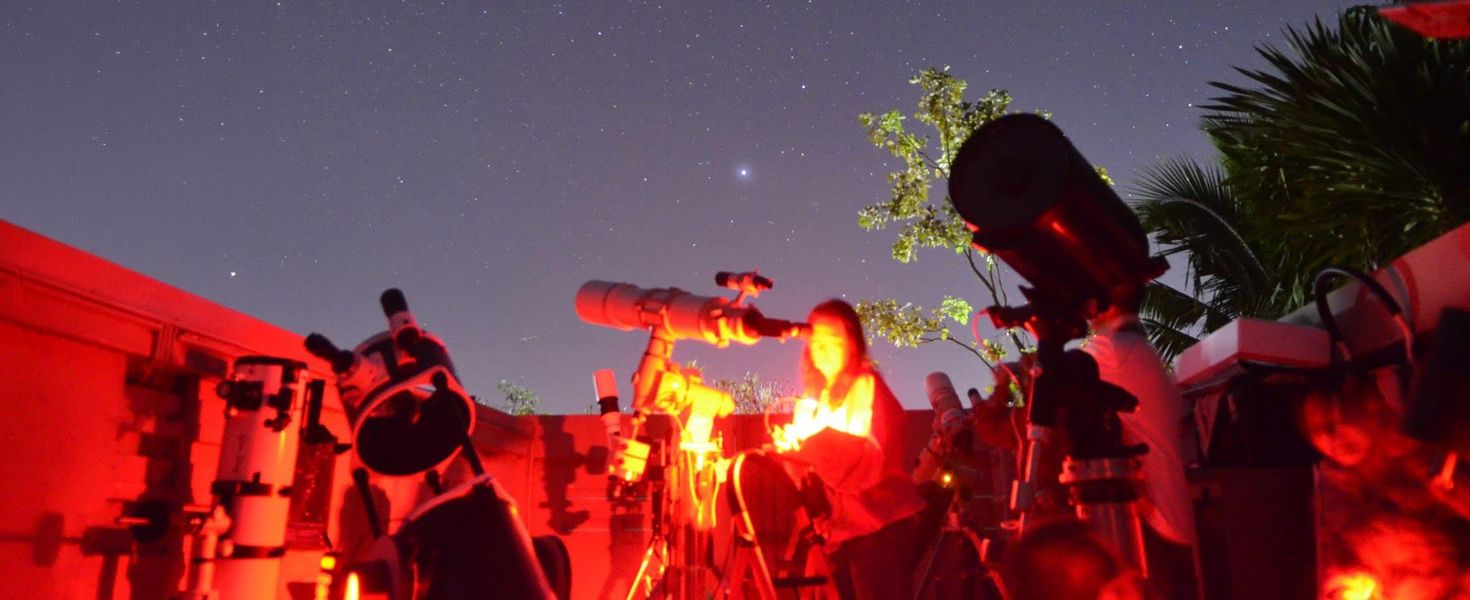
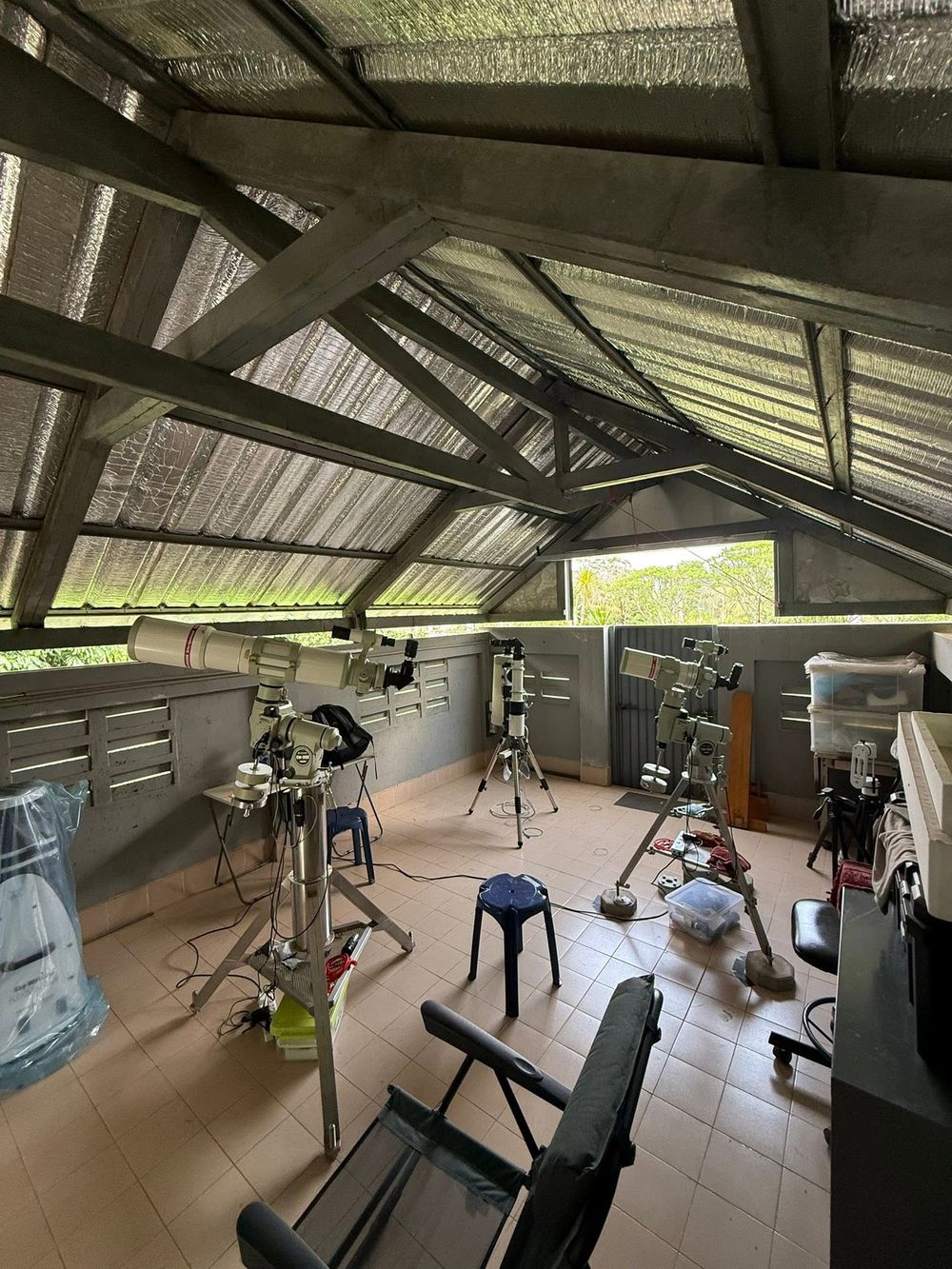
When night arrives, the same classroom expands upward into the sky. Every lamp directs its light toward the ground, keeping stray glow from washing out the stars. In the courtyard of Ing Dao Observatory, telescopes of various sizes wait for the roof to open onto the universe, while visitors wait in restless anticipation, eager to see a luminous galaxy with their own eyes.
"The fun begins with a question" is the phrase Chon chose for his nature and astronomy learning activities. In a world where answers are always at our fingertips, what is becoming scarce may not be information, but the ability to look at something familiar from every angle until a new question of our own emerges.
From a Boy Looking Up with His Naked Eyes to His First Telescope
Chon had known how to use a planisphere since childhood. His family lived in faculty housing at Nakhon Si Thammarat Teachers College, where a neighbor he called uncle taught in the physics department. On National Children's Day, the man would often take a telescope up to the rooftop, giving the children at the college a chance to see Saturn and Jupiter through a sharp lens while they were still very young.
The experience did not instantly turn him into a stargazer. He knew a few constellations and could use a star chart. He began to realize how fascinated he was by the stars when he found himself constantly reading about astronomy in SE-ED's science magazines and the book Miti Thi 4 (The Fourth Dimension). Yet whenever he looked up at the real sky, the names and pictures on the page would not connect with the points of light above. He did not know where to find the celestial objects he had read about, or whom he could ask to explain them.
Even a visit to the planetarium, where someone pointed out that this star was here and that constellation was there, was not the same as standing beneath the real sky and making the discovery for himself. The gap between "knowing the name" and "seeing" remained with him for years.
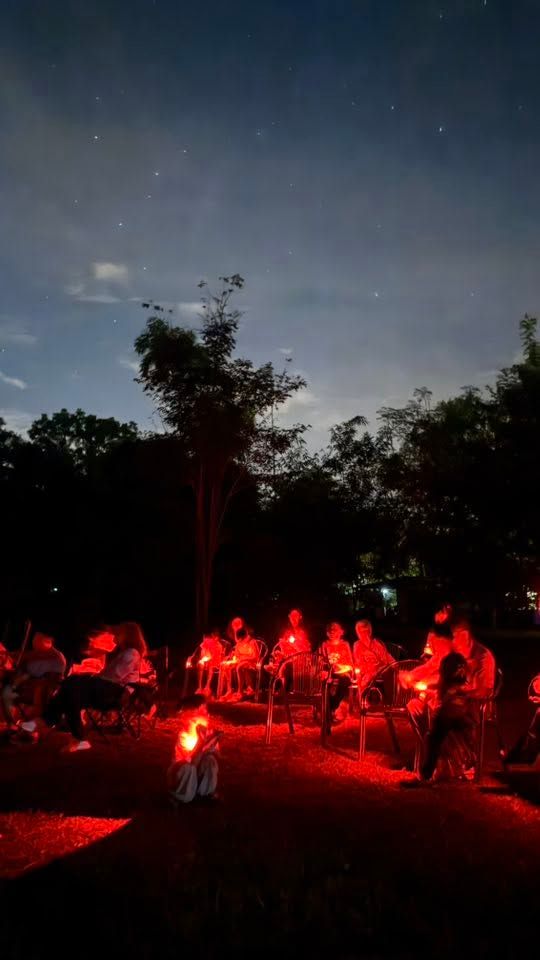
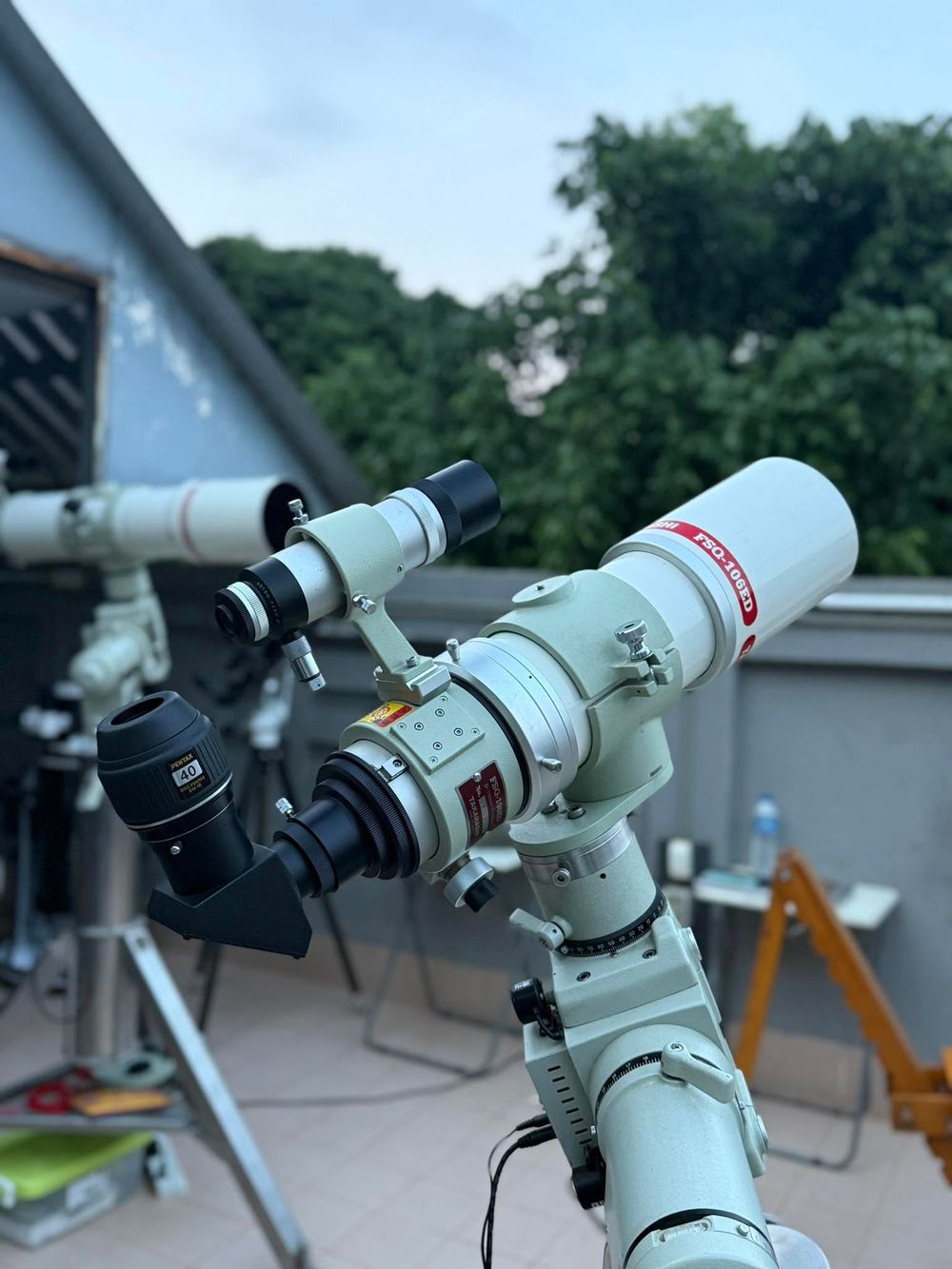
Once he began working and traveling, he noticed a period when many accommodations added the words "Resort & Spa" to their names and raised their prices, even though he had no interest in using a spa. His refusal to pay extra led him instead to camp in national parks. A simple question - what would he do at night, when it was so quiet and dark? - led him to buy his first 80-millimeter telescope from the Astronomy.com webboard. That inexpensive Chinese telescope became his first doorway into the realm of the stars.
Looking through the telescope, he discovered how much the sky held beyond the reach of the naked eye. Fainter stars, craters on the Moon, and details on the planets gradually came into view. The experience echoed Galileo's lesson: by using a telescope to observe small moons circling Jupiter, he found evidence before his own eyes that shook the old belief that Earth stood at the center of everything.
What mattered, then, was not simply seeing more, but seeing and becoming curious. One question branched into many others and drew him back to observe again, to see how tonight's view differed from what he had seen the day before.
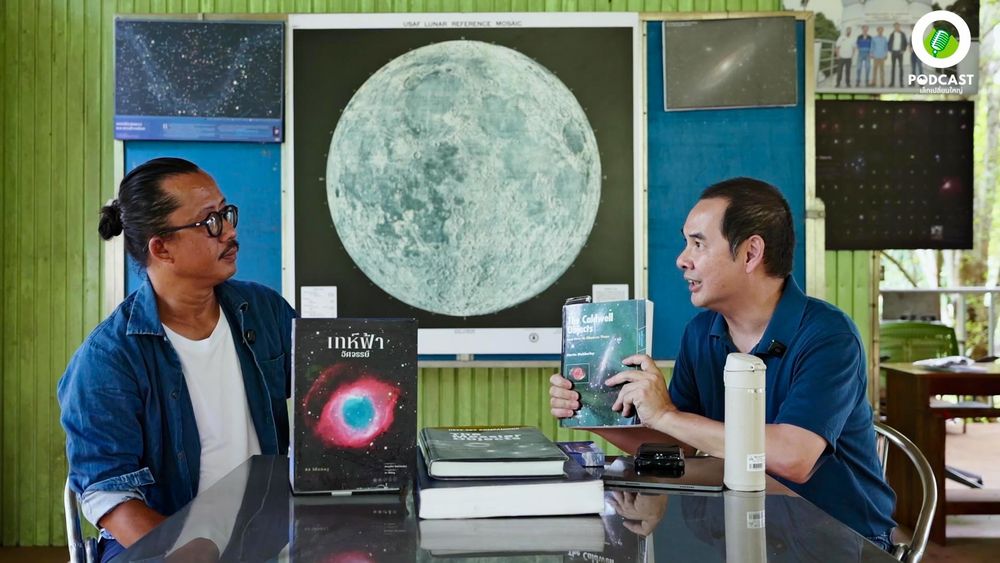
He Began Writing Because the Available Guides Could Not Answer His Questions
At first, Chon knew of M42, the Orion Nebula, but did not know how to locate it in the sky. A planisphere offered too broad a view to lead him to such a faint object, while most Thai-language books were introductory guides. None contained observations that Thai stargazers had made and recorded from the sky themselves.
He therefore relied on foreign-language guides. Anyone traveling to an unfamiliar country needs a guidebook that explains where to go and what to expect. Such books were difficult to find in Thailand at the time; some required a trip to Singapore. After using them for years, however, a new question arose: why did we not have a guide based on firsthand observations of the sky from our own region?
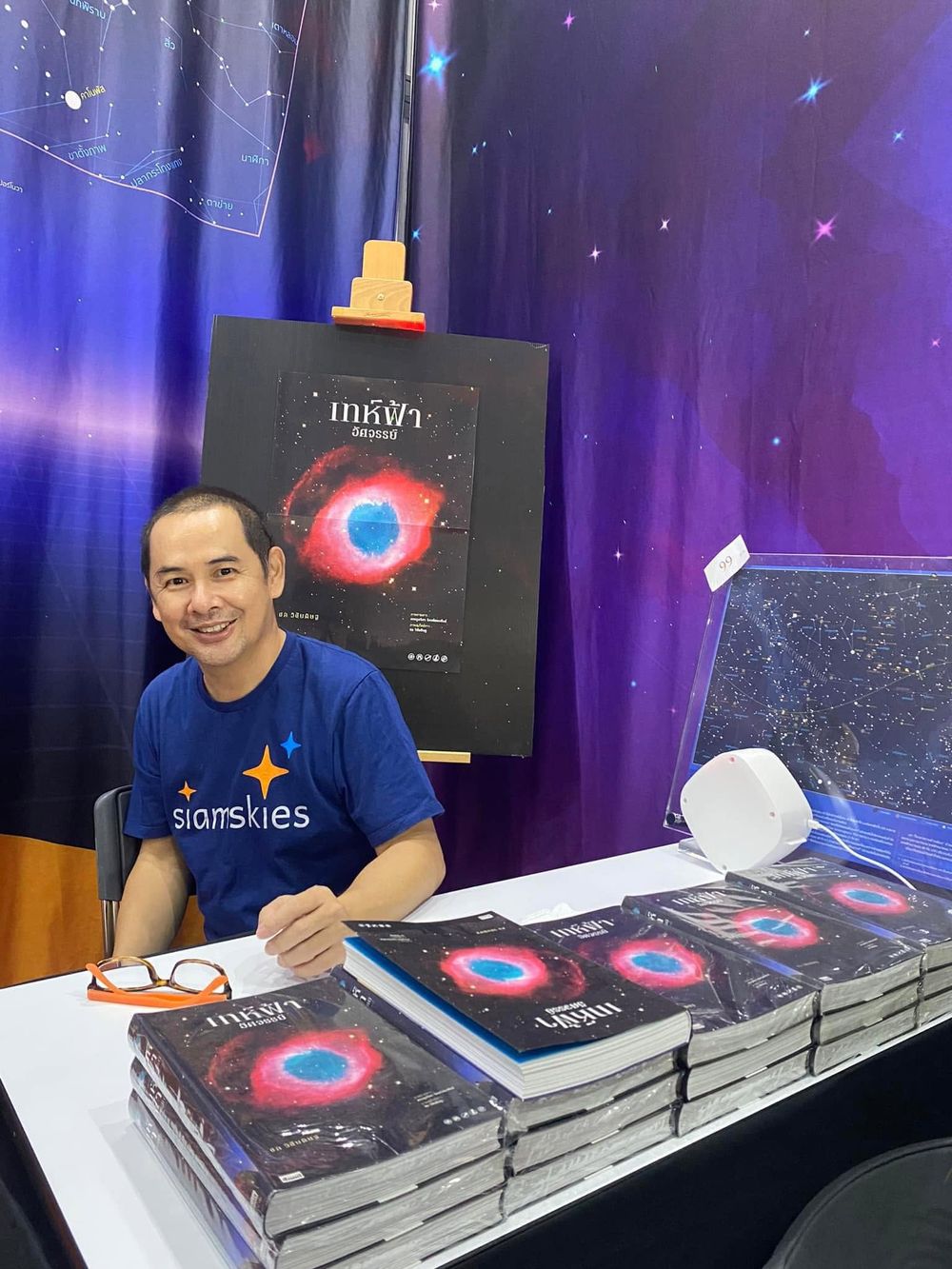
That question became Teh Fa Atsachan (Amazing Celestial Objects), a book for which he spent about six years gathering information, some of it at Rai Khao Noi Suwana. Chon observed celestial objects himself, drew what he saw, and kept detailed records, accompanied by photographs by Tragoolchitr Jittasaiyapan. When the manuscript reached Sarakadee Press, its contents were thoroughly checked. The publisher also chose not to cut corners: the entire book was printed in four colors and produced as a rounded-spine hardcover with signature-sewn binding, making it both beautiful and durable. Its original concept, the long process of writing it, and the care taken in its production earned the book a 2025 Outstanding Book Award in the nonfiction category from the Office of the Basic Education Commission (OBEC).
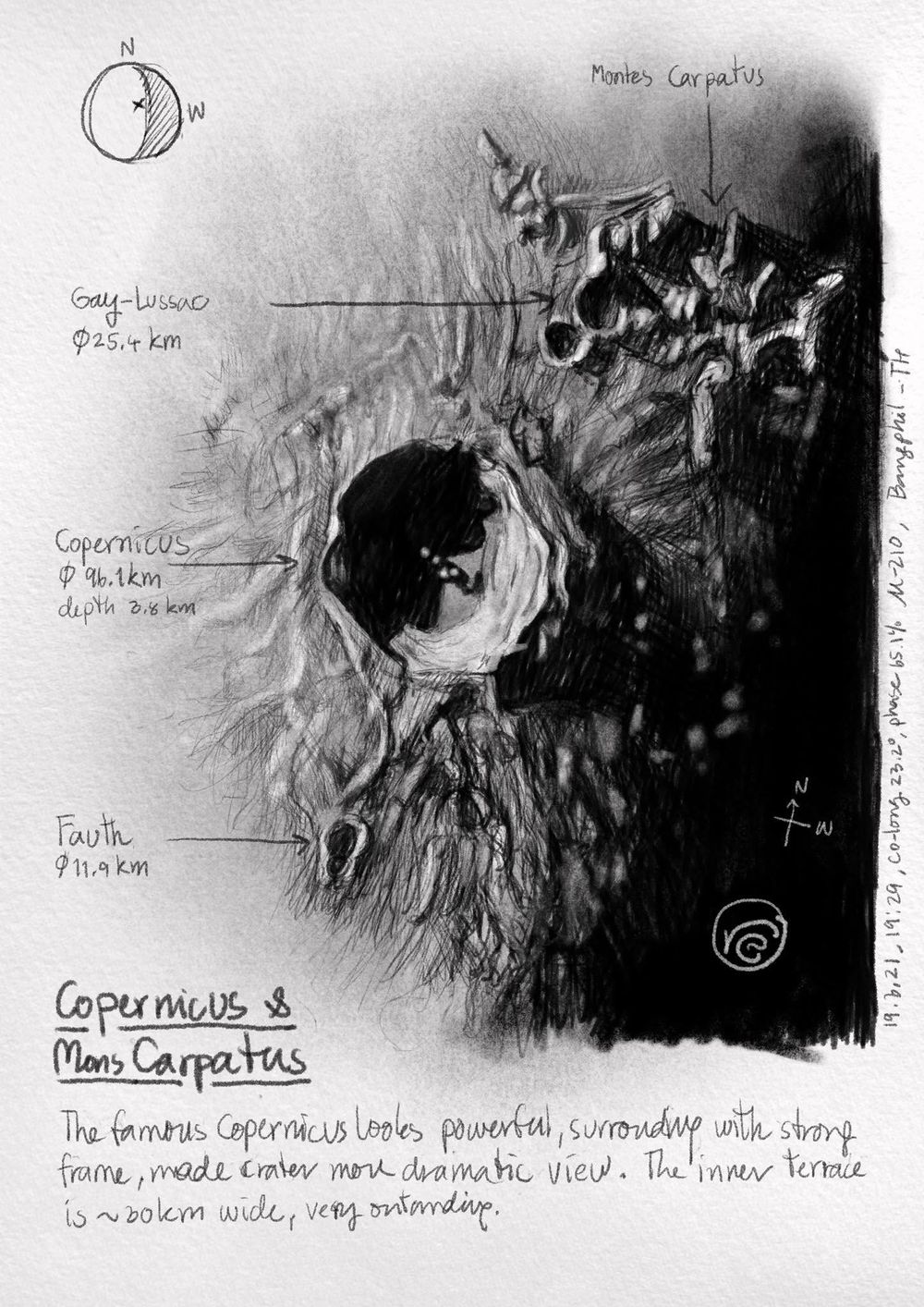
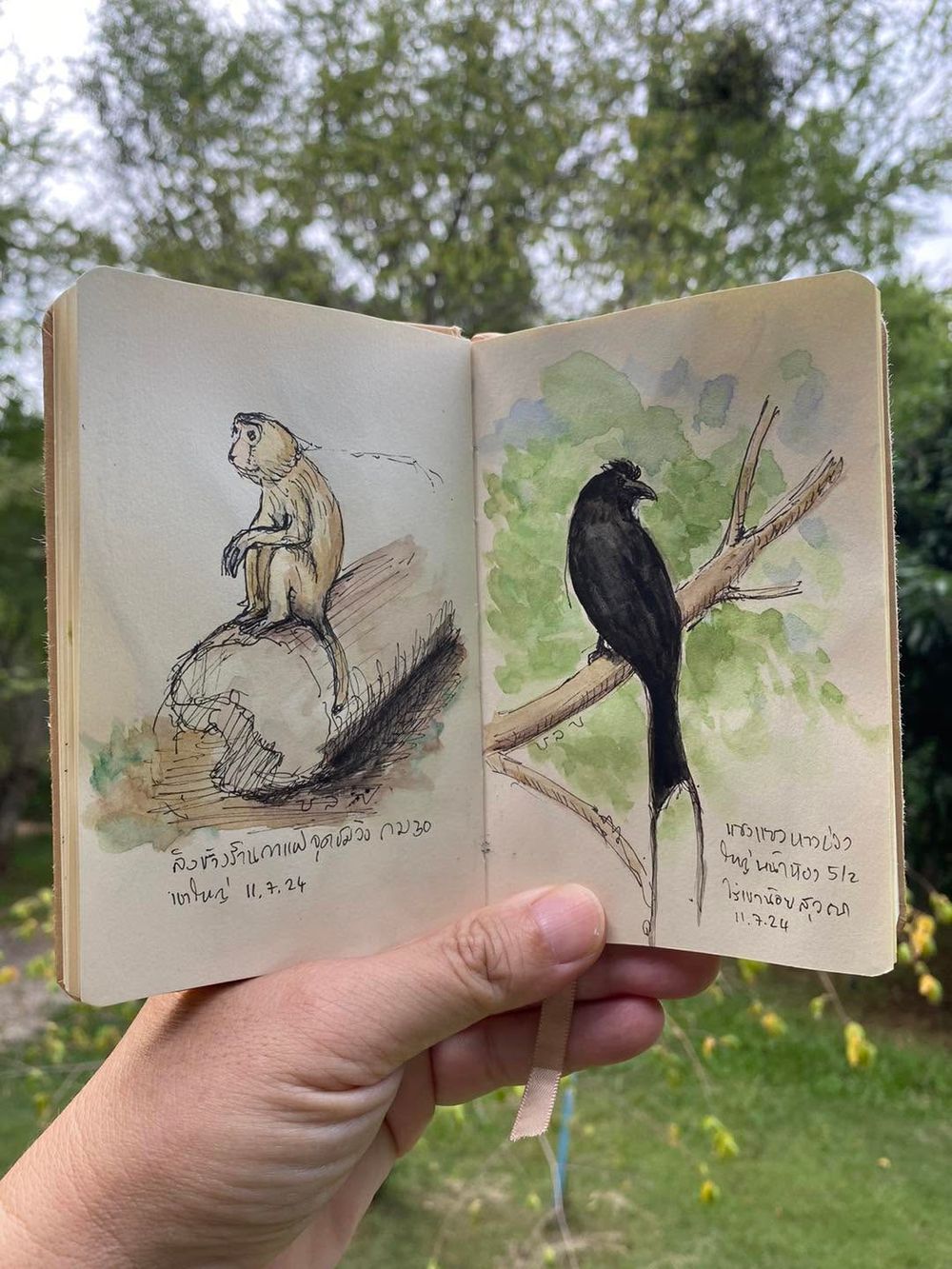
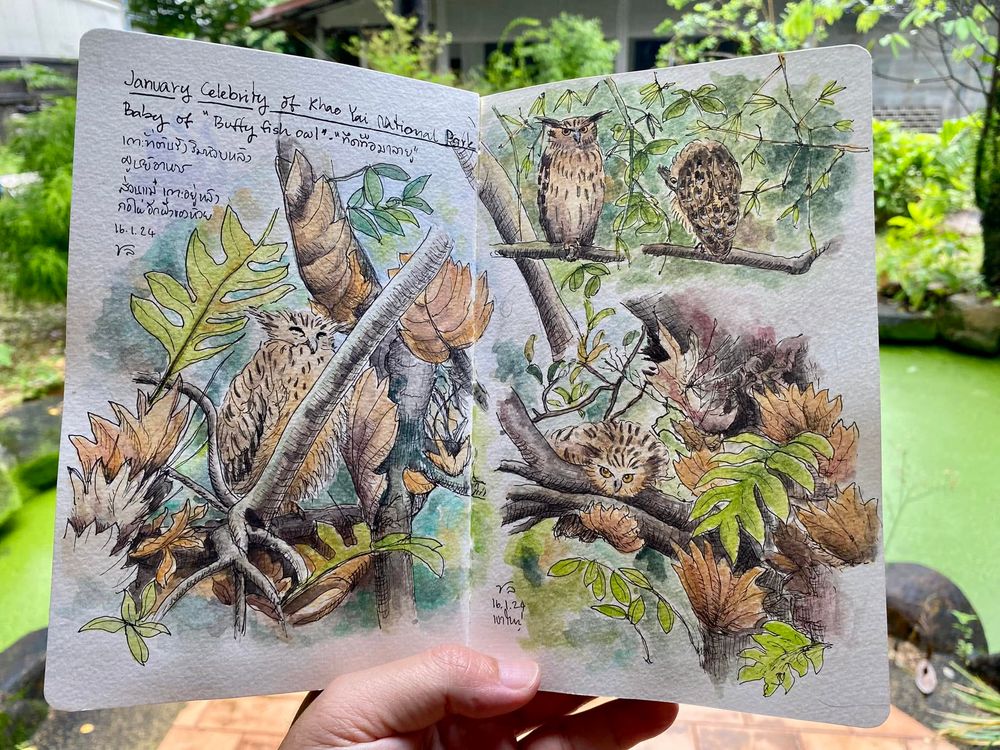
Something extraordinary emerged from the sustained effort behind the book. The practice of sitting down, taking time, and recording what he saw - something he had continued for around twenty years - worked not only for stars, nebulae, and the Moon, but also for flower stamens, the shapes of clouds, serrations along a leaf, a grasshopper on a blade of grass, and even a snake gliding across the path before him.
It Does Not Matter If the Drawing Is Not Beautiful - This Is Not an Art Class
When people are invited to draw nature, the first question that often arises is, "What if I can't draw?"
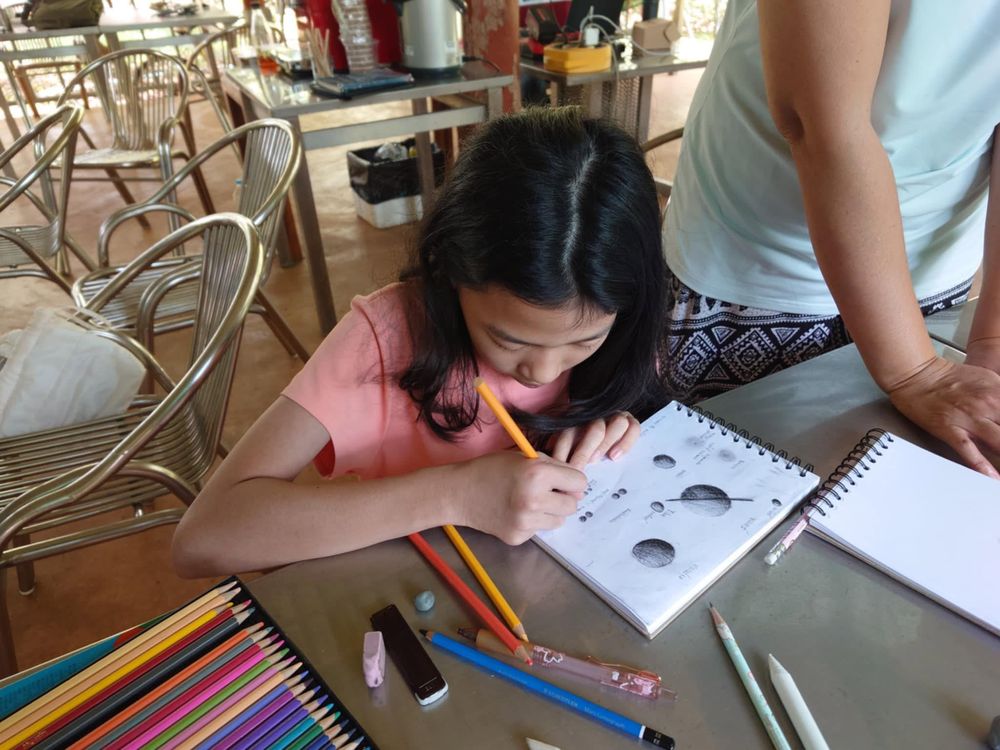
"We are not making art..." Chon answers almost immediately. He explains that we are recording something that may be difficult to describe in words - a stamen with a long filament and an oval tip, for example. A simple drawing made with only a few lines may convey that feature more precisely than a paragraph of description. More importantly, this record is for ourselves. It is not made for anyone else to judge as beautiful or otherwise.
A journal therefore becomes both a tool for observation and a record of thought in motion. As the hand slowly draws each line, we must look at the object before us for longer than it takes to raise a phone and snap a picture. We begin to notice what we once overlooked. We must decide what to draw, what to write, and which details distinguish this thing from another. Drawing slows the eye; writing allows thought to gather gradually into form.
This skill matters not only for children. Chon has noticed that many adults, too, have grown distant from the practice of organizing their thoughts on paper. Everyday work flows through short chat messages, with information scattered across conversations from today, yesterday, and the week before. This differs from writing an email or a report, which requires the writer to gather and organize their thoughts before sending them out. Returning to journaling is therefore not old-world romanticism. It is training in systematic thinking for a world where everything moves quickly.
Observation is also the root of new ideas. Chon tells the story of a child from a chili-farming family who noticed that holding a bag in one hand and picking chilies with the other was slow. The child devised a way to loop the bag around the wrist, freeing both hands to pick at once. This small innovation did not begin in an expensive laboratory. It began with seeing a problem in an everyday routine and asking: could we do this differently?
Many innovations begin with one small detail noticed by one person while everyone else walks past.
There Is Still Something to Learn When the Sky Is Overcast
Rai Khao Noi Suwana covers roughly 15 rai (2.4 hectares) and defines itself as an observatory, not a resort or homestay, although accommodation is available for stargazers. It is certified under the Amazing Dark Sky in Thailand project, a collaboration between the National Astronomical Research Institute of Thailand (NARIT) and the Tourism Authority of Thailand (TAT). Certification considers the darkness of the sky, the space available for activities, and the site's lighting management.
Lighting is controlled not only so that people can see the stars more clearly. Light pollution also disrupts the rhythms of plants, insects, and animals. Plants need periods of darkness to rest from photosynthesis. Rice growing in a field illuminated by streetlights all night may continue to grow without producing grain. Some living creatures navigate by the stars or the Milky Way, just as sea turtle hatchlings must distinguish the direction of the sea from lights onshore. Darkness, then, is not emptiness; it is an essential ecological resource.
Yet even in a dark-sky area, the sky does not always clear on demand. Over twenty years, Chon has watched long stretches of clear nights dwindle to scattered days amid fog, smoke, dust, and water vapor that combine into a pale veil of haze. A visit in December or January therefore offers no guarantee of a sky filled with stars.
Many people have driven a long way only to be disappointed by rain. Chon himself once cooked instant noodles under an umbrella in the rain at Phu Hin Rong Kla. But after spending enough time with nature, he learned that an overcast sky does not mean the classroom is closed. Plants, animals, the scent of earth, and birdsong still surround us, waiting to be observed.
Accepting what cannot be controlled may be as important a lesson as seeing Saturn through a telescope. Nature is not a performance that raises its curtain according to our schedule. The learner's task is not to demand favorable skies, but to prepare the mind to learn from whatever the sky offers at that moment.
When Answers Are Easy to Find, Questions Matter Even More
At Rai Khao Noi Suwana, participants gradually become acquainted with the sky through binoculars before exploring the different kinds of telescopes at Ing Dao Observatory. Chon does not want to compress twenty years of accumulated knowledge into an enormous mass of information delivered over three days. Even if an instructor could pack everything in, learners might be left with no room for questions of their own.
What he wants to pass on, therefore, is a "way of learning" rather than a set of answers: observe, take notes, draw what you see, and then ask questions.
This idea carries particular weight in the age of artificial intelligence. Answers are easier for people to find than ever, but how far those answers can take us depends on the quality of our questions. Without questions born of direct experience, we may ask what everyone else asks and receive the same generic answers. Specific questions do not arise from tool-use techniques alone. They come from looking closely enough at the world to notice that something does not fit, something has changed, or something still lacks an explanation.
Observation leads to questions; questions lead to inquiry; and keeping records helps us remember the path our thoughts have taken. This simple cycle lay behind the work of Galileo, da Vinci, and many other students of nature. It has not lost its meaning simply because our tools can now answer more quickly.
Spending Time Together in Nature
The three-day, two-night program co-designed by Khaoyai Connect and Chon is therefore not intended merely to send participants home with a list of constellations. It invites families to share life at a slower pace. Parents and children take part in the same activities, looking together, thinking together, and sharing what each person sees - a kind of time that can be difficult to find amid the rush of everyday life in a big city.
Participants will turn their observations into a "zine," or a small magazine of their own. They must choose scenes, arrange compositions, draw, write, and ask questions. The process puts phones aside without any command being given: both hands are busy touching soil, turning over leaves, holding a pencil, opening a notebook, or raising binoculars to the sky.
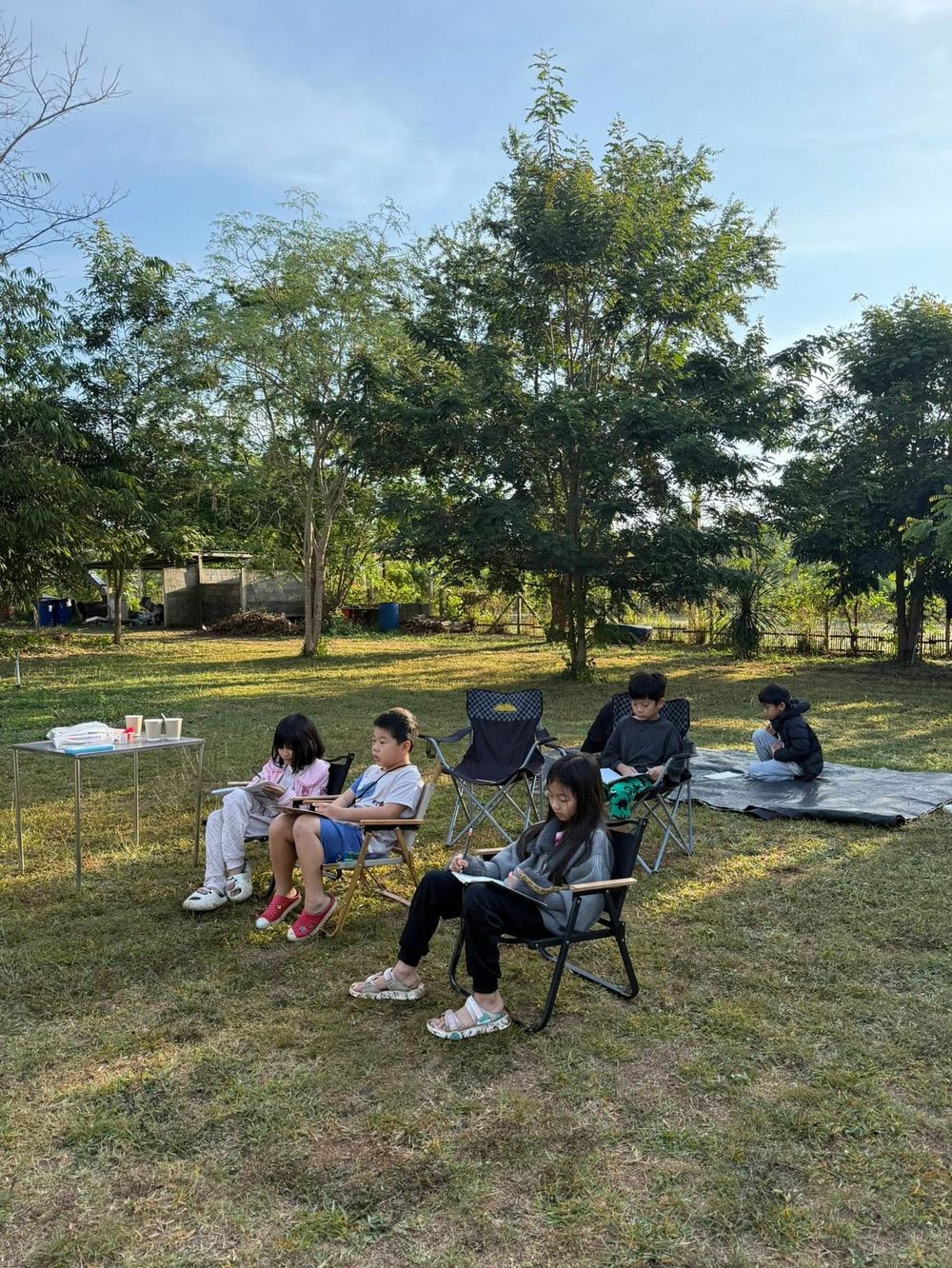
In the end, what they gain may be more than knowledge; it may be a bond. Chon believes that we need not constantly tell children to protect nature. Once they have spent enough time with it, love and a desire to cherish it will arise on their own. They will know how a certain tree changes when the rains come, remember where a particular insect once perched, or recall how it felt to see the Moon through a telescope one night.
Everyone is invited to ask themselves how well they know the nature around them, whether in the city, the suburbs, or the heart of Khao Yai. How long has it been since we touched soil, smelled leaves after the rain, or looked up at the sky without rushing to take a picture?
On the night we meet, the sky may be strewn with stars, or clouds may hide every point of light. But the fun need not wait for the sky to clear. It begins the moment we stop, look, and ask our first question about what is before us.
Then nature will gradually stir our curiosity - and from curiosity comes... a question.
--------------
Editor's Note
This article was adapted from an interview with Chon Wichaidit at Rai Khao Noi Suwana for "Tiny Step, Giant Change," a Khaoyai Connect podcast.
© 2025 Khaoyai Connect. All rights reserved.
No part of this content may be copied, modified, or distributed in any form without prior written permission.
