


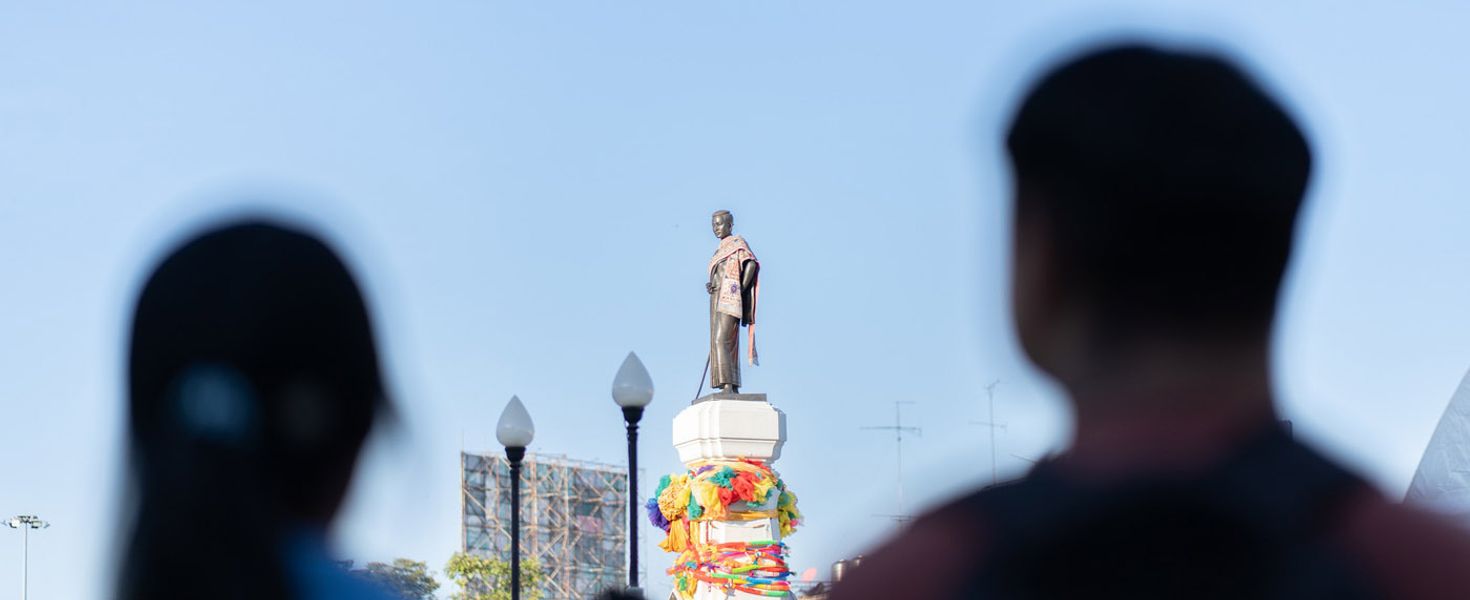
Walking Nakhon Ratchasima Part 1
Viewing historical treasures at the Maha Viravong National Museum

With the hot, humid weather and sidewalk conditions that are not conducive to walking, these may be key factors why Thai people do not really have a culture of walking for tourism like in other countries.
But if you actually try walking, you will find that cities in Thailand are walkable. Moreover, weaving through alleys and lanes allows you to see new and strange places. It counts as a great stress reliever. Most importantly, it allows us to absorb the surrounding atmosphere in more detail, creating a stronger sense of connection with the city.
Nakhon Ratchasima is a city with a long history. Currently, it is the economic center of Isan, whether in agriculture, industry, or tourism.
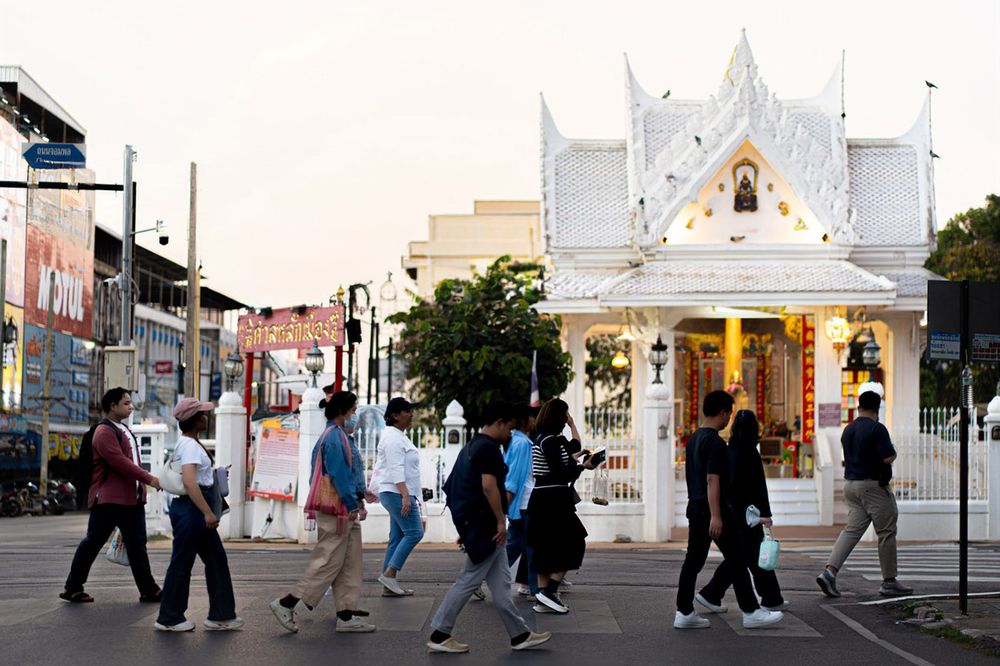
But before becoming the Nakhon Ratchasima province of today, the city and its people have journeyed through time for a long while. Each era has had interesting stories occur, forming a history recorded in various forms.
But it is unbelievable that walking can be an incredibly good way to learn about the past.
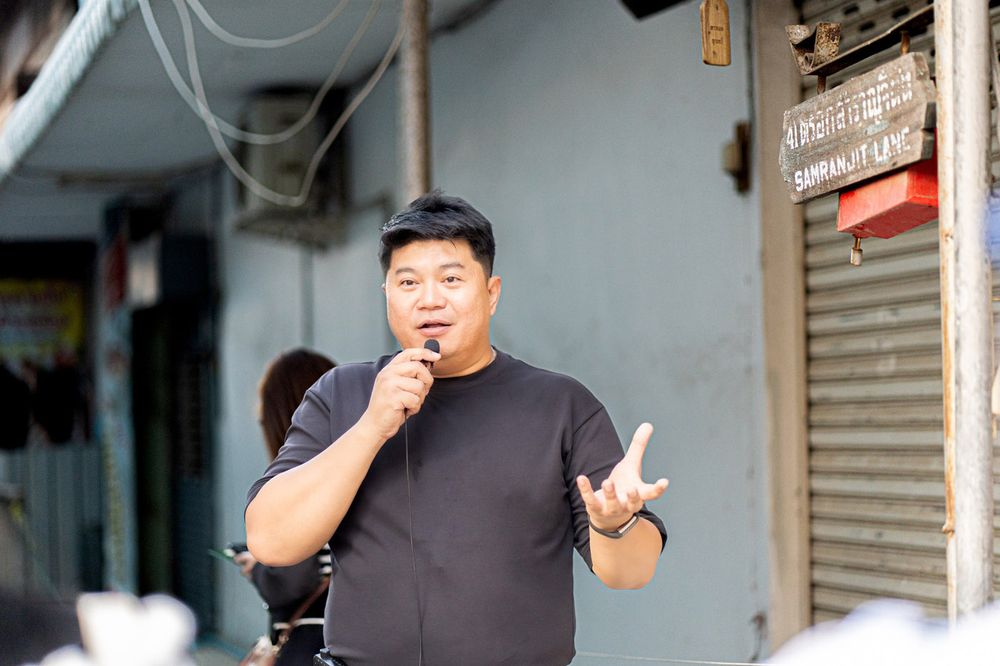
Late in the year, the "10th Walking Nakhon Ratchasima" event was organized by Assistant Professor Phitakchai Jattuchai, or Ajarn Ta, a historian and lecturer at the Faculty of Humanities and Social Sciences, Nakhon Ratchasima Rajabhat University. Khaoyai Connect took this opportunity to register and join the walk to learn the city's history from actual locations.
Where does the “Walking Nakhon Ratchasima” activity go?
As the sun dipped and the wind calmed at 4:00 PM, we started at the "Maha Viravong National Museum" on Ratchadamnoen Road, Tambon Nai Mueang, Amphoe Mueang, to view important artifacts. From there, we headed to the Thao Suranari Monument and Chumphon Gate, followed by a walk along Jompol Road—which curves like a large dragon—to see interesting architecture remaining from the past. The trip ended around 7:00 PM at the City Pillar Shrine and Wat Phra Narai Maharat, taking a total of about 3 hours.
"One phrase I've heard since I came here 15 years ago is that Korat doesn't seem to have anything worth visiting. But actually, Korat has a lot of interesting things," Ajarn Ta, the trip leader, began the conversation in a friendly manner.
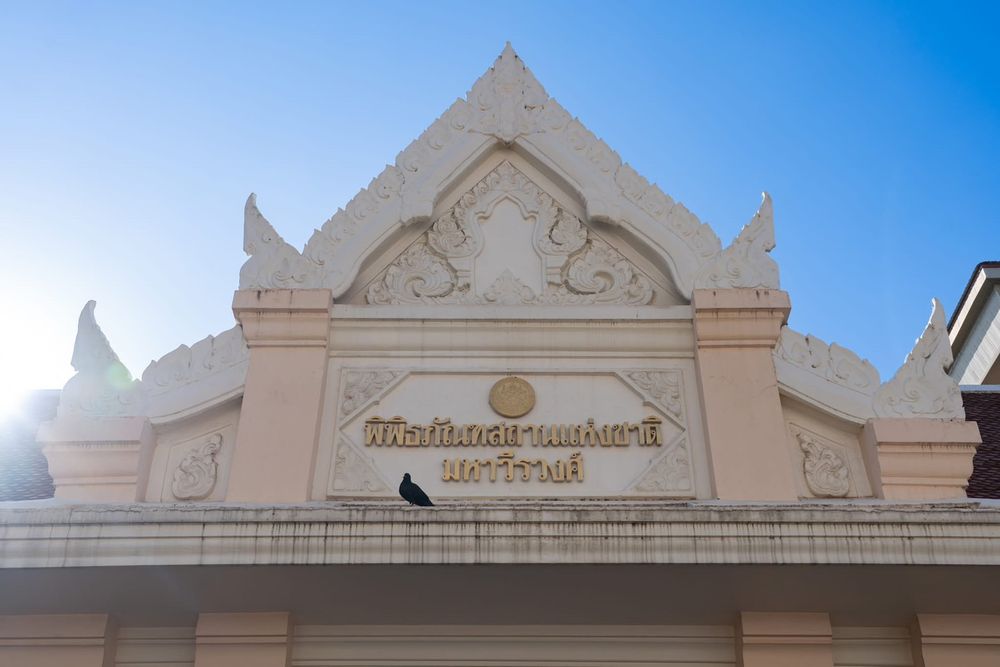
Small but Mighty: Maha Viravong National Museum
Who would have thought that the Maha Viravong National Museum, with its compact hall size, would be filled with so many important artifacts? All of which serve as evidence to piece together stories, allowing us to see the picture of Nakhon Ratchasima in the past more clearly.
All the artifacts displayed in this museum were the personal collection of Somdet Phra Maha Viravong (Uan Tisso), the former abbot of Wat Sutthachinda Worawihan, who donated them to the Fine Arts Department starting in 1927.
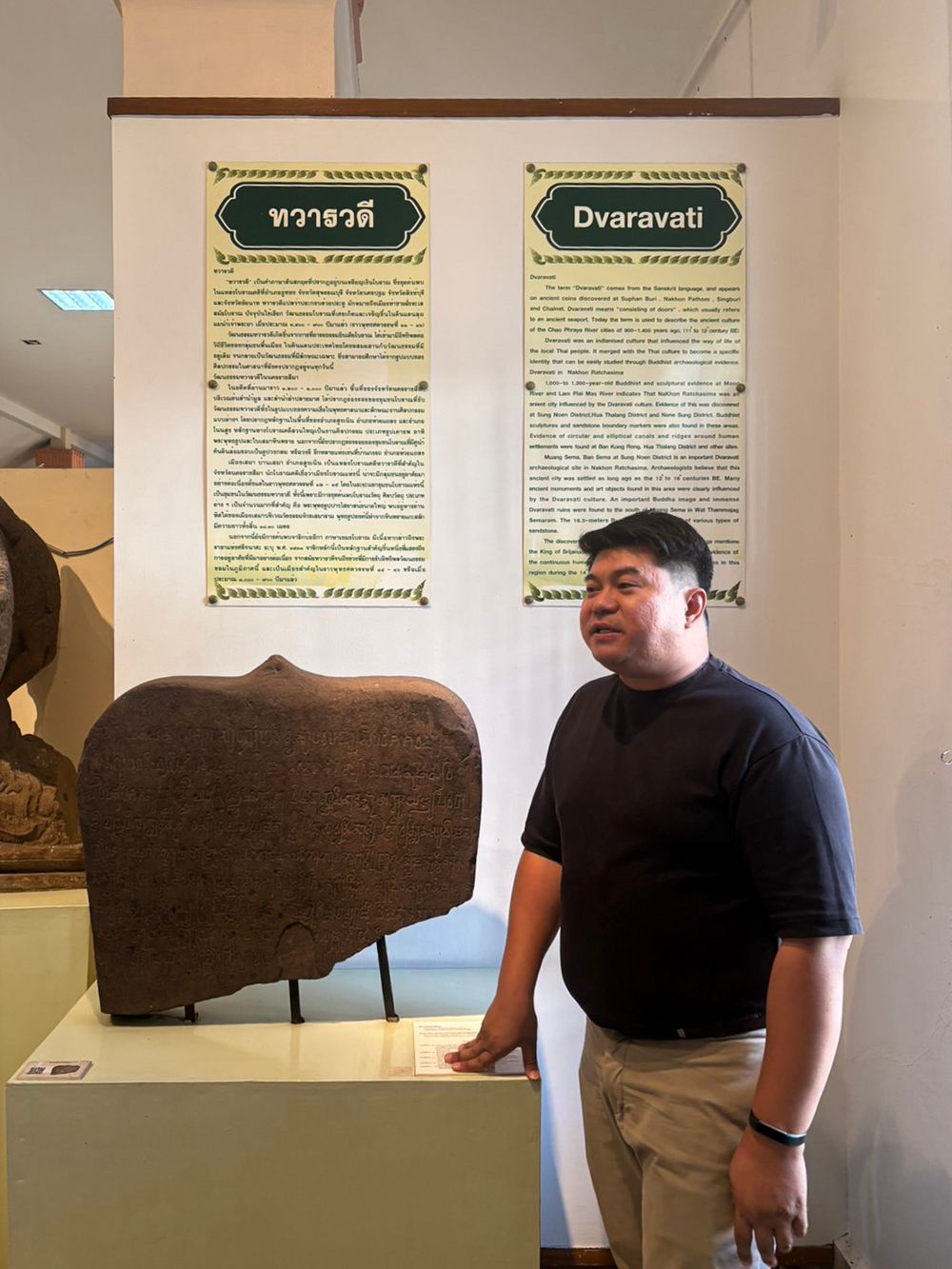
From "Standing Stones" of the Isan Spirit Religion to the Ban Phandung Inscription: The Origins of Nakhon Ratchasima City
In the deepest corner of the hall, there is an inscription stone that is extremely important to the city of Nakhon Ratchasima. Originally named the Phra Siwatsa Creating an Idol Inscription, it has been renamed after its discovery site: the "Ban Phandung Inscription," found in Kham Thale So District. It is an inscription created around 1,300 years ago, written in Pallava script in the Sanskrit language. It contains 10 lines of text mentioning Phra Siwatsa, a Brahmin who created a deity statue to praise Shiva. Interestingly, the end of the record mentions the joint worship of Buddhism and Hinduism. Furthermore, the content of this inscription also appears in the Si Chanasana Inscription at the Muang Sema historical site. Archaeologists therefore hypothesize that this inscription might be the origin or the starting point of the founding of Nakhon Ratchasima.
"In the past, despite Isan being arid, Korat had something interesting: an abundance of sandstone and many Sema stones found. Normally in Isan, there was a 'Standing Stone' culture where stones were planted at grave sites. However, standing stones began to disappear when Buddhism arrived. We find Sema stones instead because Sema stones represent a clash between Buddhist influence from the Central region and the Standing Stone culture, which was the spirit religion (Animism) present in Isan and Laos. Sema stones are never found in other regions besides the Isan region of Thailand. Meanwhile, the Ban Phandung stone inscription is considered a development from standing stones as well, but fashioned into an inscribed stone form."
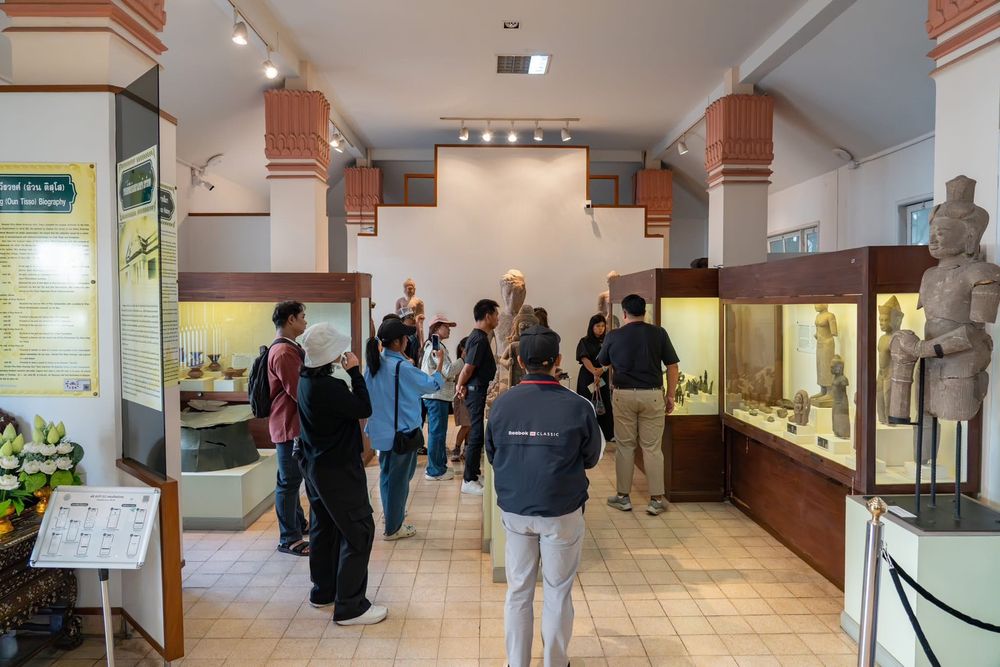
Nakhon Ratchasima: A Border City Not Under Cambodian Influence
Although there is a lot of Khmer art in Nakhon Ratchasima, the Si Chanasana inscription at the Muang Sema historical site, Sung Noen District, states that the city of Si Chanasana was a city outside of "Kambuja-desa" (the country of Cambodia). This means that Nakhon Ratchasima was not under the influence of Cambodia but was a border city that exchanged Khmer influence back and forth between the two cities.
"You must distinguish between Khmer and Cambodia. I insist that we must use the term 'Khmer Art' because Khmer is a shared culture of Cambodia, Thailand, and Laos. It is impossible for Khmer culture to exist only in Cambodia because, in some periods, the Khmer influence present in Thailand also influenced Cambodia as well, such as Phimai Historical Park. I confirm that Phimai Historical Park was the prototype for the construction of Angkor Wat in Cambodia. Therefore, Khmer influence in our home also influenced them. Korat has thus been a border city since time immemorial; it only ceased being a border city in the reign of King Rama V."
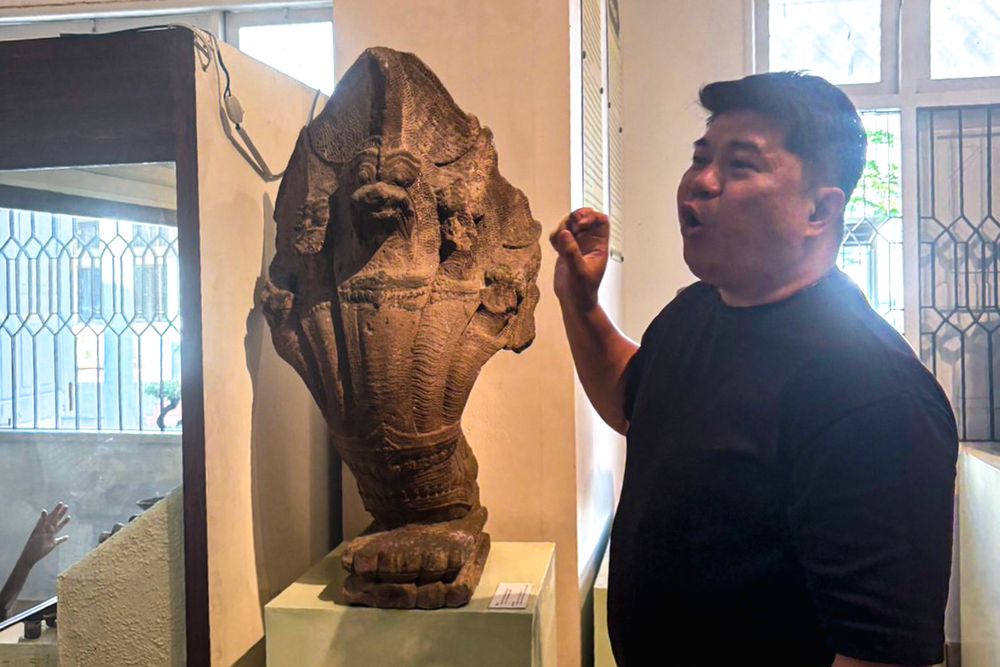
Angkor Wat Art: The Prototype is Phimai Art
Another important artifact is a genuine Naga head obtained from Phanom Rung Historical Park.
Most Naga heads are kept at the Phimai National Museum, some at the Phanom Rung Historical Park, and another portion at the Maha Viravong National Museum. You will see that the pattern is characteristic of Angkor Wat-style Nagas, with connected hoods, created around the 17th Buddhist century.
"Actually, many scholars, including myself, propose that it shouldn't be called Angkor Wat style anymore. It should be called Phimai style because it has certain unique identities. It is Khmer influence from Thailand sent back to Angkor Wat, and then Angkor Wat sent it back to us. It was a reciprocal exchange because at that time there were no borders."
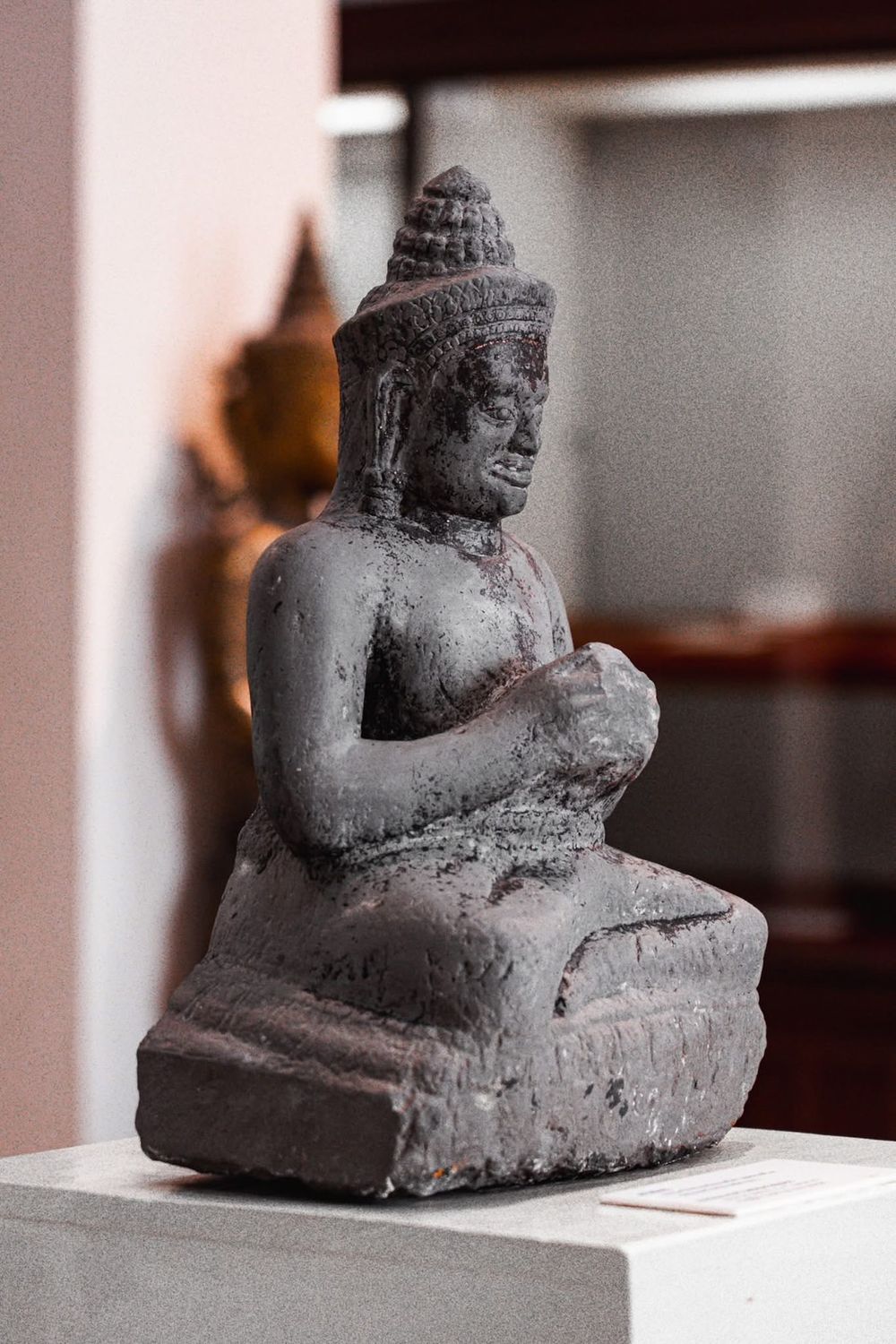
Another interesting piece is the "Buddha image in Angkor Wat to Bayon style," circa the 18th Buddhist century. Since King Jayavarman VII practiced Mahayana Buddhism, he ordered Buddha statues to be sculpted with features resembling himself because he desired to become a Buddha.
"Many people ask why we must respect King Jayavarman VII when he was a Khmer King. But actually, King Jayavarman VII had a mother who was from Phimai, and the Mahidharapura dynasty was a dynasty centered in Phimai. Thus, it is clear why King Jayavarman VII built the road called the Royal Route (Ratchamakkha) ending at the city of Phimai: because he wanted to build this road to reach the city of his mother, or the city of his ancestors."
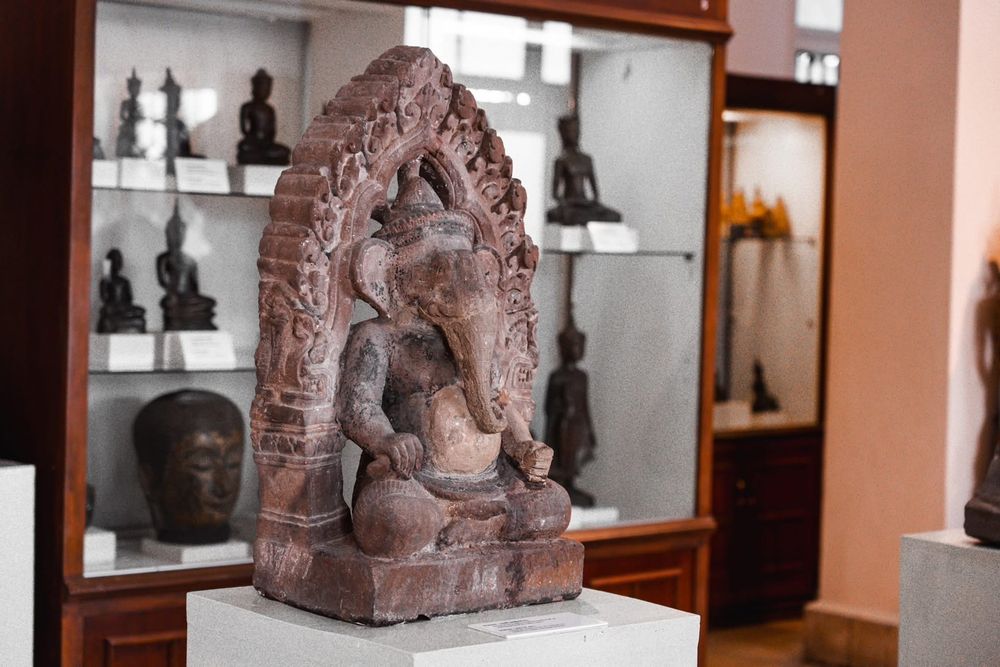
Ganesha: Important Evidence Confirming a Khmer Castle Once Stood in Central Korat
Another important piece that leads to the belief that a Khmer castle once stood in the center of Korat city is the Ganesha idol found piled next to the Phra Narai Shrine in the middle of Nakhon Ratchasima.
Ajarn Phitakchai recounted the story while the tour group stood staring intently at the Ganesha statue: from old photographs in the reign of King Rama V, one can see piles of idols around the Phra Narai Shrine area. There were lintels which are building parts, fallen decorative tops of the castle, one Phra Narai (Vishnu) idol, and two Ganesha idols. Currently, one is at the Phra Narai Shrine, and the other is at the Maha Viravong National Museum.
"This photograph made me suspicious. I used to lecture amidst loud buzzing noises because I said that a Khmer castle once stood in the middle of Nakhon Ratchasima. I've been saying this since 2013 and no one believed it. 10 years later, it is now believed that a Khmer castle indeed stood in the middle of Nakhon Ratchasima. It is hypothesized that there might have been three Khmer castles located in the same area. One likely housed a Shiva Lingam but is lost. One likely housed an idol of Vishnu or Phra Narai. Another likely housed a Ganesha idol, as Ganesha can be enshrined in multiple numbers."
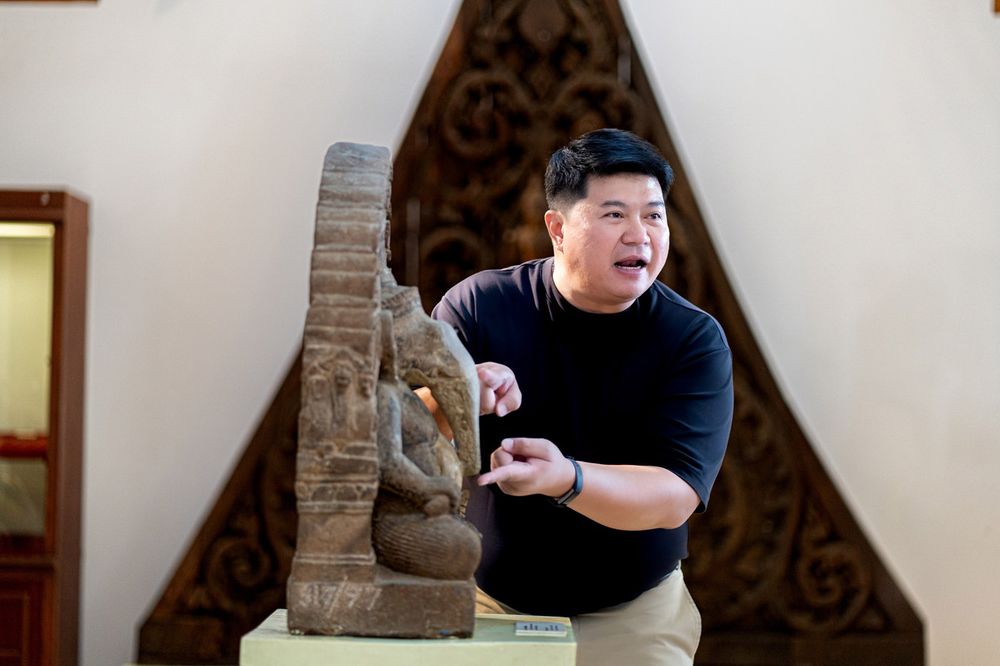
But the important question that makes later generations frown is: Then where did those castles go?!
"They likely disappeared during the time King Narai the Great ascended the throne. He ordered the dismantling of all castles to build the city gates of Nakhon Ratchasima. However, they didn't dare use all the parts for the city walls, so they were piled up on the side, in the area of the original castle, and a ubosot (chapel) was built over it. At one point, water was pumped out of the chapel, revealing a fair amount of laterite lying inside. This is proof that a castle once stood there, dating around the 15th Buddhist century. The dating is based on the various idols which have Koh Ker style art, and lintels which are also Koh Ker style, placing them in the 15th Buddhist century. Therefore, this Ganesha statue helps unravel the history of Nakhon Ratchasima city considerably."
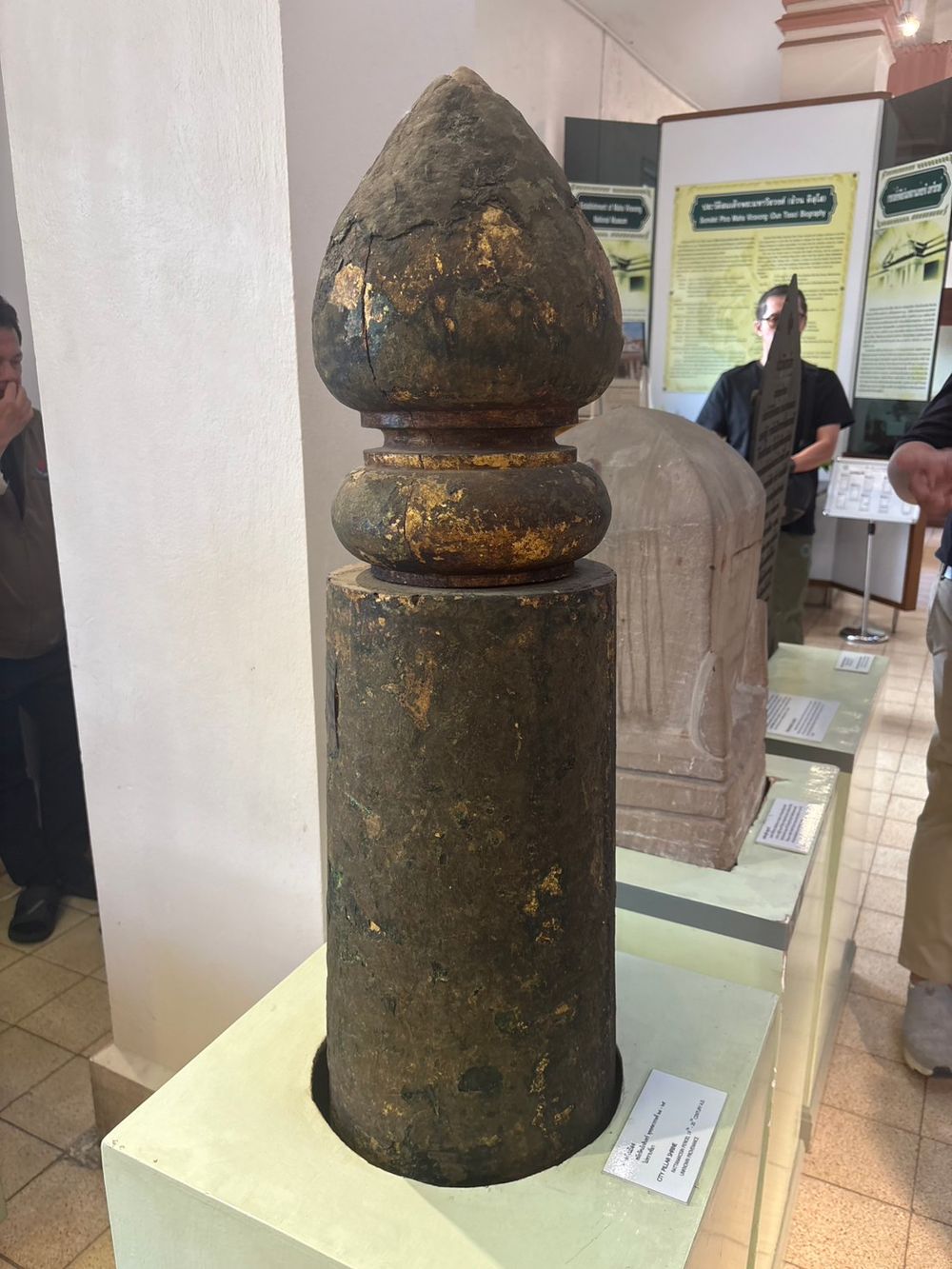
The Old City Pillar: Dismantled by Chao Anouvong's Army
The City Pillar standing prominently in this museum does not specify its origin, but scholars hypothesize that it is the original City Pillar of Nakhon Ratchasima. However, it was pulled out when Chao Anouvong marched his army to attack during the Siamese-Laotian War (Vientiane) around the year 1826, or 200 years ago.
When Chao Anouvong's army reached Korat, the army destroyed the city walls on the east and south sides, destroying everything. Anything standing was dismantled. And the crucial thing to strip the city of its auspiciousness was pulling out the City Pillar and dumping it beside the City Pillar Shrine.
Until King Rama V visited Nakhon Ratchasima on December 21-25, 1900, he graciously ordered it to be raised and consecrated to bring auspiciousness to the city.
The City Pillar thus returned to its original place until the reign of King Rama IX, who came to anoint a new City Pillar. From then on, the original City Pillar was brought to be kept at this museum.
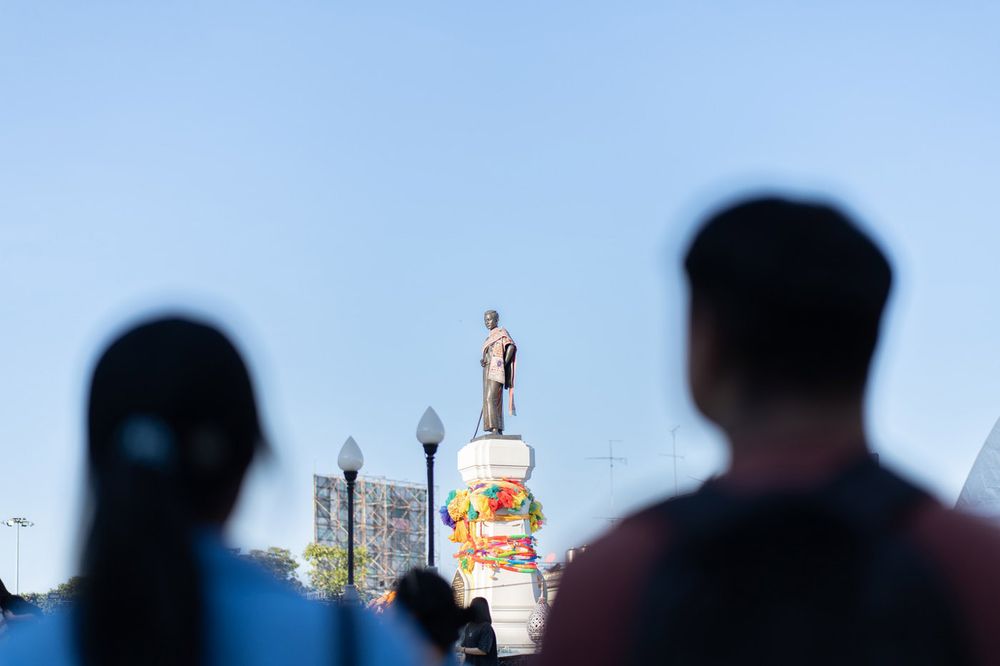
Ya Mo is Real and the Origin of the Thao Suranari Monument
The story of Ya Mo, or Thao Suranari, whom Korat people respect and have faith in, occurred during the Siamese-Laotian War (Vientiane) in the reign of King Rama III. Chao Anouvong marched his army to attack Korat and herded the people of Nakhon Ratchasima to Vientiane. It was during this time that the heroic deed of Ya Mo occurred, rising up to fight against Chao Anouvong at Thung Samrit.
"The event at Thung Samrit actually saw Ya Mo playing a significant role in delaying time to wait for the Siamese army and the Nakhon Ratchasima army to help in time. Asking if this story is true—in the official dispatch to King Rama III, this event is mentioned, stating that women, old people, and monks rose up to fight Chao Anouvong. As for the story of Thao Suranari, it appears in the Royal Chronicles of the Third Reign. However, it is notable that this story might have been added after the regime change of 1932 and the Boworadet Rebellion, which affected the creation of the Thao Suranari Monument to be the first monument of a commoner to be praised and have a monument. So, asking if Ya Mo existed, I confirm that Ya Mo really existed because palm leaf documents at the Nakhon Ratchasima Library state that Khun Ying Mo, the wife of the Governor of Nakhon Ratchasima, created scriptures as an offering to Buddhism. So Ya Mo existed, but regarding the name 'Thao Suranari,' we still need to find more evidence because this version of the Royal Chronicles of the Third Reign has additions and edits."
However, from the story of Ya Mo, we see a woman who had no power but dared to rise up and fight for her homeland. After the regime change of 1932, Ya Mo became the first commoner in history to have a monument built.
Currently, those who respect and have faith in Ya Mo go to pay respects to Ya Mo's ashes at Wat Salaloi. But actually, very few people know that Ya Mo's ashes were divided into 3 parts: one part is in the base of the Thao Suranari Monument, another part is at the stupa of Wat Salaloi, and another part is at the new ubosot of Wat Phra Narai.
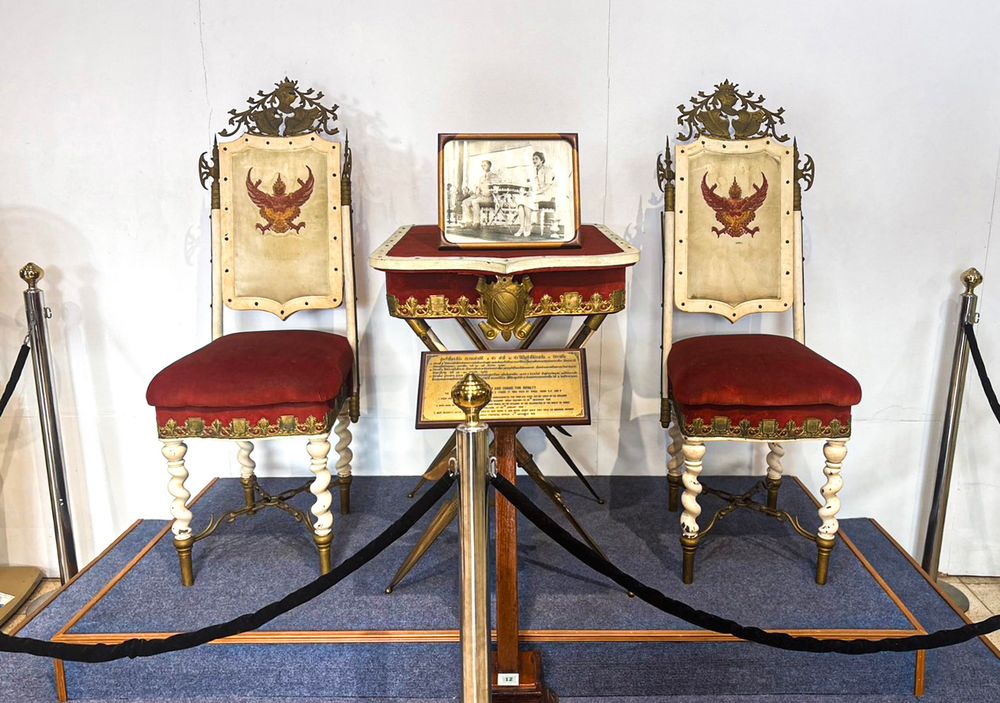
The Royal Seat and King Rama IX's Royal Address to the People of Nakhon Ratchasima
An important piece that is like the beginning of the current Nakhon Ratchasima province is the Royal Seat for the Monarch.
"Normally, when the King and Queen visit anywhere, the Royal Seat from the Grand Palace is invited to be placed there, except in Nakhon Ratchasima. This is because Nakhon Ratchasima has its own set of Royal Seats for the city. It is Western-style in shape, created by a royal prince. This set of Royal Seats is considered the Royal Seat of 3 Reigns: King Rama V when he came to open the railway line (at that time King Rama VI, then the Crown Prince, also came to stay), and when King Rama IX ascended the throne and visited the citizens by train."
King Rama IX visited Isan as the first region by train. When reaching Nakhon Ratchasima province, the King and Queen sat on this pair of Royal Seats, then stood up and gave a short royal address to the people of Nakhon Ratchasima:
"I wish the people and the province of Nakhon Ratchasima prosperity."
You will see that although it is a small museum, this place is full of valuable artifacts for the people of Nakhon Ratchasima and future generations to learn and study, creating pride in their city. Because learning to understand and accept the past is extremely important in walking forward into the future.
© 2025 Khaoyai Connect. All rights reserved.
No part of this content may be copied, modified, or distributed in any form without prior written permission.
