

The Power of a 21-Day Camp
Catching "Out-of-System" Youth Before They Fall Through the Cracks
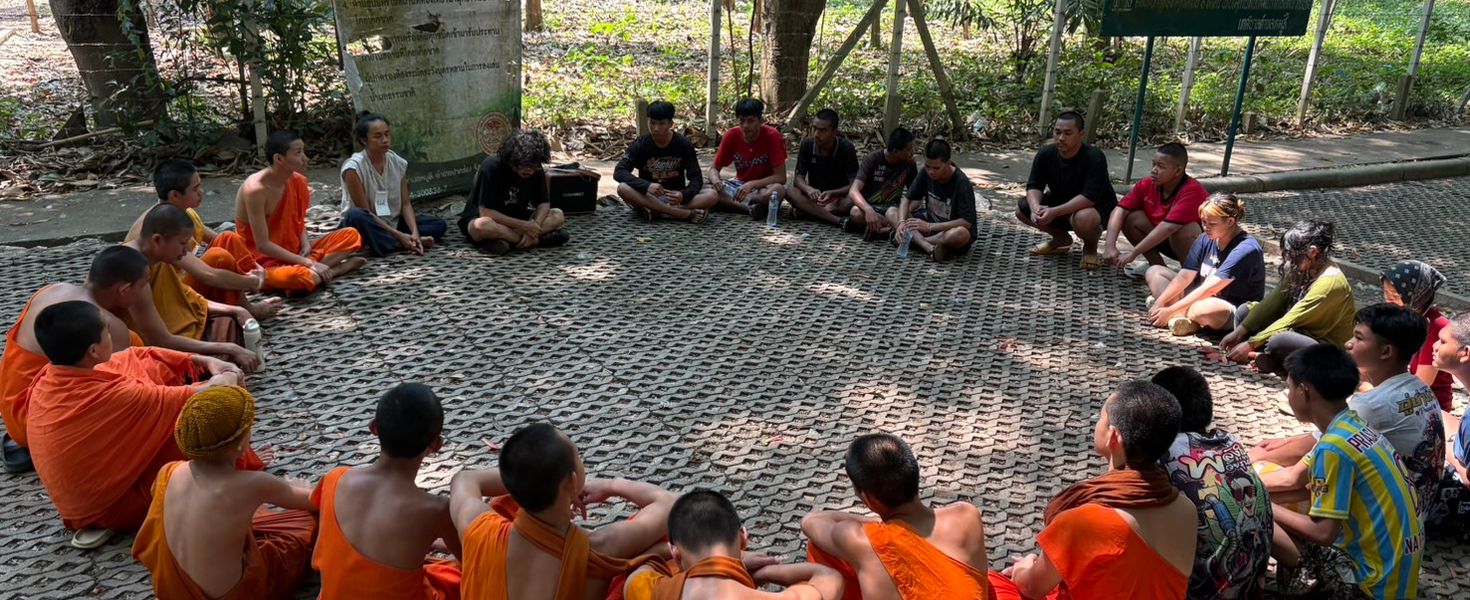
On a late morning at the Ban Tha Chang Natural Spring (or Nam Phut Pak Chong), a group of about 20 children sat in a circle, eyes closed in a moment of stillness. They were preparing to begin a dialogue about their lives—from the moment they woke up until that very second. This scene captured the attention of many tourists visiting that day.
Perhaps it was because the group looked strikingly diverse. It was a mix of boys, girls, and novice monks, all sitting together.
Unless told, no one would have guessed that these were participants of "Camp Dek Nok" (Out-of-System Kids Camp)—youth who have dropped out of the formal education system in one way or another.
If children who have fallen out of the education system are likened to planets that have drifted out of the sun's orbit, their remaining lives are like small planets floating aimlessly in the vast expanse of space. With an unpredictable destination, many face a grim fate, while some may be lucky enough to steer back onto the right path in time.
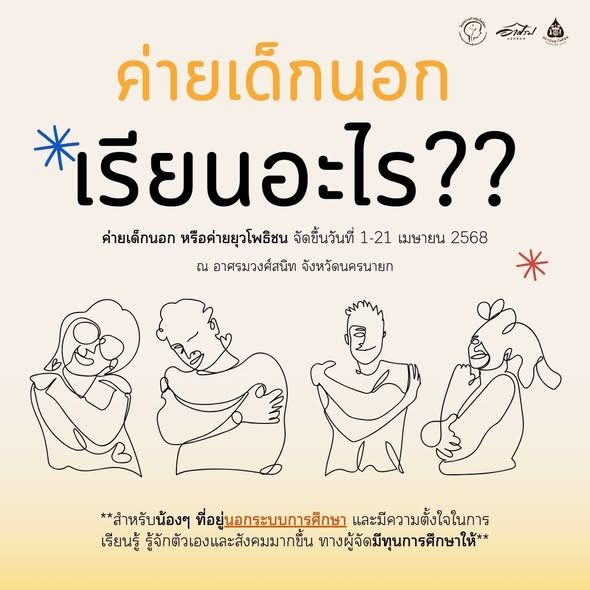
This realization led to the creation of "Camp Dek Nok," a project by Wongsanit Ashram and the Yuvabodhi Institute under the Sathirakoses-Nagapradipa Foundation. Running for over a decade, the program aims to help out-of-system youth reconnect with themselves, society, and the environment. It encourages them to see opportunities for self-development and break free from feelings of worthlessness.
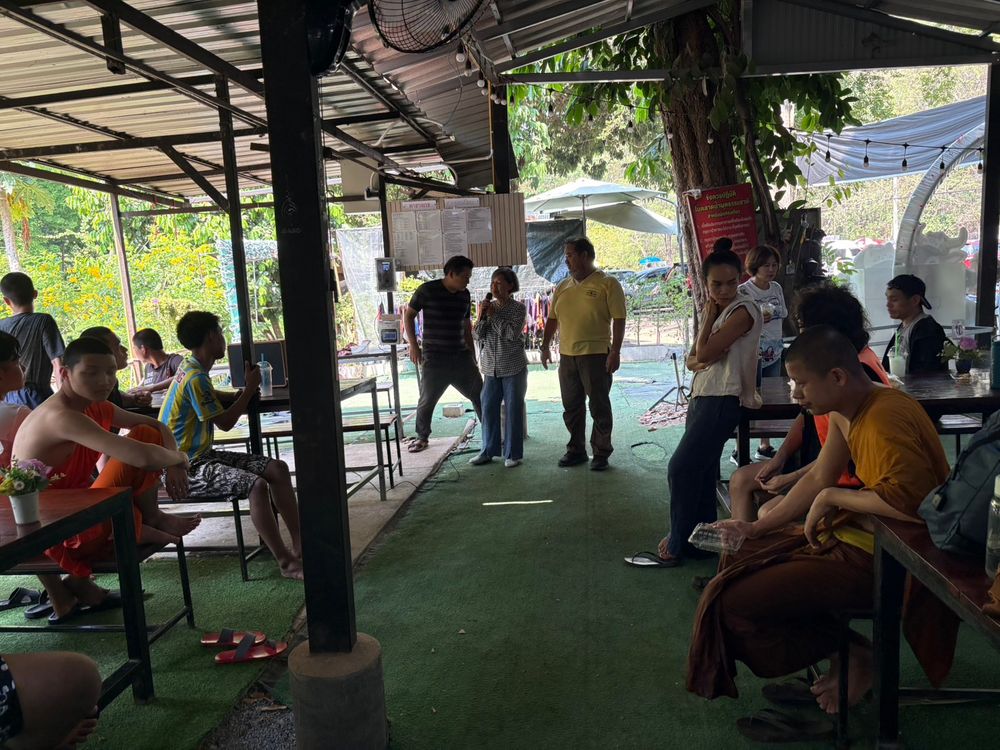
"The Yuvabodhi Institute has been running this project since 2005. Initially, we focused on general youth leaders, but over the last 10 years, we expanded to work with out-of-system youth—those outside the formal school system or on the fringes of society. The learning process is experiential; we extract knowledge from direct action. This camp builds their self-confidence, giving them the energy and will to improve themselves after feeling like they had no value," said Waraporn Luangmanee, Director of Wongsanit Ashram and the Yuvabodhi Institute. She spoke to Khaoyai Connect during the camp's 7-day mobile session in Khao Yai, Pak Chong, which is part of the full 21-day program.
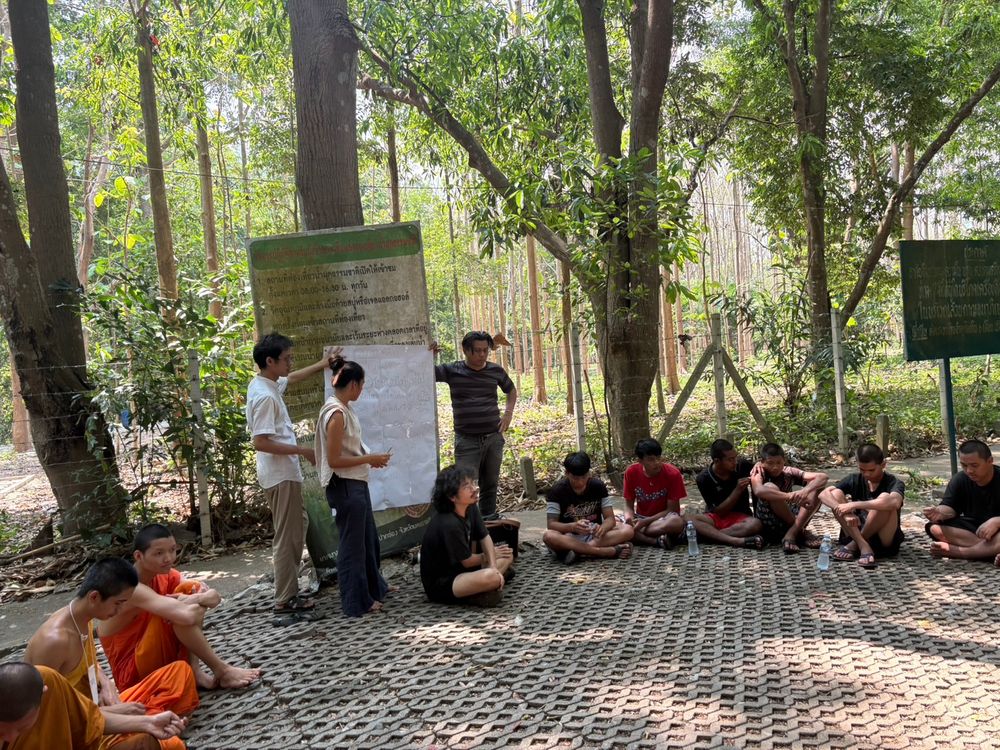
Each year, the project welcomes a diverse range of out-of-system youth. This year, the 20+ participants fell into three main groups: Shan (Tai Yai) youth who fled conflict in Myanmar to Thailand and ordained as novices to seek a better life; youth awaiting trial at the Surin Juvenile and Family Court; and general students who wish to experience learning outside the classroom. All of them live together for 21 full days.
Waraporn explained that the 21-day duration is necessary for the children to truly get to know themselves and build deep relationships with others. During this time, they are together constantly—with peers and mentors—and are brought into contact with nature, an opportunity modern youth rarely have.
"In 21 days, if conflicts arise, we can resolve them right there. If the duration were shorter, they might not face these issues because it would just be a 'honeymoon phase' rather than real learning."
From years of working with out-of-system youth, one thing is clear: if these children can navigate their period of "trial and error" and find their way back to a stable path, they develop immense resilience.
"The more we do this, the more we see the potential in these kids. When they find their way back, they have such power. We see that it is truly worth working with them."
Another fascinating aspect of the camp is the diversity of the children, which fosters mutual learning.
Waraporn shared that in some activities, general students may lack the courage to act, but the out-of-system kids step up, inspiring their peers. Conversely, in areas where out-of-system youth might struggle—such as structured thinking or discipline—the general students help pull them along. This exchange allows everyone to feel a sense of self-worth.
While there are no hard statistics to measure success, the results are compelling. Typically, many youth who enter juvenile detention for the first time end up there again. However, last year, out of 10 youth sent to the camp by the court, only one returned to the detention center. The rest stayed out.
"But life has its ups and downs, just like ours. We believe that being in a space like this gives them a memory. When they want to return to a good path and have the tools to do so, they will be able to find their way back."
The "Dek Nok" project is held only once a year due to limited funding and the difficulty of the work. Changing someone's mindset must come from their own inspiration.
"Our challenge is that we try not to use authority with the children. We focus on participatory decision-making. It’s a learning process for us too, as each group of kids is different. Some old methods don't work anymore. We have to keep an open mind and keep learning along with them."
In addition to the youth from the justice system, this group included Shan (Tai Yai) children who left the education system after fleeing across the border to Thailand. They are currently ordained as novice monks to study the Dhamma, hoping it will lead to other opportunities in life.
Ms. Sukpranee Kanthachai, coordinator for the child protection project of the International Network of Engaged Buddhists (INEB), who brought the novices to the camp, explained that INEB works on child protection, starting with children in temples and those on the margins or borders—mostly Shan and Burmese children. Their work focuses on fundamental rights: survival, education, and participation. Currently, these boys are monastics to secure a better life and education, but the organization believes they should also learn about the world should they ever choose to return to lay life.
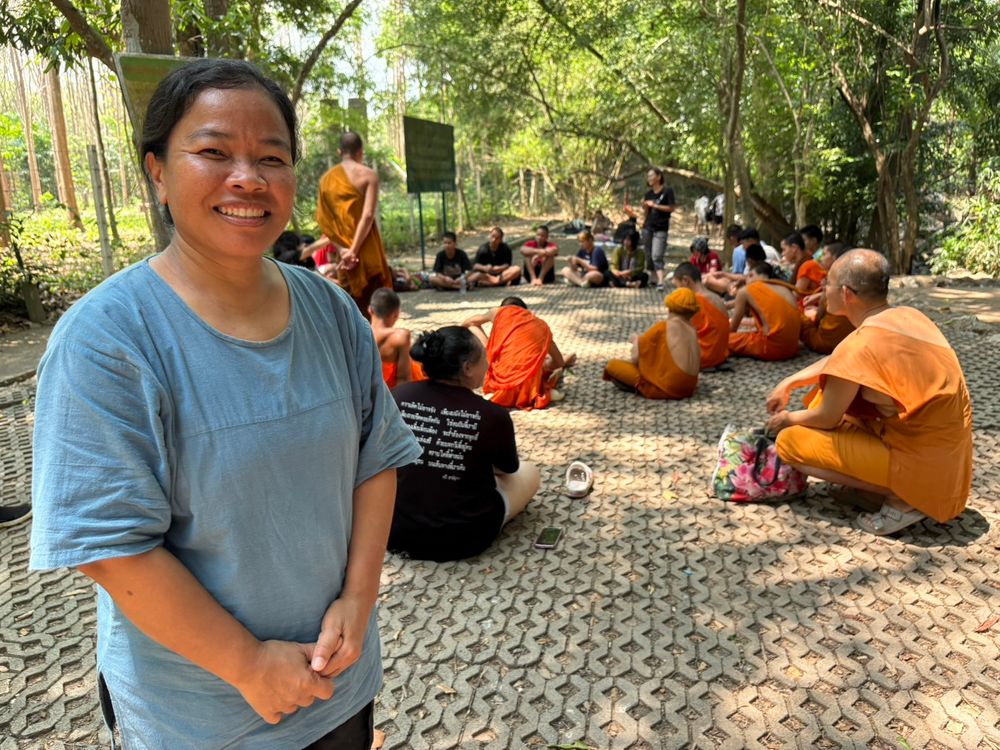
"These children come from Shan State. Given the current political situation, boys are often forced into military conscription, which endangers their lives. So, they flee to seek a future elsewhere. We see that many children who drop out of the system end up wandering aimlessly, unable to find themselves, and facing tragic fates. This camp provides an opportunity for those who have fallen out."
Sukpranee noted that "Camp Dek Nok" is, as the name suggests, about learning outside the classroom. It provides a space for learning and allows children from different backgrounds to understand one another's lives. Activities are designed to enhance potential and help them understand their own emotions, which is crucial.
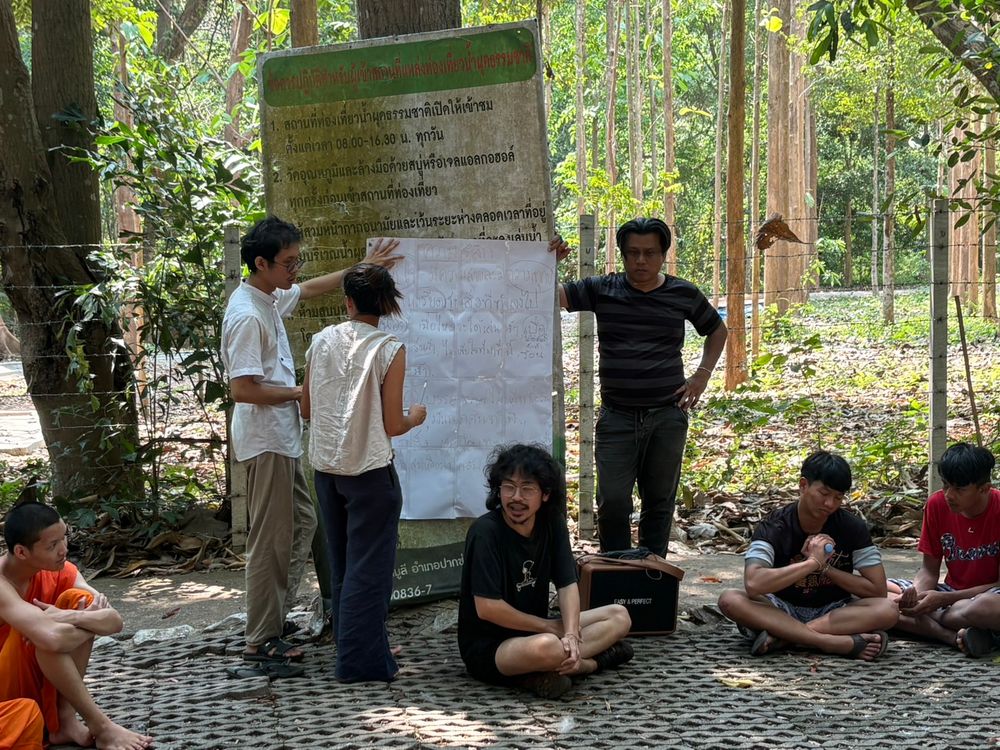
The activities include playing, listening to music, watching movies, or creating art—processes that encourage "thinking through doing." Each day concludes with a circle talk to summarize the day's lessons.
"We have an activity where they look inward at themselves and the families they left behind. We let them talk about what they carry with them, reflecting on their lives so they gain the courage to express themselves. Once they see their own value, they stop withdrawing and start engaging with friends and others. We’ve seen this change. For those who have been in Thailand for only a year or two, these activities force them to use more Thai, leading to rapid language development when they have a platform to speak."
The camp, therefore, serves as a space for children to discover their identity, understand their feelings, and find their potential and desires.
"We only create the space; how far they jump is ultimately up to them. We want them to have a good life. Even if they come from elsewhere, they have the right to grow anywhere in this world."
Sukpranee mentioned that after the activities in Pak Chong, they would travel to Bangkok. There, the children would speak with homeless youth and sex workers to see the realities faced by those who have fallen through the cracks of the system. These stories may help them see their own lives more clearly and decide what they want for their futures.
...Amidst the noisy chatter of tourists playing in the spring, the "Camp Dek Nok" circle continued their discussion. They debated with the camp mentors about various events, specifically a kayaking incident from the morning where some got carried away, broke the rules, and resulted in the whole group being reprimanded by officials.
This was not the first conflict within the group. Friction caused by their differences can arise at any moment. However, at the end of every day, everyone must gather to summarize the lessons and find a resolution together.
Facing conflict head-on like this can be a "bitter pill" to swallow. Yet, it is a necessary process they must learn. In the vast world ahead, there will be far greater challenges waiting for them to face.
© 2025 Khaoyai Connect. All rights reserved.
No part of this content may be copied, modified, or distributed in any form without prior written permission.
