


Admiring Art and Savoring Zesty Flavors at Pen Lao, Rama 7
Tasting Art Outside the Gallery by National Artist Saravudth Duangjumpa
Sharing the same belief that if our everyday lives are surrounded by good art, it will creatively drive our society forward more than ever before.
This became the starting point for two people from different circles to cross paths: Khun Tae Tae - Panchana Vatanasathien, the founder of Penlaos restaurant, and Ajarn Meow - Saravudth Duangjumpa, a National Artist. They both agree that art should exist in other spaces of life, not just displayed in museums or galleries.
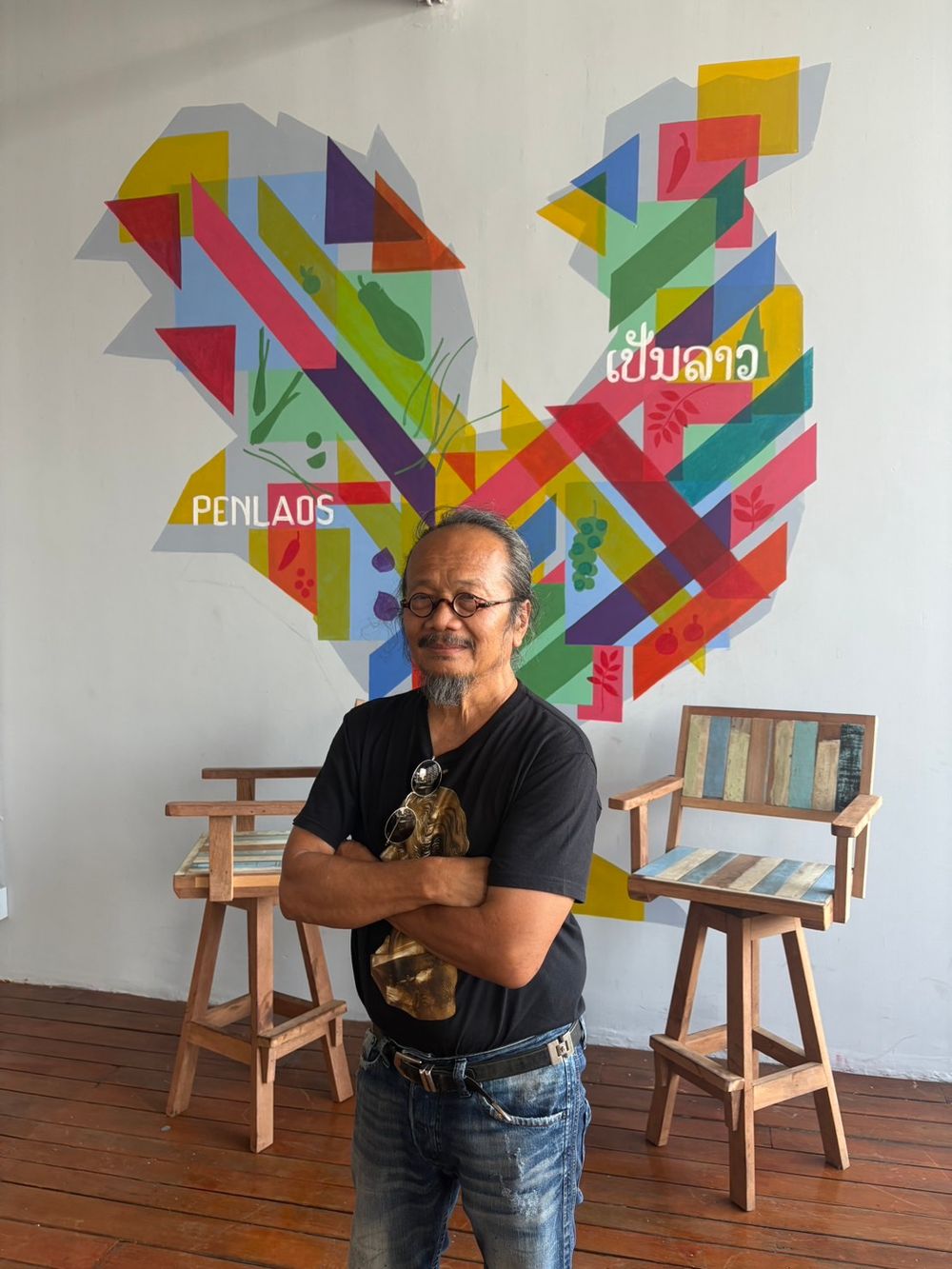
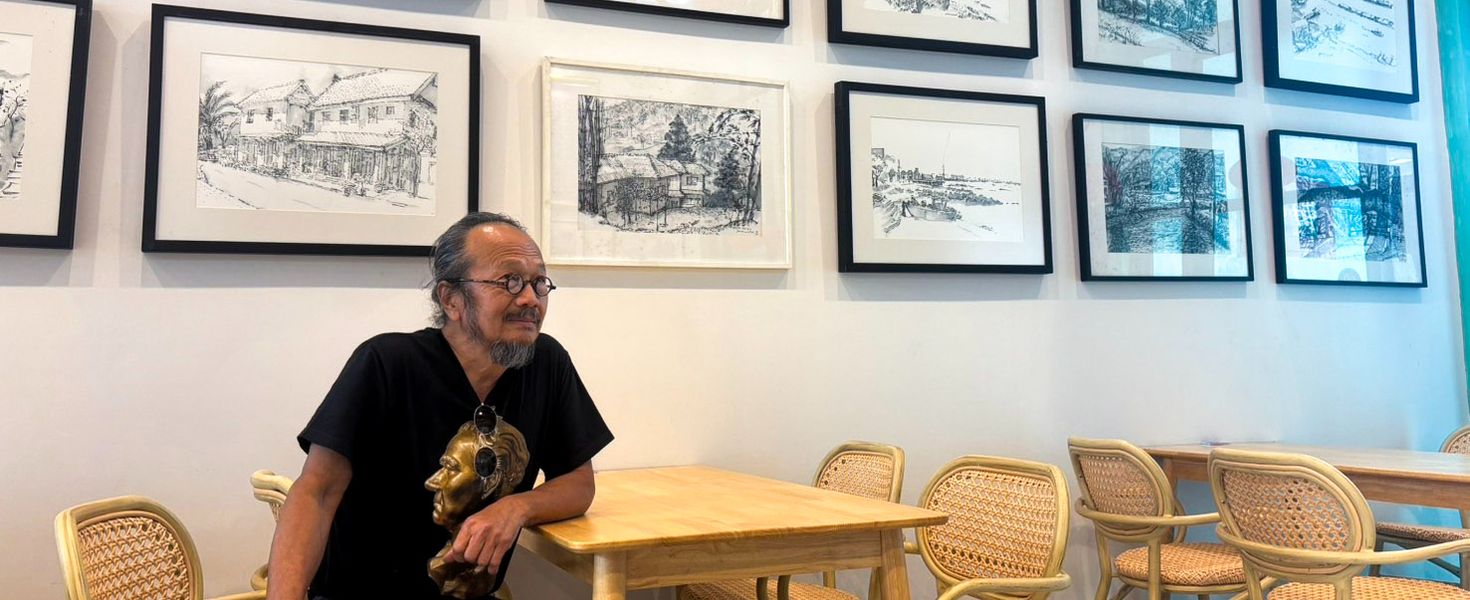
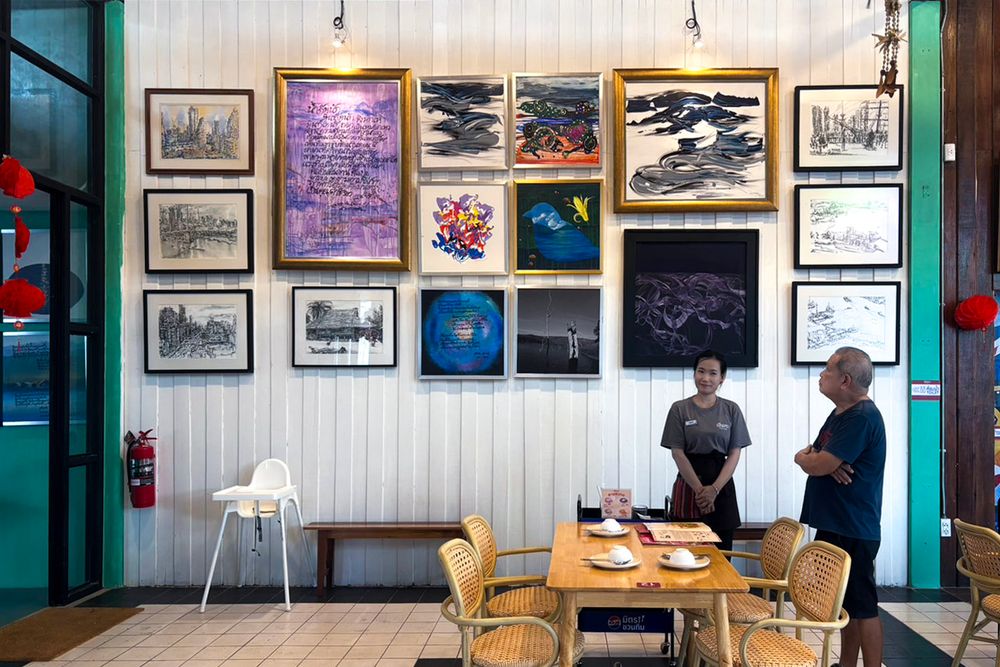
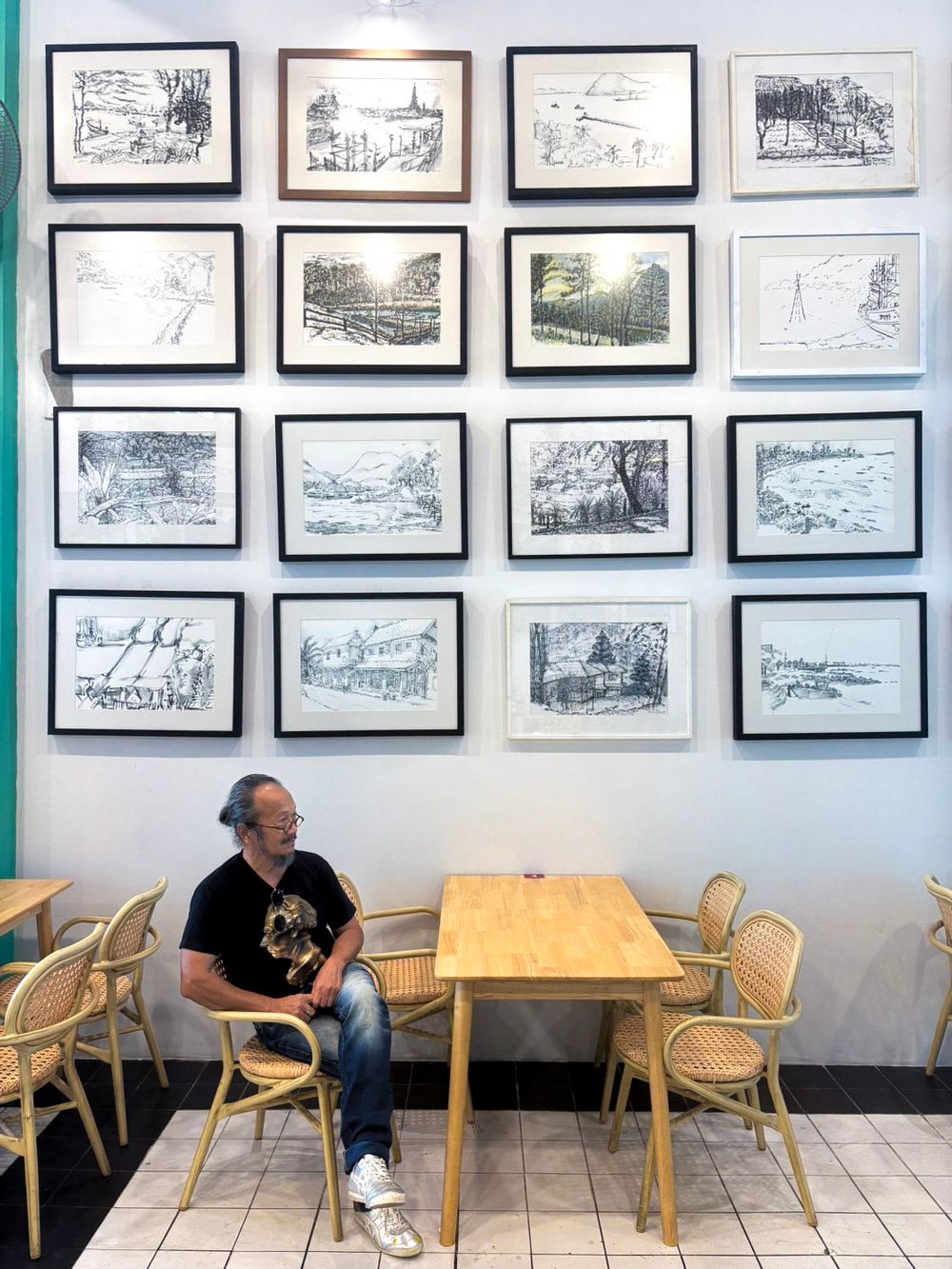
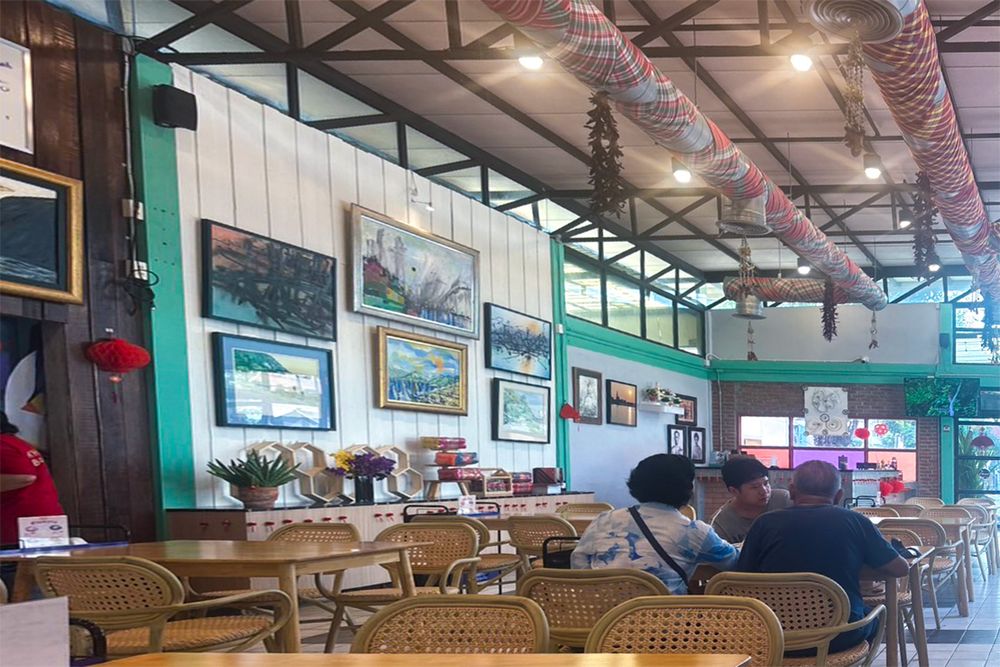
Whether it's because of the familiarity between the two who have worked together since Khun Panchana was working at the Amata Foundation, which often has projects supporting artists, or because they both hail from Korat, it remains unknown. However, it has transformed Penlaos, Rama 7 branch, into a miniature art exhibition space today. Masterpiece paintings adorn both sides of the walls, allowing diners to immerse themselves in fine art while enjoying their meals.
"Sometimes, works are kept in a room for years. Exhibitions in art galleries are just that; people come to see them and then leave. But if they are in public spaces, they become beneficial to society. People get to see and learn. And it just so happens that this place has huge walls, making it a great space for people to see and learn. Or if anyone is interested, they can buy them," Khaoyai Connect had the opportunity to converse with Ajarn Meow - Saravudth Duangjumpa one afternoon, a few days before the restaurant's official opening.
Ajarn Meow - Saravudth Duangjumpa, widely known and remembered by the public as the 2017 National Artist in Visual Arts (Sculpture), has created numerous sculptures both domestically and internationally. Yet, few know what this 74-year-old artist has been through on his artistic journey.
From a Korat Boy to the College of Fine Arts, Before Entering Silpakorn
It was good timing that afternoon as Ajarn Meow had no urgent errands, allowing us to sit down for an unhurried chat about his past life and the beginning of his art journey since his days as a student at Ratchasima Wittayalai School.
"My interest in art started at Ratchasima Wittayalai School, where teachers from Poh Chang and Silpakorn came to teach during art classes. Plus, I had an aunt who knew Ajarn Uab Sanasen at the College of Fine Arts. So, I took the entrance exam and passed. It was 1968 when I came to study at the College of Fine Arts. There, I learned both fundamental art and teaching subjects, essentially an elementary teaching certificate. After three years of study, I took the university entrance exam for Silpakorn."
With talent combined with diligence, the boy from Korat, the gateway to Isan, finally enrolled in the Faculty of Painting, Sculpture and Graphic Arts at Silpakorn University as he wished. Being in the 28th batch, he spent a full 6 years studying there. It was considered the golden period of his life, nurturing his artistry to bloom and grow.
"During my first to third year, we had to choose two subjects for a major and a minor. I chose sculpture and printmaking because sculpture didn't require much investment (smiles). But honestly, I liked all of them."
Although he chose to study sculpture, his painting skills were second to none. During his third year at the College of Fine Arts, he joined a watercolor painting competition against Silpakorn freshmen, and it turned out that Ajarn Meow took home the first-place trophy.
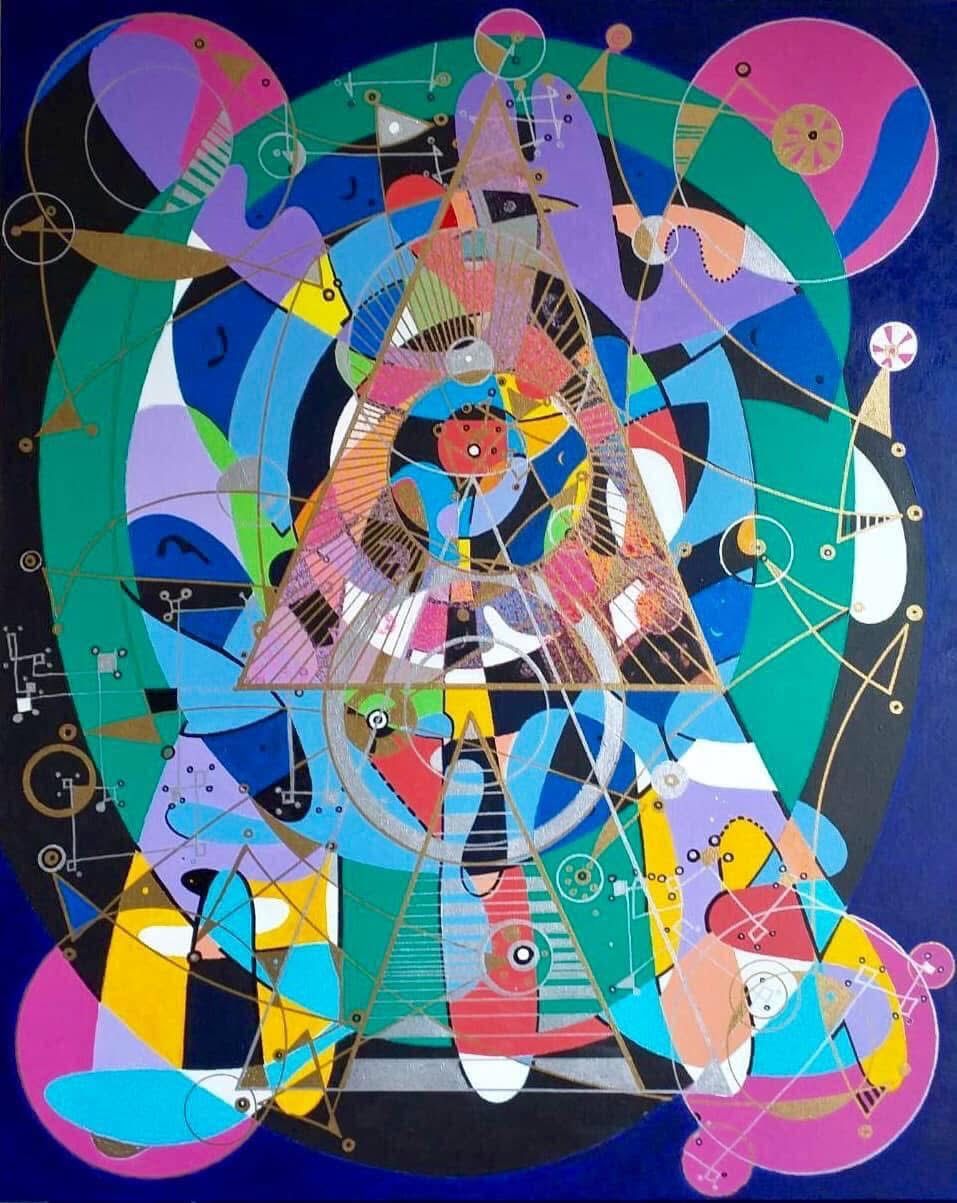
"Since my days at the College of Fine Arts, I have always loved painting with watercolors. It's easy, fast, and reflects my true self."
This individuality played a crucial role in his journey as an artist. And whether it was destiny dictating his future as an artist or not, it led the first-year student within the Veridian green walls at the time to quickly discover his artistic identity right from his very first year at the university.
"During my freshman initiation trip at Koh Samet, I was strolling along the beach, picking up rocks and shells. By chance, I found a piece of coral rolling around, and its shape resembled a human being—quite close, looking alive with rhythmic lines. So, I used it in my work, incorporating human structures into it. Adding a bit of a head, a chest, arms, and legs gave it a form. It was no longer a coral; it became mine. I used the structure of a living organism to control it, turning it into my own new form. I used that concept for my work from my very first year and always got good grades."
Until his works started becoming repetitive, along with his feeling that the pieces were too soft with too much movement. Ajarn Meow, a student back then, began experimenting by adding new ideas.
Ajarn Meow recounted that works mimicking nature too closely were too soft. So, he thought of introducing planes. From having volumes and curves, he brought in straight lines to slice them into planes. He then mixed in geometric Cubism to make the works more solid, adding more dimensions and making the creative process more fun.
"When doing my thesis, I worked in a semi-abstract style. I used triangular structures but blended them with curves and planes. The geometric structure solidified my work. Instead of merely moving, it had direction, bringing it to life. The concept was 'Growth'."
Even today, the concept of "Growth" remains, eventually becoming his signature identity. Anyone who sees the work instantly recognizes it as a creation of Saravudth Duangjumpa.
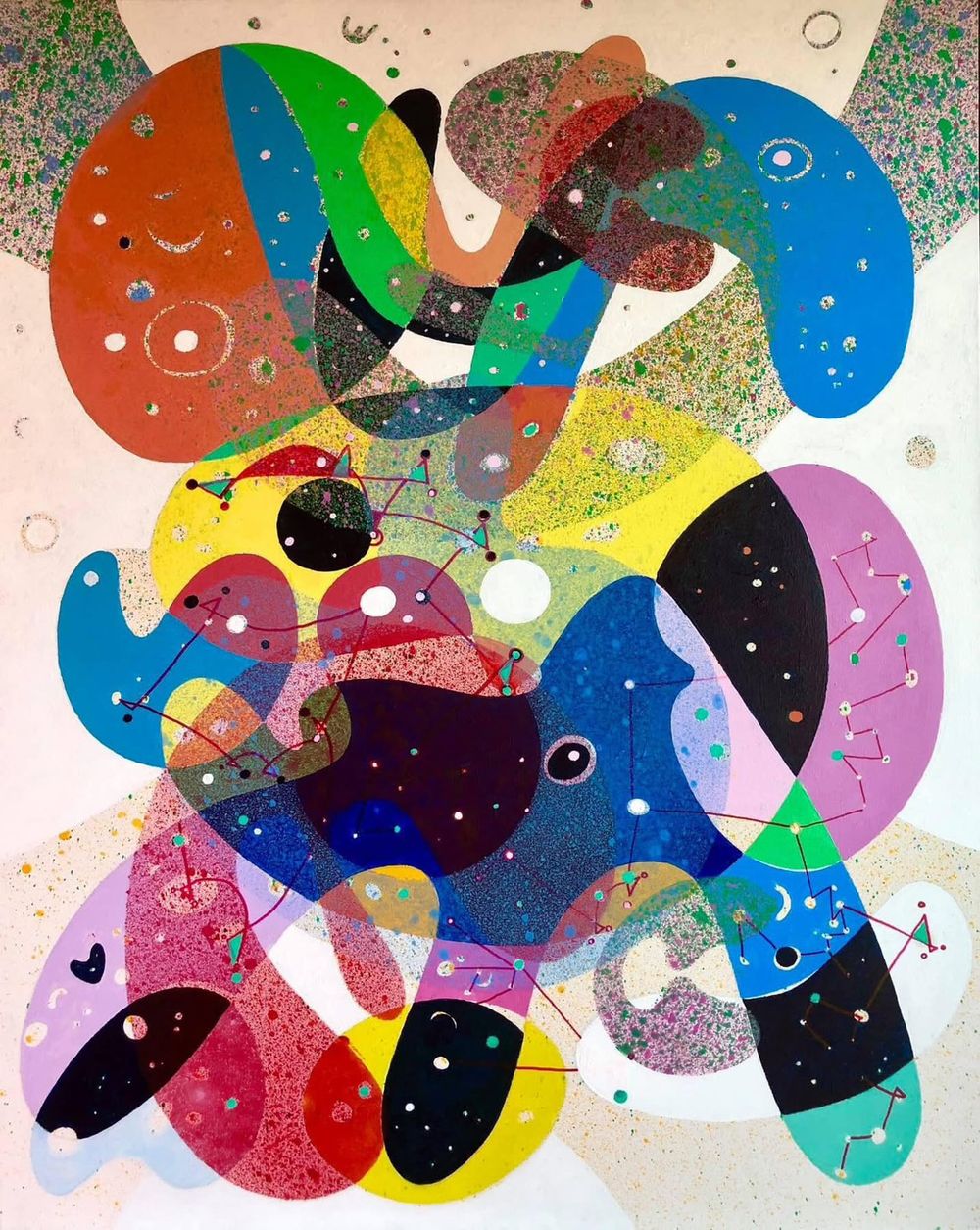
"There's a senior who recently became a National Artist, Ajarn Pong Sengking. When he sees my work, he points out that it's clearly Meow. I have my own form. He remembers the coral piece from when I was a freshman and he was a junior. He told me he remembers it."
A key turning point that made his work memorable with a clear concept was partly due to Ajarn Ruangsuk Arunvej, a sculptor who had just returned from America. He came back to the university introducing the word "concept" and integrated it completely into the art curriculum. He believed that good art should have an origin, a clearly stated idea, and an indication of what it leads to.
Another master who molded Saravudth Duangjumpa into the artist he is today is Ajarn Chalood Nimsamer. At that time, he taught composition, and left one sentence that his student still remembers by heart today.
"I remember vividly that the very first thing he taught was, 'Here, we teach you to be an artist. To be an artist, you must have an identity.'"
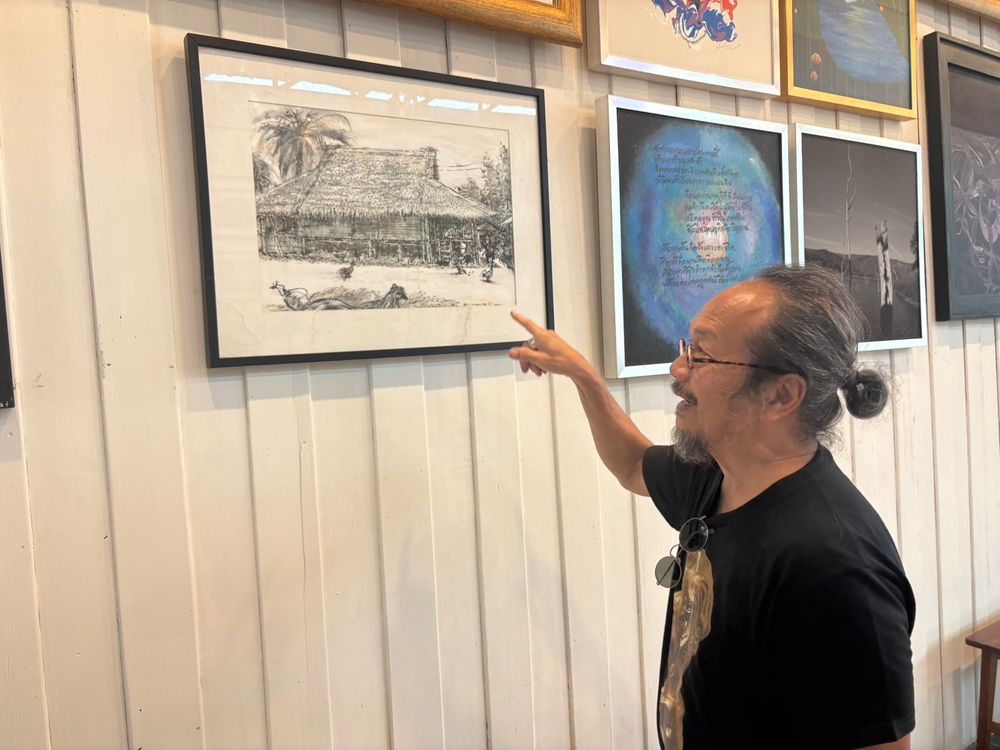
With such inspiring words from Ajarn Chalood, every student who heard them at that moment collectively aspired to become an artist.
"So how does one become an artist? You have to work hard, be determined, have creativity, possess your own identity, take responsibility, be dedicated, and be sincere. Meaning, do what feels real to you; you must truly feel it. You might pick up influences from others along the way, but you have to find your own self."
There is a little anecdote about Ajarn Chalood: he was a very serious person, making him one of the teachers students feared and respected.
"Everyone was very afraid of Ajarn Chalood. Sometimes we were just hanging around, but the moment he walked by, we would rush back to work. Sometimes we went to eat at Tha Chang, then came back to shower by the side of the building—both seniors and juniors. It was good in a way because we didn't go anywhere else; we worked day and night, producing results. If we were a bit diligent, we got a lot done, sometimes even more than what the teachers assigned. What was great was the brotherhood; seniors guided juniors, and the seniority system was strong, with juniors respecting seniors. The work at the university progressed quite well because we had seniors looking after juniors."
Thus, it can be wholeheartedly said that the university is the place that most shaped the identity of National Artist Saravudth Duangjumpa.
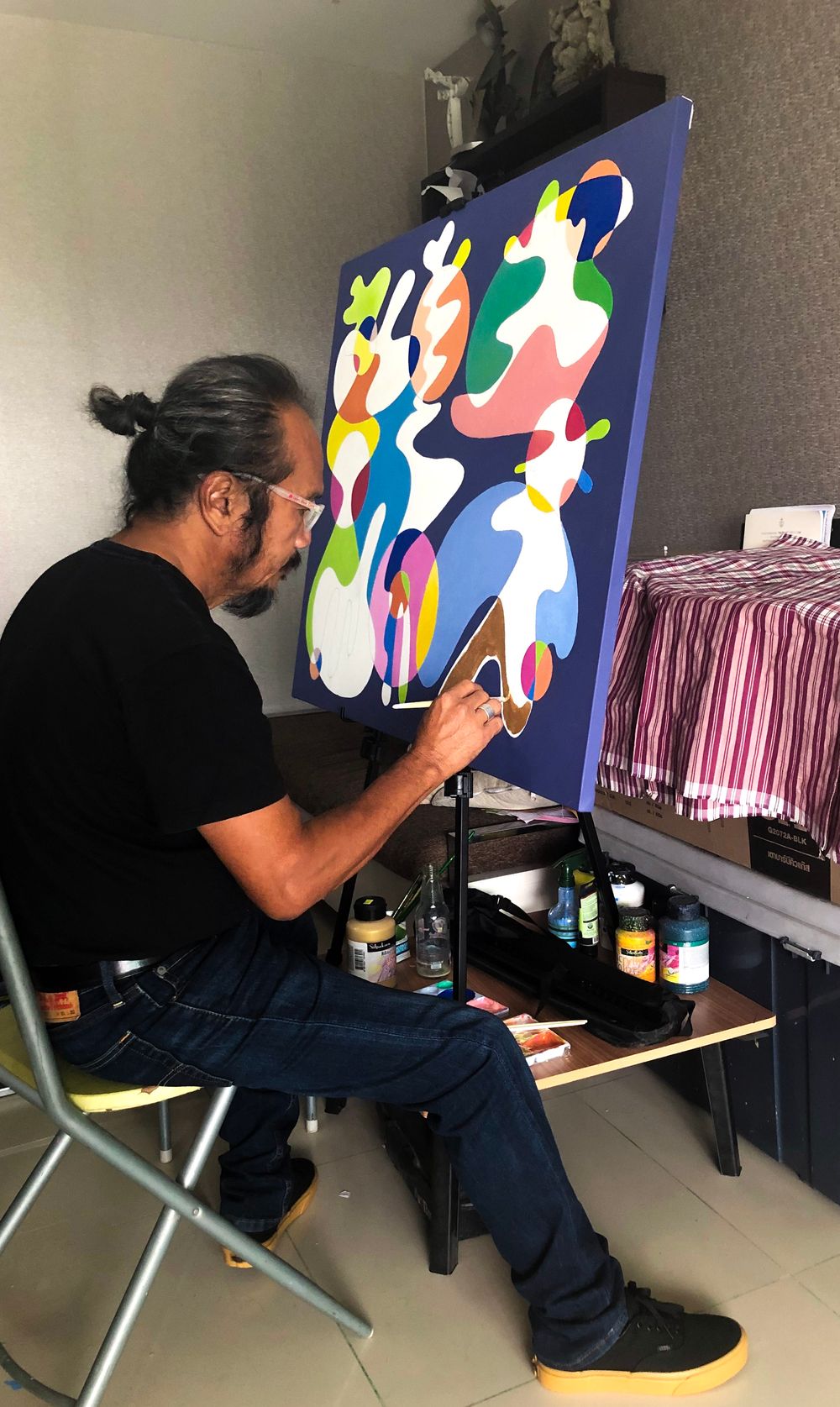
Studying art during that time was an era of learning from many highly skilled masters. However, due to internal conflicts, over ten teachers marched out to the Faculty of Decorative Arts. These included Ajarn Vira Jothaprasert, Ajarn Prayat Pongdam, Ajarn Son Srimatrang, and Ajarn Chamruang Vichienkhet, among others. The Faculty of Painting was left with only Ajarn Chalood. Later, Ajarn Prayat Pongdam returned. Following that, fifth-year seniors began taking up teaching roles, such as Ajarn Preecha Thaothong, Ajarn Vichai Sitthiratn, Ajarn Nonthivathn Chandhanaphalin, Ajarn Roong Terapichit, and Ajarn Kanya Charoensupkul.
"When I studied with Ajarn Vira Jothaprasert, I later found out from Ajarn Suchat Thaothong that during my freshman year, Ajarn Vira gave my watercolor painting a full 100 points, something no one in the faculty had ever achieved before."
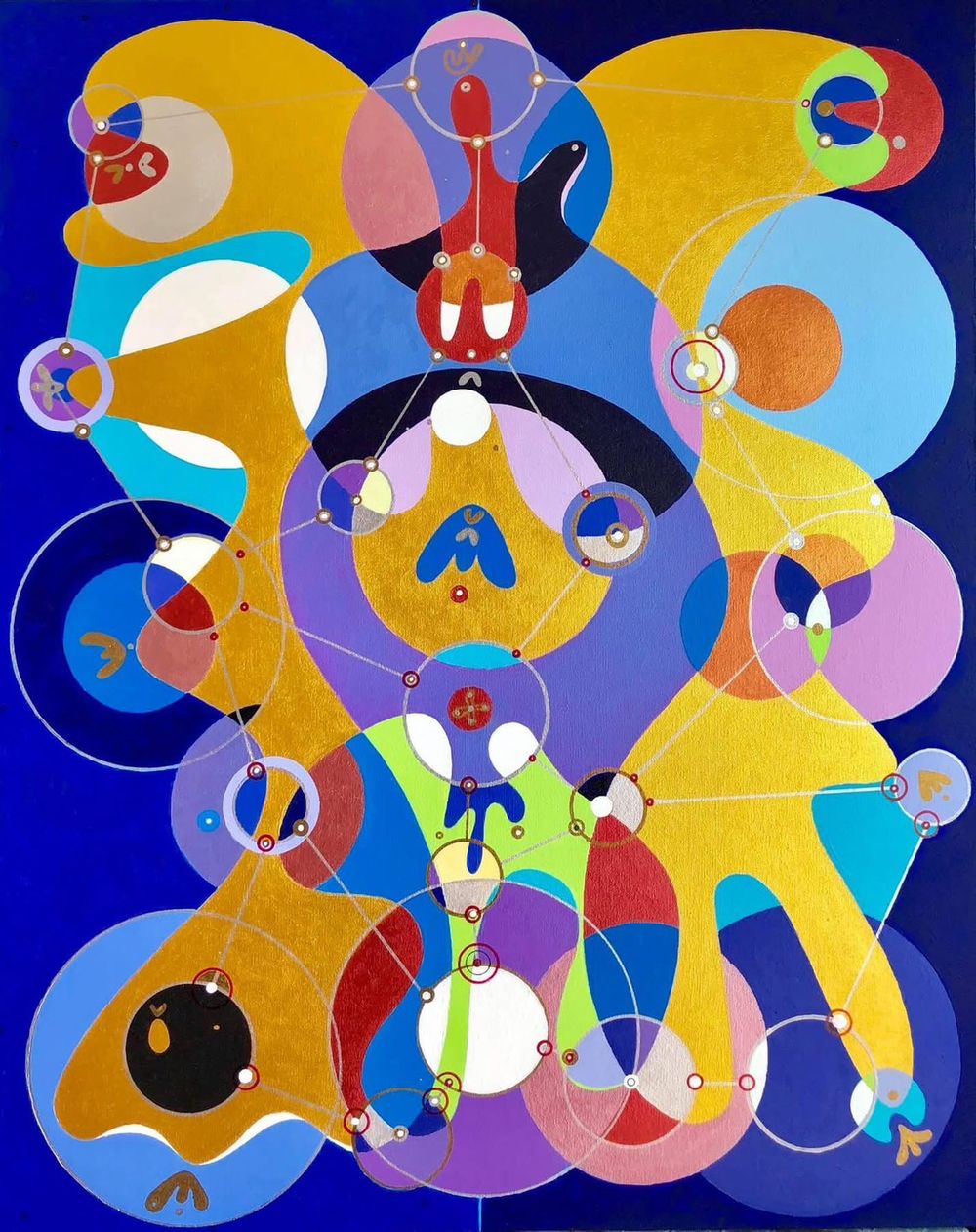
Teachings Passed Down to Students: Do What Feels Real, Don't Fear Being Outdated
After graduating from Silpakorn, Ajarn Meow had the opportunity to teach at several institutions, including Rajamangala University of Technology Isan, the College of Fine Arts, and Silpakorn University, until his retirement.
"I tell my students that to be an artist, you must be creative, possess your own identity, be responsible, diligent, determined, dedicated, and sincere. You have to do what feels real and truly connect with it. Don't be afraid of being outdated; eventually, you will find your own balance. I tell the kids to ask themselves who they are, as everyone is different. Some prefer silence and tranquility, so their work might be still. Some like fun, so their work will have movement and energy."
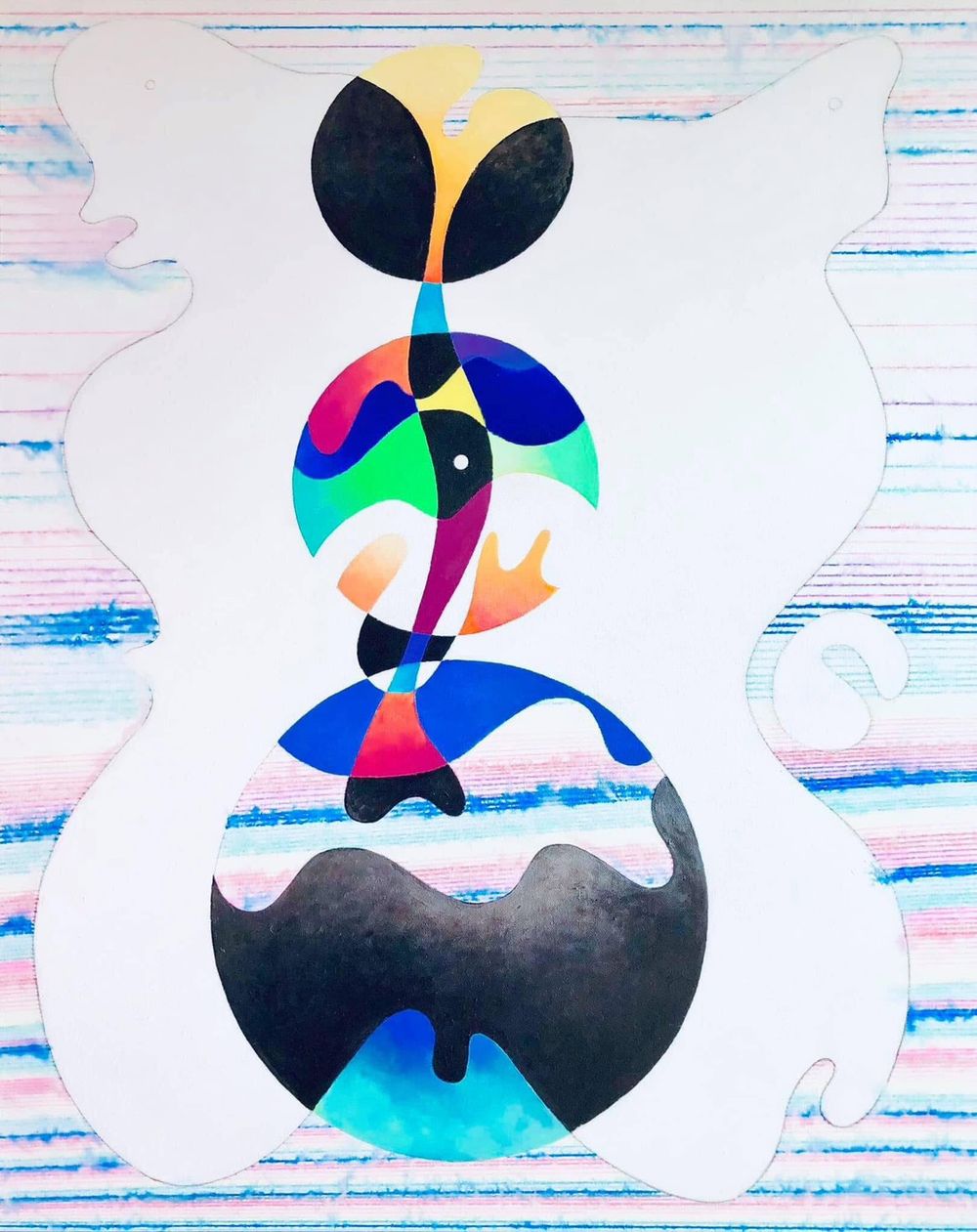
Can you fool yourself into feeling it?
"If you fool yourself, it’s just a desire to be something. Wanting to be like this person or that person means you might do things that don't suit your true nature. Eventually, it will change on its own because if it's not your nature, you can't keep it up for long. Unless they like to keep fooling themselves, then it's up to them (laughs). Sometimes I teach kids not to tell too many stories; art must evoke feelings. Most importantly, it must have its own character. Suppose you're working on the theme of peace; what kind of peace is it? You have to find your own character. Now, discovering it takes time. I also tell the kids not to close themselves off. Don't turn a blind eye or a deaf ear. You must learn everything. Even Ajarn Silpa Bhirasri taught his senior students, who later became teachers, that they must go watch movies. That way, they could see something different that might be applicable. Even sounds of music or food can be incorporated into work."
When asked whether he prefers the life of a teacher or an artist, the answer is that while being a teacher, he also created art alongside it because he didn't know how to do anything else (laughs).
Co-founding the Thai Sculptor Association and 'White Group' Watercolor Association
One of the competitive stages that Thai artists highly value and constantly participate in is the National Exhibition of Art, organized by the Fine Arts Department and Silpakorn University. The competition features four categories of art: Painting, Sculpture, Printmaking, and Mixed Media.
In the sculpture category, Ajarn Meow and several of his teacher friends submitted their works every year but barely won any awards. This was because the judging panel felt they were only submitting plaster works. It reached a point where a group of sculpture teachers, such as Ajarn Vichai Sitthiratn, Ajarn Khemarat Kongsuk, and Ajarn Nonthivathn Chandhanaphalin, boycotted the event by no longer submitting their works. Instead, they united to co-found the Thai Sculptor Association, with Ajarn Nonthivathn serving as the president for life.
"Once the association was established, we organized our own exhibitions. We also went out to work with societies and communities both domestically and internationally. Eventually, international sculptor associations joined in, leading to art projects all over Thailand and abroad, such as in India, Italy, Serbia, and Korea."
After that, another watercolor association was formed, called the 'White Group'. It was initially a gathering of teachers from the College of Fine Arts. Later on, external artists, both seniors and juniors, joined together to create art using watercolors.
"Gathering together as art teachers, creating art was so much fun. Moreover, each member was highly qualified. For example, Ajarn Sawat Tantisuk, the Director of the College of Fine Arts, was a member because he loved watercolors. Ajarn Somsak Chotiwattanapong, Ajarn Panya Vijinthanasarn, and Ajarn Montien Boonma, who were fellow teachers at the College of Fine Arts, also joined. This made art more enjoyable. The fine arts students also had fun. We taught while continuously creating our art; we never stayed still."
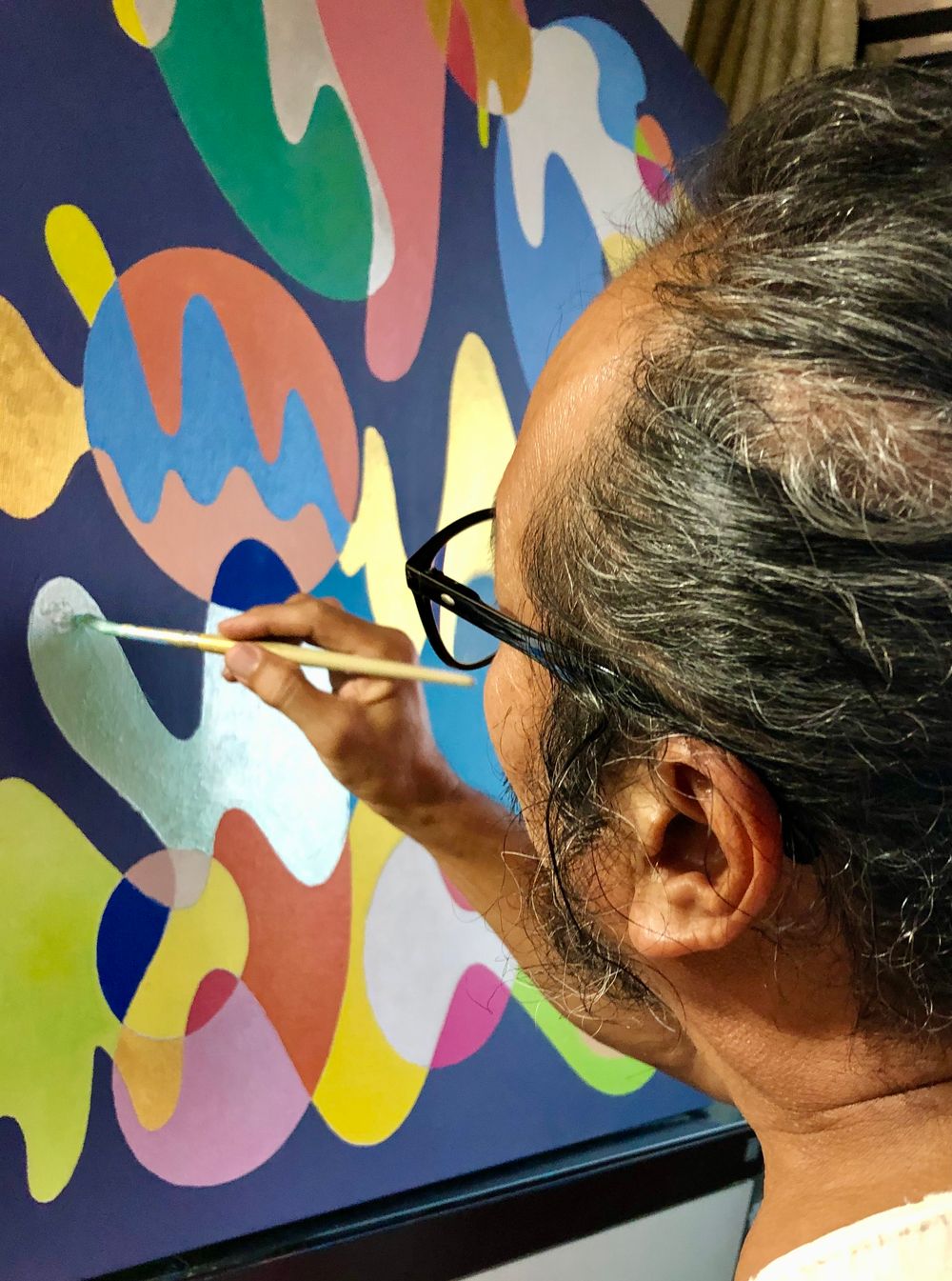
Up until now, the 74-year-old artist still works every day, to the extent that whenever a new idea sparks, he gets up to work on it immediately.
"I remember one time while I was driving and got stuck in traffic, I had some modeling clay, so I started molding it. By the time I reached the university, I had completed a piece. I felt happy. I always tell my students that they must be happy when working. Have fun with it. If you hit a block or can't think of anything, go look at the outside world; you will gain inspiration. The key is you must feel it. I always teach the kids not to be afraid of being outdated, just make sure it feels real and has our identity in it. It doesn't mean it only has to be Pop Art or only Art Toys. I do feel a little irritated by that, but it's okay. I mean, it's their era, and eventually, art will come full circle."
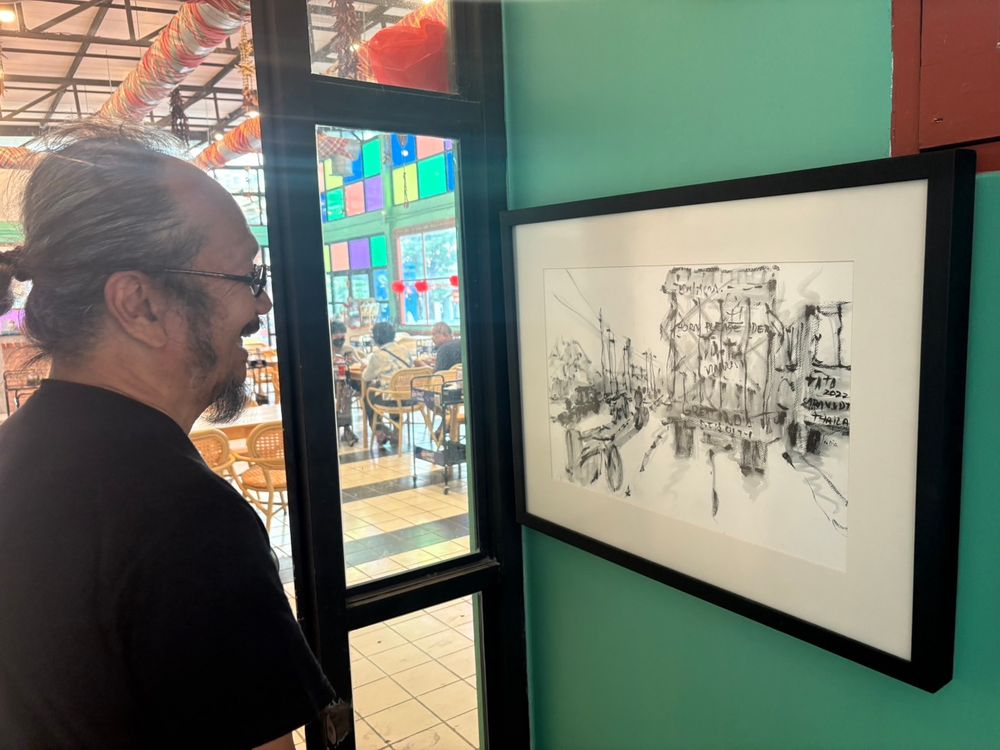
New Experiments: Hundreds of Artworks Adorn an Isan Restaurant
For those dining at Penlaos, Rama 7 branch, apart from the delicious food, you will also get to admire hundreds of beautiful artworks. This ranges from paintings filling the walls, massive welded steel sculptures, to works from several art masters who have joined the exhibition.
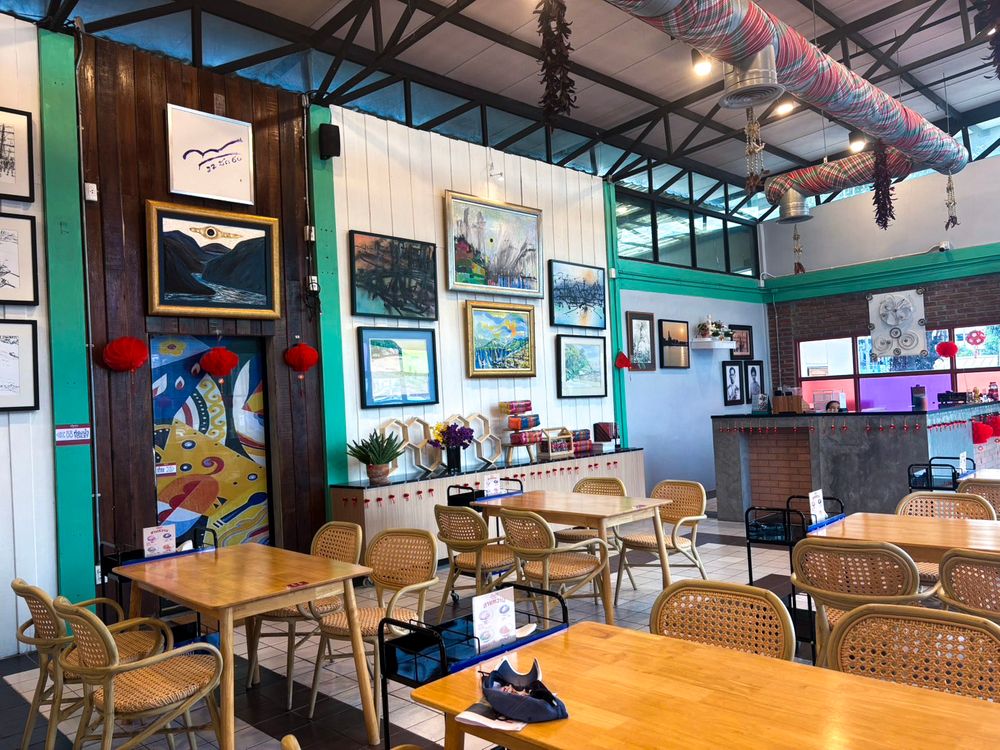
"We want people and the general public to see the value of art, because art is in our daily lives. Even for ourselves, dressing up is an art form. Like the mobiles decorating the restaurant, I used aluminum from leftover materials and painted them with blacklight colors. When the lights are off, they reflect light for decoration. We can pick up anything and find inspiration from nature—branches, leaves, flowers. At least let people see that art is near them, while also raising environmental awareness."
As for the single large sculpture, it will be a welded steel table. This is a piece from the "Sainam Suntaree Wattanatham Paendin 10" (Aesthetics of the River, Culture of the Land 10) project, where artists from various fields rafted from Kanchanaburi to Chiang Mai for nearly a week.
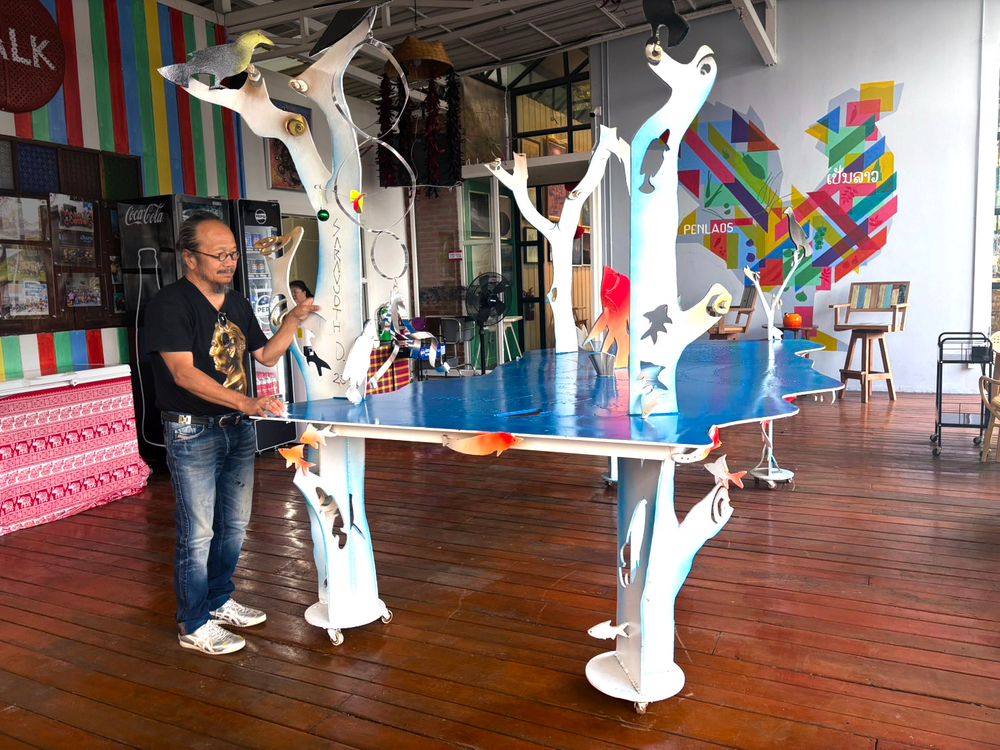
"For this piece, I made it into a table. We spent a month working on it, representing the waters flooding the mountains. There are trees popping up, fish, and perforated poetry by the artists who joined the project, including Ajarn Naowarat Pongpaiboon, Khun Surachai Chantimatorn, and M.C. Dighambara Yugala who joined as a photographer. If anyone likes this piece, they can purchase it, with 80% of the proceeds going to hospitals in the North."
Art in a museum has one flavor, while art in a restaurant has another. It marks the beginning of new flavors for people to taste, which might unexpectedly ignite endless sparks of new creativity in people.
© 2025 Khaoyai Connect. All rights reserved.
No part of this content may be copied, modified, or distributed in any form without prior written permission.
