

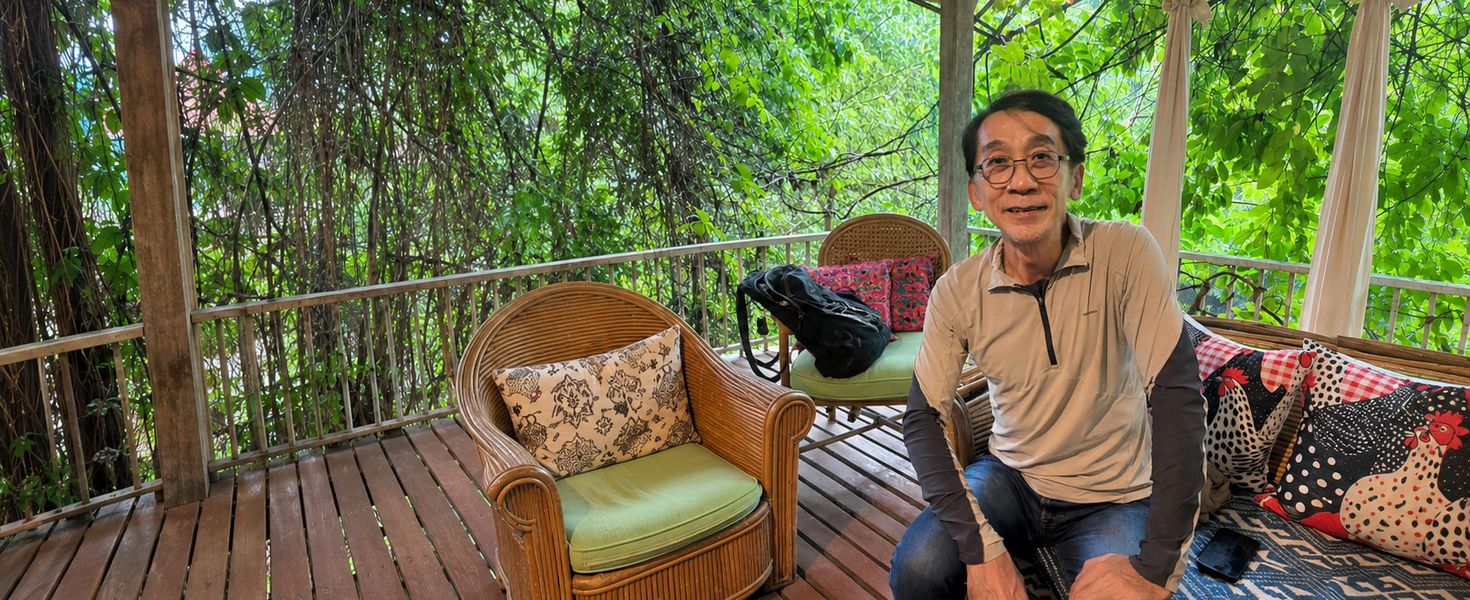
“Prinya Thaewanarumitkul,” an environmental-minded legal scholar, backs opposition to the Nam Phut project:
residents must win, turning it into a new model for Thai development where progress and nature move forward together.
Beyond his role as a full-time lecturer at the Faculty of Law, Thammasat University, Associate Professor Dr. Prinya Thaewanarumitkul is also widely recognized for another prominent role: being an “environmentalist” who has actively and seriously driven environmental action. One image many people are familiar with is that of him paddling a kayak to collect trash.
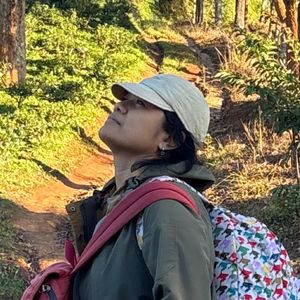
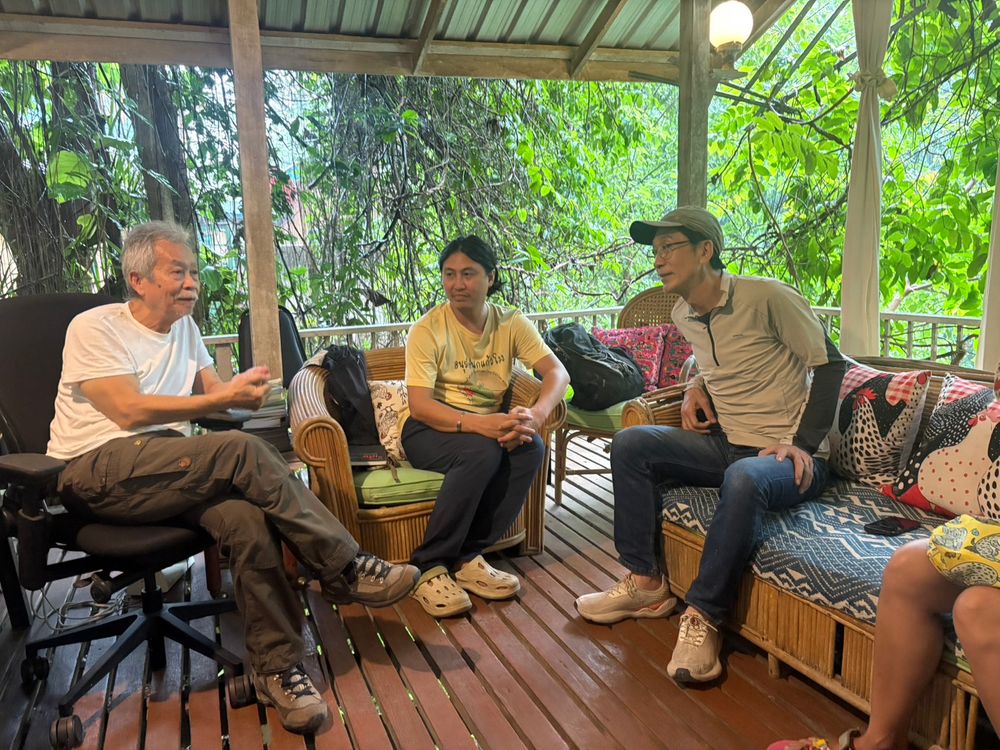
The case of the natural spring at Ban Tha Chang Nuea, which has now become a major public issue, has drawn the attention of this environmentally conscious legal scholar and prompted him to travel to Pak Chong to inspect the site in detail. He also came to discuss the direction of development in today’s world, which should be aligned with nature, with M.L. Prinyakorn Voravan, a wildlife photographer and documentary maker with more than 30 years of experience in the field, who resides in Pak Chong and has long witnessed the impacts of development that destroys nature.
The Khaoyai Connect team had an opportunity to speak with Ajarn Prinya about whether sustainable development can truly take place in Thailand, and what possible way out there may be for the Nam Phut case.
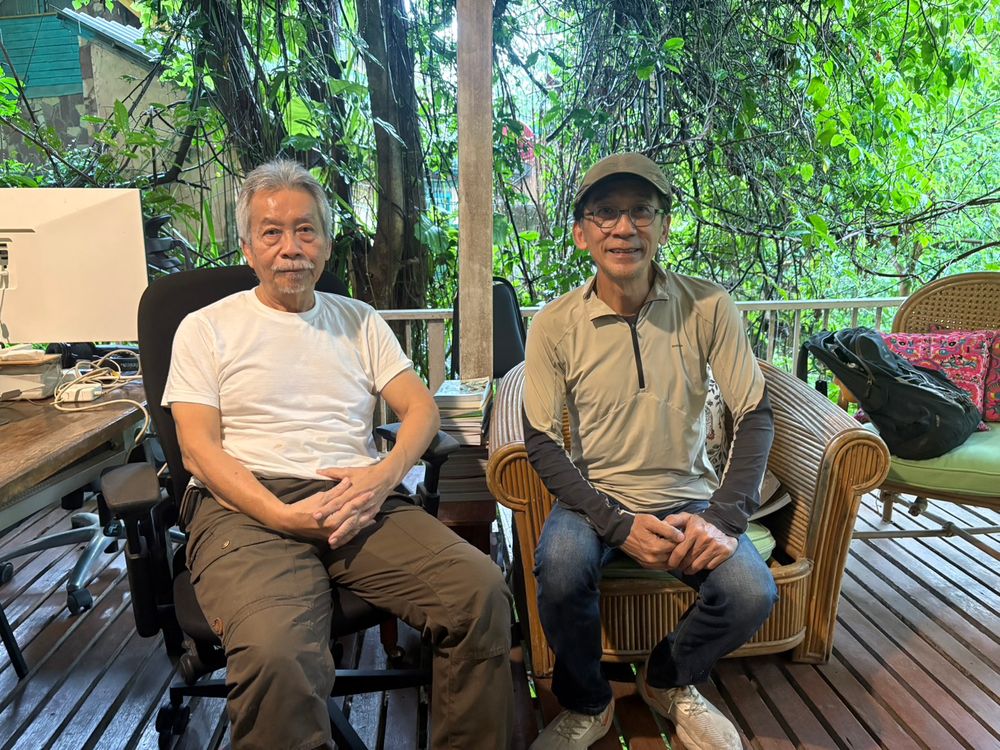
In what capacity did you come to see the natural spring today?
I am a lawyer. I am a law lecturer. At the same time, I am also an environmentalist. In truth, all of us should be environmentalists, because we live within the environment. That means the nature around us gives us life. Destroying nature is destroying ourselves. Destroying the environment is destroying ourselves. The key point is that our children and grandchildren cannot grow up with cement. They have to grow up with nature, because human beings live with nature. Yet we are destroying nature for a kind of progress made of concrete.
The truth is that the world has already changed. There is a term called sustainable development. The first year the United Nations used this term was 2012, more than ten years ago. It is a development approach that says progress and nature can go together. That means the kind of progress that destroys nature must come to an end.
The world’s population has now reached 8 billion. If the global population were only 1 or 2 billion, perhaps we could still keep destroying nature. But not anymore. We no longer have nature left to destroy. The global warming we are seeing is happening because green areas and trees have decreased, and it is becoming more and more severe. So now there is only one path: what remains must be protected 100 percent, and we must find ways to bring nature back.
Therefore, every form of development from now on must be development that does not reduce what already exists, and development in which progress and nature move together.
Why are you interested in the Nam Phut issue?
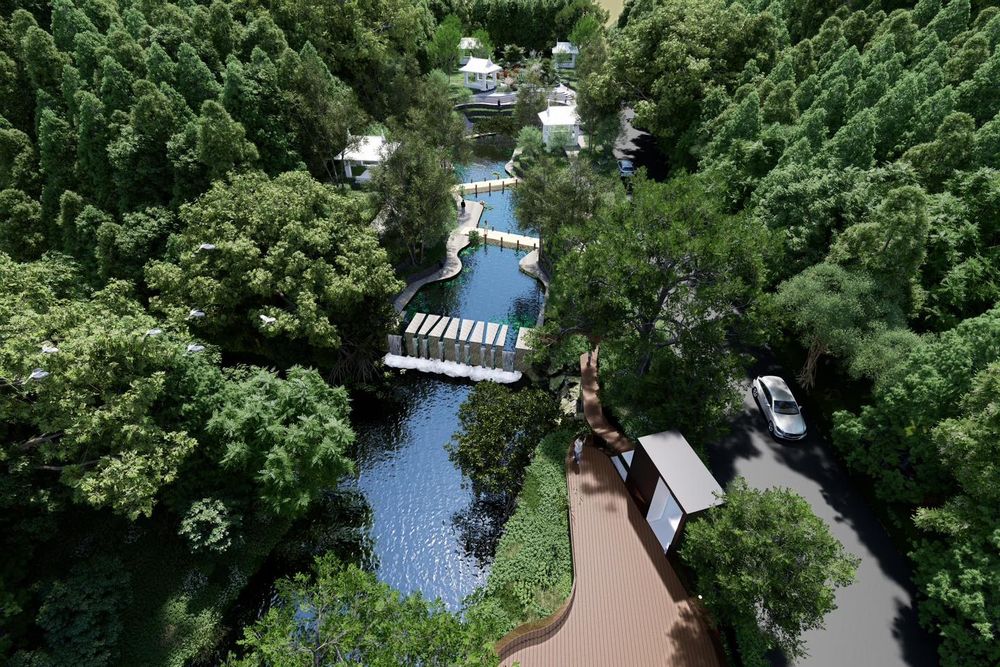
I heard the news on Facebook that construction was going to take place at Nam Phut in Korat. When I saw the 40-million-baht-plus construction plan reported in the news, I felt uneasy, because all I saw was concrete. This era is an era in which concrete must be reduced, used only where necessary. The age of concrete use has passed. Today there is a term called nature-based solutions: solving problems by using nature as the foundation. Grey solutions refer to man-made infrastructure: cement, concrete, piles. They are grey solutions, and they damage nature because trees have to be destroyed before concrete can be poured. So that era is over, because we now have new solutions that can solve problems without needing so much concrete. It is called using nature as the way out for solving problems.
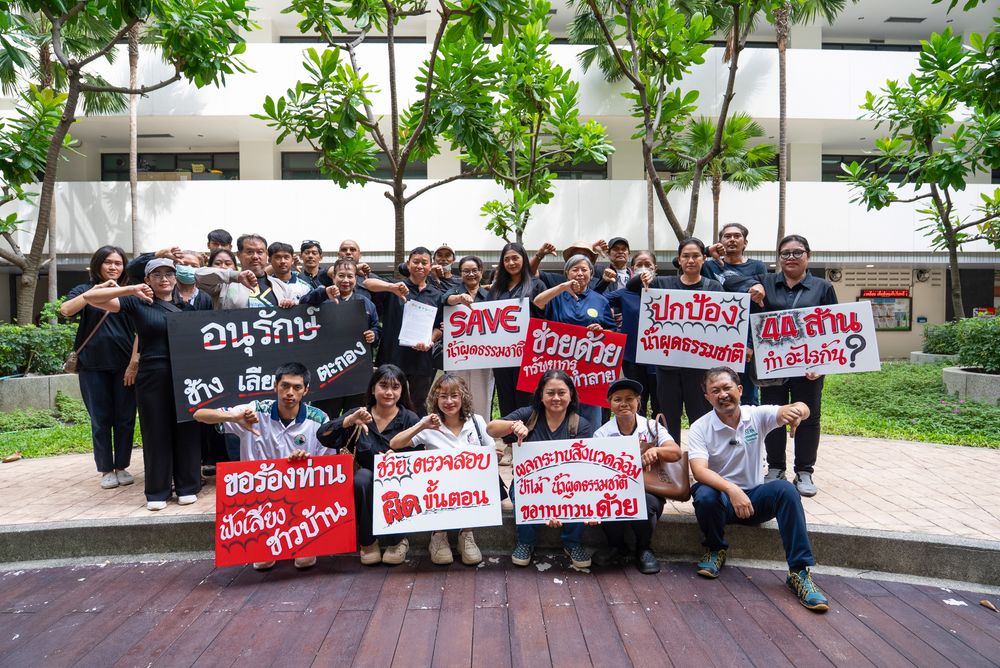
So I wanted to come and look at the problem, to see the area for myself. And the important thing is this: in most projects, wherever they are, if a large number of local people agree with them, then even if some people oppose them, the authorities can go ahead. But here it is different. The community enterprise and most local residents think it should not be done, that it is not appropriate. I saw their protest signs and I was pleased, because the words they used were not a head-on rejection, not an opposition that rejects progress.
Let me read it to you. They say: “We do not oppose development. Come and consult with us. Do it in a natural, sustainable way.” They are not opposing development. They are opposing a construction model that destroys the environment. Listen clearly: they are not opposing improvement. I think this is a progressive point. Usually, we see opposition that simply says no. For example, when people oppose a power plant, they say it must not be built. But here they say they do not oppose development. They do not oppose improvement. What they want is development that goes together with sustainability and nature. I think this is a new dimension of opposition, and I think it must succeed, because all we are asking for is a revision of the design.
So this is being confirmed by someone with experience opposing state projects?
That is half true. The first project I opposed was the Nam Choan Dam. That was in 1987. I was a second-year Thammasat student and went to oppose the Nam Choan Dam. We did everything. Sixteen universities came together at that time as the Natural Resources Conservation Committee of 16 institutions. We formed a procession in front of Thammasat’s Main Auditorium and cycled to oppose the Nam Choan Dam, riding all the way to Kanchanaburi. I signed up to cycle, but it turned out I could drive, so they made me drive the supply vehicle at the rear of the procession, which was very boring (laughs). I wanted to ride a bicycle, but had to drive the supply truck. During that period, I went to Kanchanaburi many times. And it was very encouraging, because the opposition succeeded. Do you know why? Because the people of Kanchanaburi did not want it. They already had enough dams, and they knew that the area was on a fault line. If a major earthquake occurred and the dam broke, the consequences would be extremely severe.
I understand civil engineers. They study in order to build. When they look at a place and think it is suitable for construction, they build. In that era, nature-based solutions had not yet reached teaching and learning as much as they should have. It was still grey solutions. Concrete was still being used.
I have another example of collective action by the public that succeeded. In 1989, there was a log disaster in Nakhon Si Thammarat. It swept away an entire village. Mud alone was already devastating, but logs from the mountaintops also came rushing down. This led to opposition against forest concessions, and Thailand successfully abolished forest concessions in 1989.
When the public joins forces, it often succeeds. At Nam Phut, it is clear that local people are not opposing improvement. They are not opposing development. They are asking for it to be sustainable. And importantly, they are also asking for transparency, because villagers are suspicious that the construction design looks strange. There are many questions, including the fact that the public hearing was conducted in only one village.
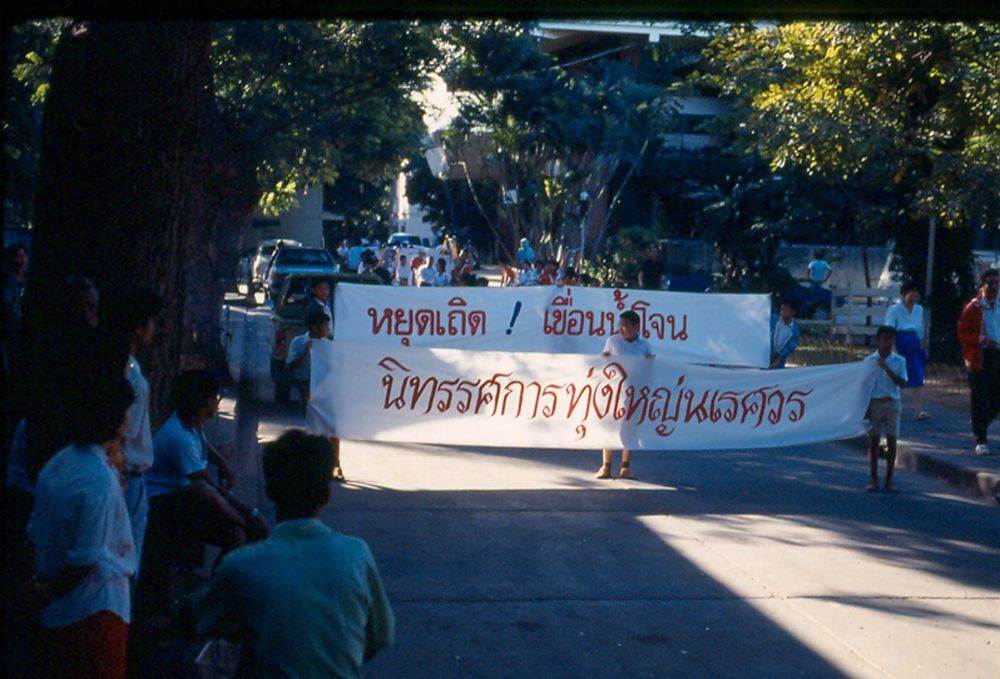
Credit http://thungyaiwest.com/
Are there any laws that could help people find a good way out together?
I am a lawyer. In truth, one mistake we made concerns good governance, which we translated as “thammaphiban.” We have participation as one of the six principles. But in the Western framework, there are two more: inclusive and consensus-oriented. In our case, the Office of the Public Sector Development Commission removed them, because they were considered part of the same group. But if you want participation, it must include inclusive and consensus-oriented approaches.
What does consensus-oriented mean? If people disagree, they must find a way out based on mutual agreement. For example, one group wants improvement, while another group wants to preserve the trees. Then let both go together. How can improvement be done while the trees remain? How can improvement be done while nature remains? But in Thailand today, we are forced to choose one or the other. If we include this principle in good governance, we have to find a way out through mutual agreement. If it works this way, villagers would not have to protest all the way to Government House, because every issue can find a solution when all parties agree.
Public hearings must include this principle, because the current public hearing process is often just a formality. The responsible agency already has a project in mind. It simply invites people to listen. Those who agree will be listened to, while those who oppose it are not listened to at all. Let me give the example of the Krabi power plant, which, in truth, could not be built. At the time of the opposition, the Electricity Generating Authority of Thailand, or EGAT, said the South had less reserve electricity than every other region and had a greater chance of blackouts than other regions. It needed another 3,000 megawatts to ensure energy security, so a coal-fired power plant had to be built. The villagers said they were not opposing reserve power plants, but asked whether it could be done in a way that did not destroy nature. If it had been consensus-oriented, we would first have framed the problem: the South needs another 3,000 megawatts of electricity. Then we would search for a solution that villagers could accept. This is an example of using consensus-oriented thinking as a tool to find a way out. But we refuse to use it. When EGAT held the public hearing, it already had a coal-fired power plant project, because it had already bought shares in coal mines in Indonesia. So it listened only to those who agreed. When there were opponents, it recruited another group of villagers to support it. In the end, villagers were divided against one another, which was very wrong, wrong in every way. Fortunately, the Krabi power plant did not succeed. I see that Thailand’s new direction should no longer require us to quarrel. When people disagree, they should find a way out together. Everything has a way out that allows people to move forward together.
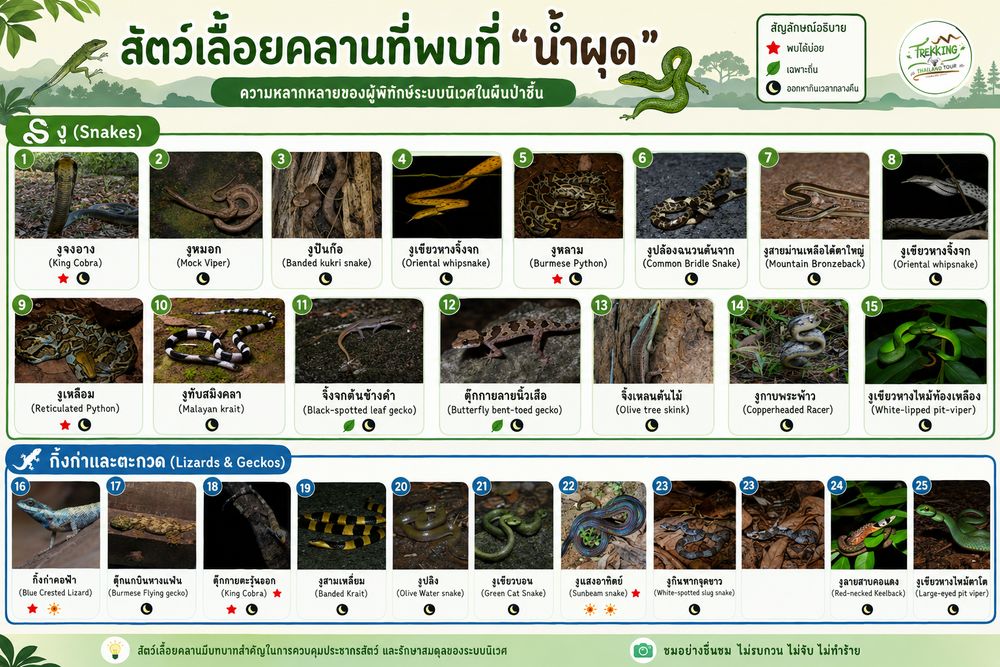
เครดิตภาพ https://www.facebook.com/trekkingthailandtour
Another principle is inclusive, meaning taking every party into account. For example, some people want the trees to remain. Surveys have found water monitors and Asian water dragons. Taking everything into account means that, in development, every party must be considered. So the Asian water dragon must be included too. We should not say that development inevitably requires some people to lose out. Whenever people say that, everything falls apart. When a dam is built, for example, some people’s homes are flooded and they have to move upstream of the dam. But if the inclusive principle is applied, then we must think about what will happen to the flooded villagers. Are there other options besides a dam? Can the power project be made smaller? Or are there other models that take into account conflict resolution that works for all parties and minimizes impacts?
Does that mean the Nam Phut case already has a way out in which everyone can move forward together?
It is already clear that the villagers are not opposing progress or improvement.
Do you see this as a new direction for development?
Yes. What I am saying is simply that participation must include these two elements. Whenever people disagree, use a consensus-oriented way out and take every party into account. Then amend the public hearing regulations to say that from now on, public hearings must include these two principles. They will become good guiding mechanisms. This is one issue that can be pushed forward. I have looked at the Prime Minister’s Office regulations on public hearings to see whether they can be amended. Is it possible that you should not begin with a project? Bring the problem first. For example, what problems does Nam Phut have? Then brainstorm how to solve them in a way all parties can accept. But if you already have a project and then hold a public hearing, that is wrong. Once you have a project, you will not listen to other solutions, because you have already chosen this one. You already have the answer. It is like a judge who has already made up his mind; he will not listen to anything that does not fit his predetermined conclusion. So from now on, in finding solutions, it is fine to set aside a budget first and say we have a certain amount of money. Then look at what the problem is and what solutions exist. Choose the problem-solving solution that all parties agree on. That is how progress and nature can move forward together. That is all there is to it.
From now on, different organizations should come together, because if we leave each area to fight on its own, sometimes it does not succeed. In areas where local communities are strong and villagers join the fight, there is a chance of winning. And is it possible for us to bring together all the projects that destroy natural rivers, canals, and waterways, so people can see why forests have to be destroyed, why natural canals have to be destroyed, and why drainage has to be made of concrete pipes?
What have you seen at Nam Phut so far?
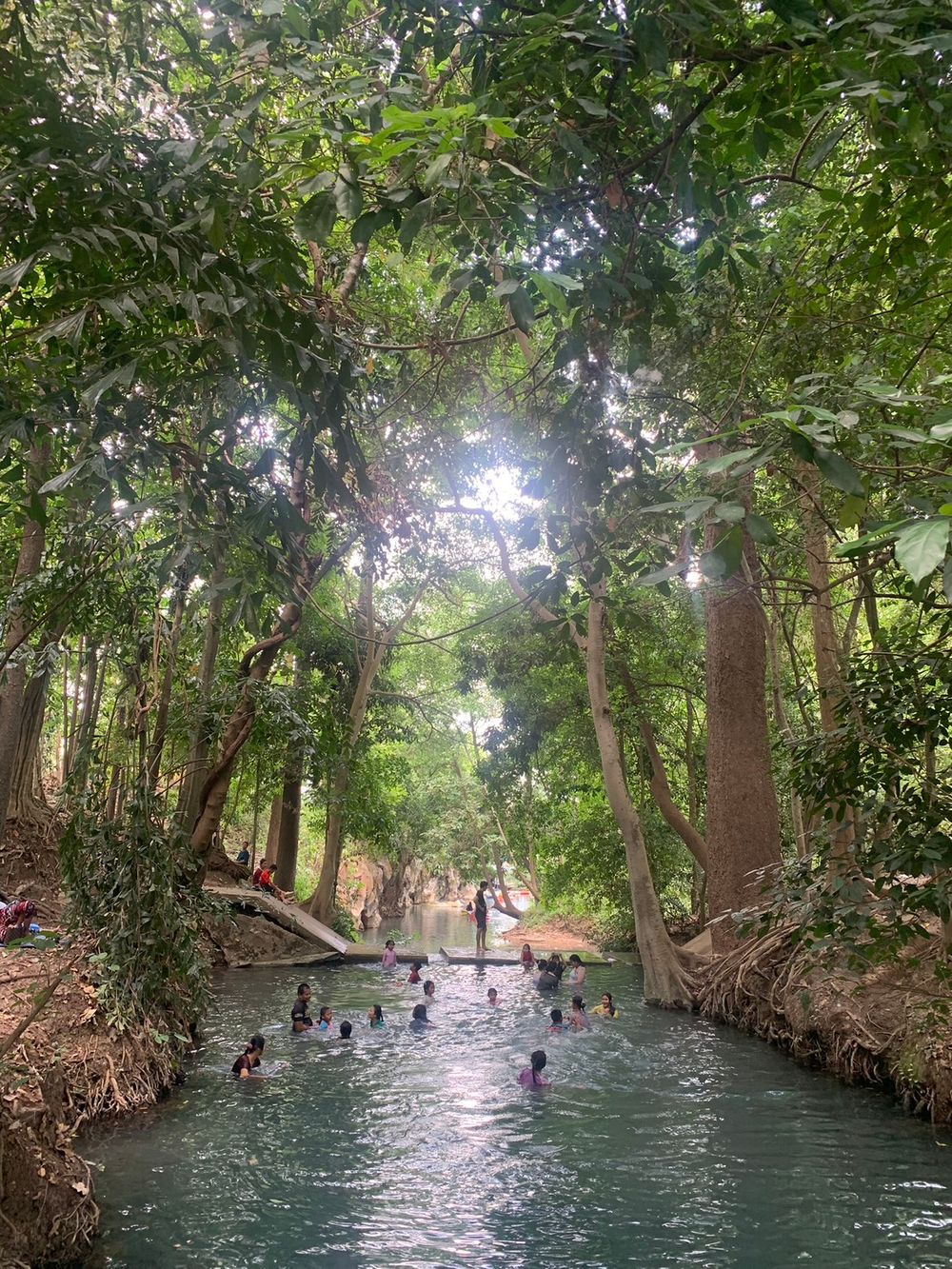
I went to see Nam Phut and walked around the area for several hours. Today I came to look again, driving past the section that had already been concreted, which is very ugly. Concrete has to be called ugly. I mean it can exist where necessary, but right now we have far more than necessary. Concrete comes from blasting mountains or dredging sand from riverbeds. In the past, progress meant concrete. But today we have the concept of sustainable development. I think we need to change.
Thailand’s capital is nature and biodiversity. We are not a desert country. We are a country full of nature, and this is a capital asset that we must preserve. I ask: why are fish in rivers and canals disappearing more and more? When I paddle my kayak and meet villagers fishing for fish or shrimp, I ask them everywhere. I have never met anyone who says they catch a lot of fish. Everyone says they do not catch any, or they catch very little. The fish are disappearing because the riverbanks have all become concrete. Where are juvenile aquatic animals supposed to be born? There is only concrete. And concrete does not give life. If there is only concrete, how can there be fish and shrimp?
It is still not too late. What has already been destroyed, we have to accept. The point is: how do we avoid destroying more? If we can learn from this, then in this opposition campaign we must find a way for everyone to understand the same thing: we are not opposing progress. Everyone simply wants progress and nature to move forward together.
© 2025 Khaoyai Connect. สงวนลิขสิทธิ์
ห้ามคัดลอก ดัดแปลง หรือเผยแพร่เนื้อหาทั้งหมดหรือบางส่วนโดยไม่ได้รับอนุญาต
