


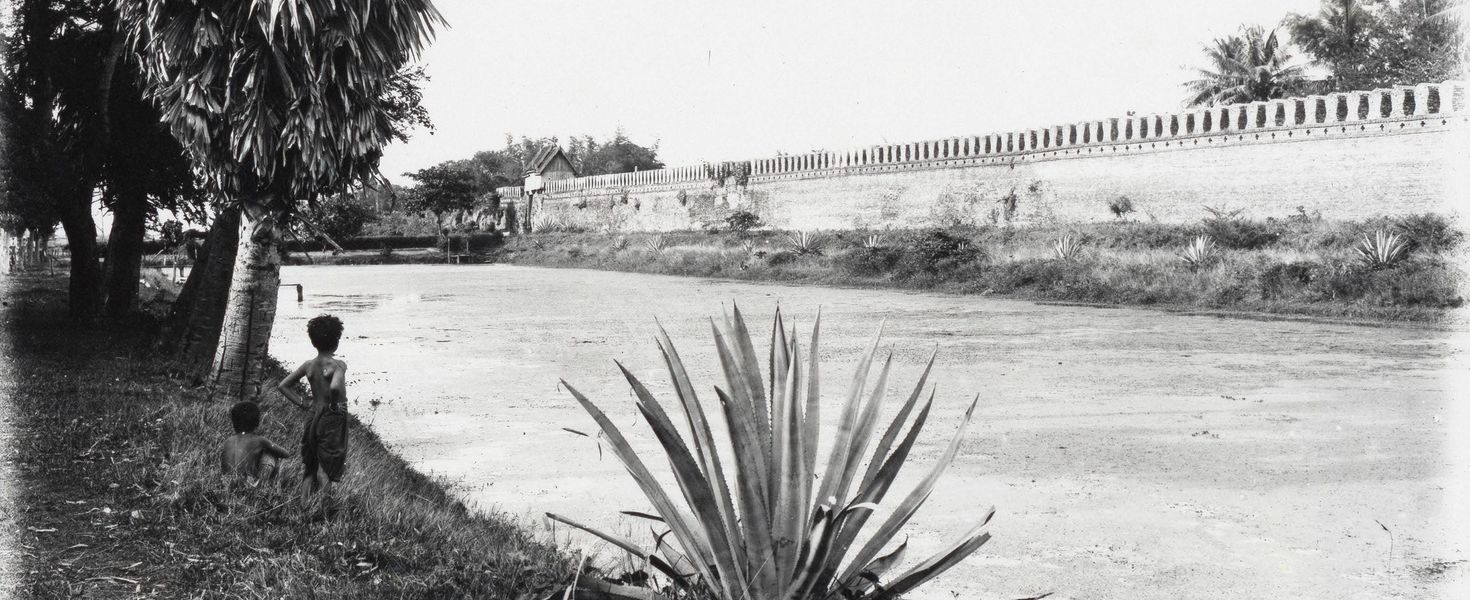
Nakhon Ratchasima’s old-city community did not begin in the Ayutthaya period
people had lived there since prehistoric times!
Some stories about the past become so deeply ingrained over time that even new information cannot easily dislodge the old beliefs. Among historians, however, whenever new evidence is discovered and systematically verified, even an important page of the historical record can always be struck out and rewritten.
Such is the case with Nakhon Ratchasima’s old city, which we had long understood to have been founded in the Ayutthaya period, during the reign of King Narai the Great. Historical records describe its fortifications, city walls, and moat as forming a rectangle.
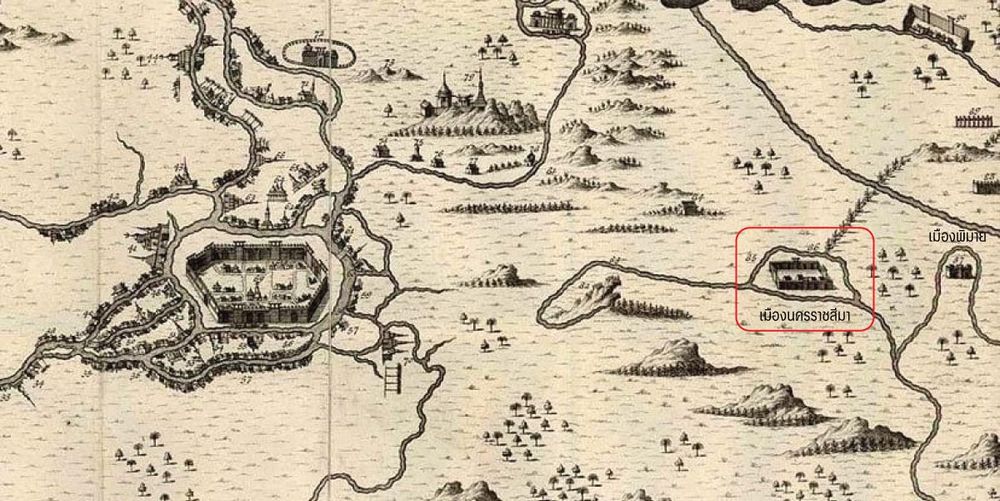
Over the past few years, however, archaeological excavations have brought new information to light. Traces of an ancient settlement have been found—evidence significant enough to turn back the clock on Nakhon Ratchasima’s old city, carrying its past far back into prehistoric times.
This archaeological evidence was only recently discovered, during excavations in 2024 and 2025 conducted by the 10th Regional Office of Fine Arts, Nakhon Ratchasima, at the Non Phon Lan archaeological site. The site lies by the eastern city wall and moat, at the intersection of Atsadang Road and Phon Lan Road.
It marks another exciting advance in the study of ancient human activity within Nakhon Ratchasima’s old-city area.
Time to Bring Korat’s Educators Up to Date
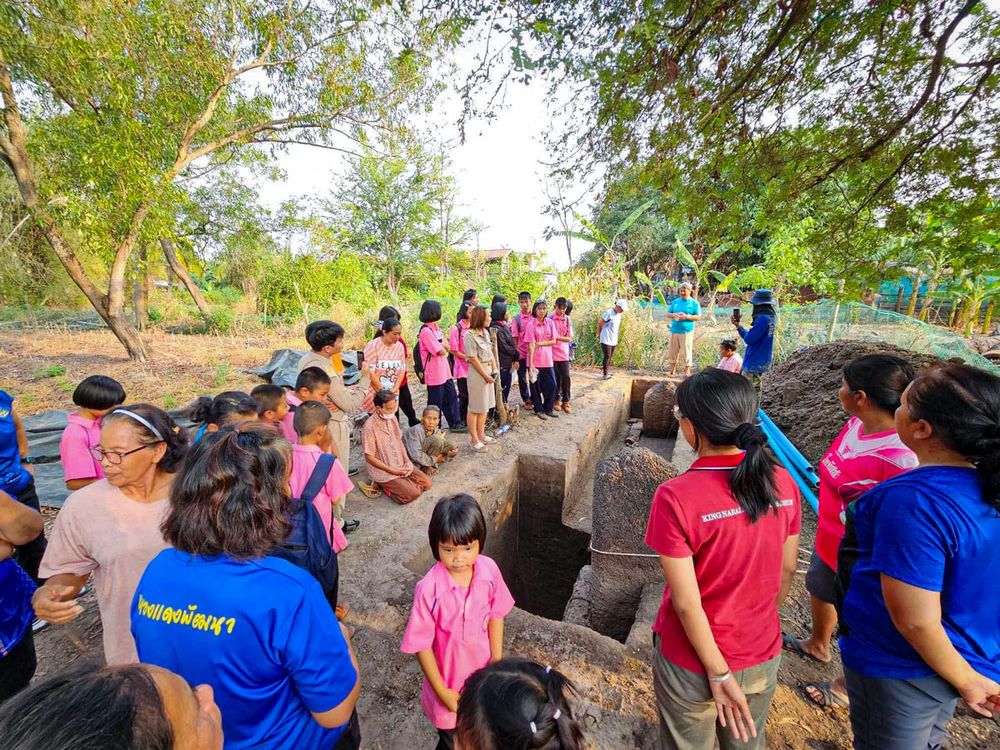
Although this information has periodically appeared in the media, many people—especially Korat residents themselves—have still not encountered it. This led the Office of Arts and Culture at Nakhon Ratchasima Rajabhat University to launch a staff-development project. Its aim is to equip personnel with accurate, up-to-date knowledge so they can serve as intermediaries in sharing the story of their own home correctly and in step with the latest findings.
Assistant Professor Phithakchai Chattuchai, Director of the Office of Arts and Culture at Nakhon Ratchasima Rajabhat University, said the project was intended to educate and expand the knowledge of personnel both within the Office and across the university, because important new knowledge about Korat’s history had emerged only in 2025.
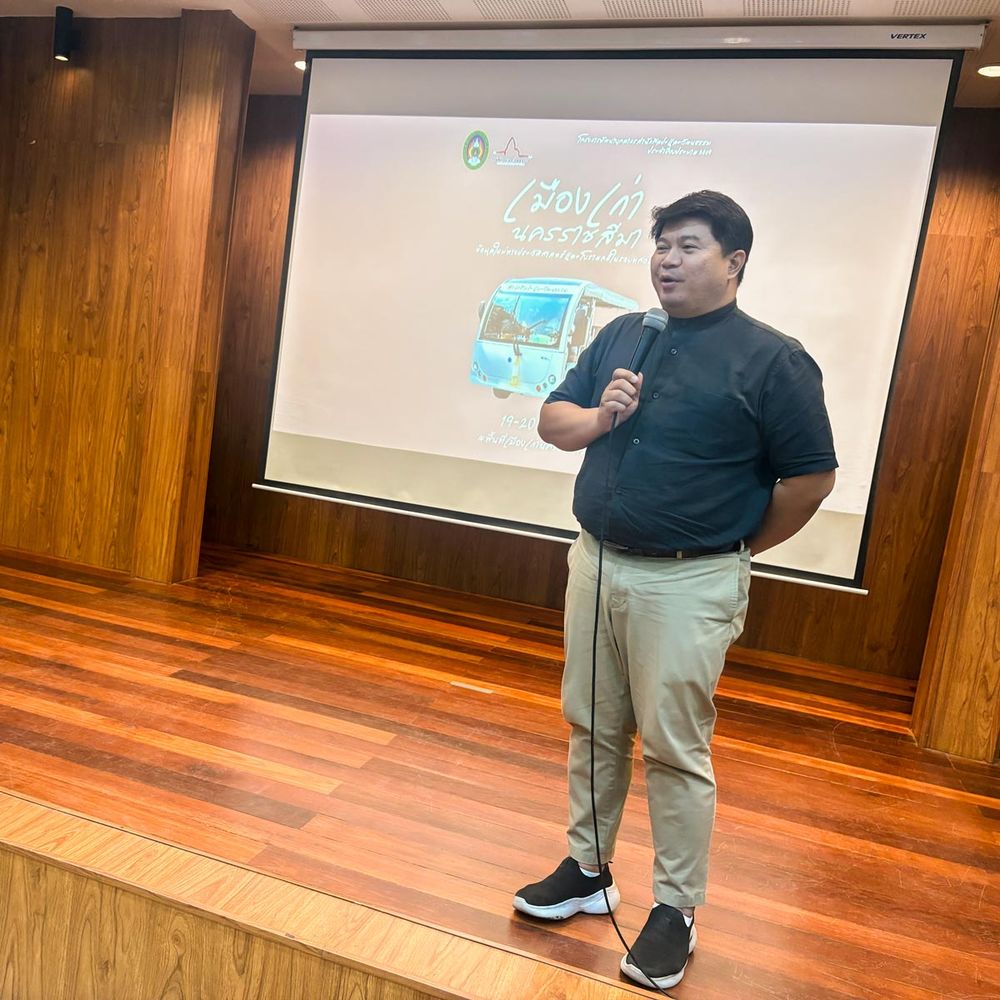
Assistant Professor Phithakchai added that when he was a student, he was taught that Nakhon Ratchasima had been established in the reign of King Narai the Great, or, at the earliest, in the reign of King Borommatrailokkanat. The latest findings, however, show that Korat has been inhabited for a very long time—since the Iron Age. Korat’s people did not come from somewhere else, as some have said; they have been here for ages. That is why he wants the people of Nakhon Ratchasima to know their own history.
“Many people say history is already in the past, that it has been told countless times and is old-fashioned. In reality, historical and archaeological work is highly modern. In recent years, we have increasingly used science to explain and unravel history, and there is much information that should be updated. Some parts of history need to be reconsidered. The people of Nakhon Ratchasima have two distinctive traits: determination and deep faith in their own history. That is the strength. The weakness is that once they believe something, they rarely change their minds. So we asked how this body of knowledge could be reviewed. This is why we need to work with the 10th Regional Office of Fine Arts, which is the source of the knowledge, while the Office of Arts and Culture acts as an intermediary that helps spread it.”
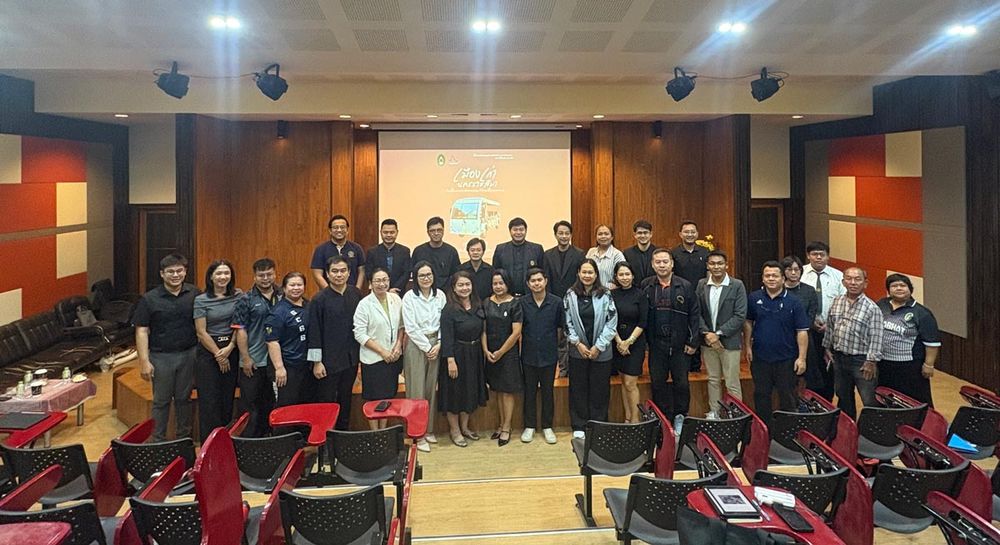
Nakhon Ratchasima: A Land of Ancient Cities
Somdet Leelamanotham, Director of the 10th Regional Office of Fine Arts, Nakhon Ratchasima, spoke on “The Archaeological History of Nakhon Ratchasima Province.” He explained that Nakhon Ratchasima is a large province and that archaeological work has uncovered evidence of human habitation dating back a very long time. Evidence—including ancient monuments and traces of past populations—has been found in virtually every district. The sites span many periods and reflect different cultural forms.
In archaeology, time is broadly divided into two periods: prehistory and history. The dividing line is the invention of writing. A community without a writing system is considered prehistoric; once writing has been developed, it enters the historic period. Some scholars add a further category, the protohistoric period: societies that used writing whose script we are unable to interpret.
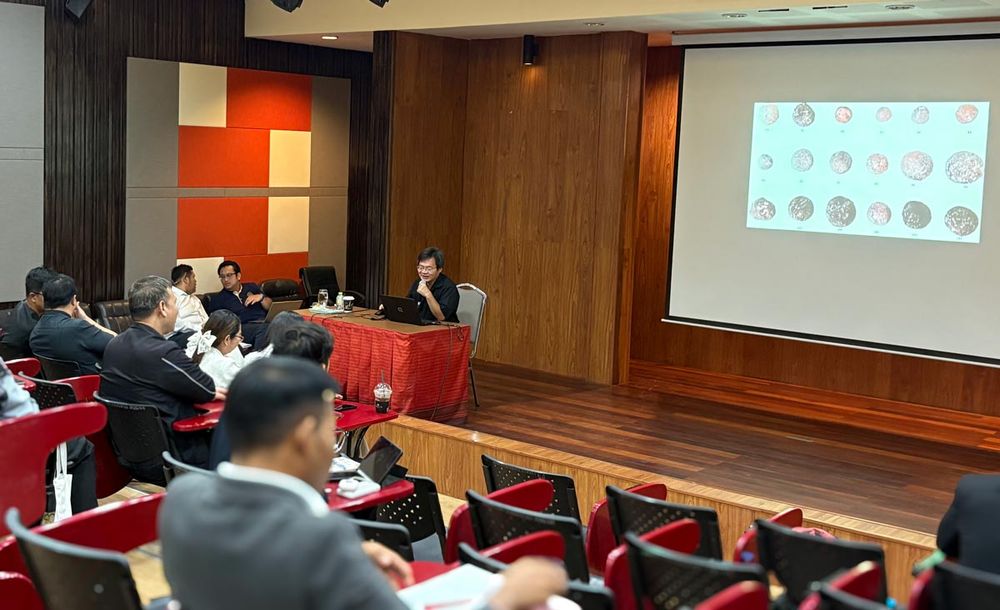
The periods are divided as follows:
1. Prehistoric Neolithic period, approximately 3,700–3,000 years ago
2. Prehistoric Bronze Age, approximately 3,000–2,500 years ago
3. Prehistoric Iron Age, approximately 2,500–1,500 years ago
4. Historic period, beginning with Dvaravati, followed by ancient Khmer, Ayutthaya, and Rattanakosin, from approximately 1,500 years ago to the present
Nakhon Ratchasima Province contains an estimated 2,000–3,000 archaeological sites, with more continually being discovered. One important site is Ban Non Wat in Non Sung District, where evidence was found of an early Neolithic prehistoric settlement. A relatively extensive area was excavated. The excavation has now been completed, and the local authorities have developed the site into an information center.
“Archaeology is the study of people. Wherever people live, their subsistence and activities leave evidence behind. This allows us to understand humanity from many perspectives: origins, evolution, society, culture, behavior, beliefs and ways of life, and the developments that continue into the present. Over hundreds or thousands of years, these traces become buried and await discovery by later generations, whether through academic investigation or by chance.”
Somdet explained that before people knew how to cultivate crops, they hunted animals and gathered food from the wild. With the Neolithic period came agriculture and permanent communities. People developed tools and learned to cultivate crops. They later began to think about protecting their possessions and developed distinctive burial customs: graves were dug, the deceased were placed in designated areas, and grave goods were offered to them. These customs continued into the Iron Age.
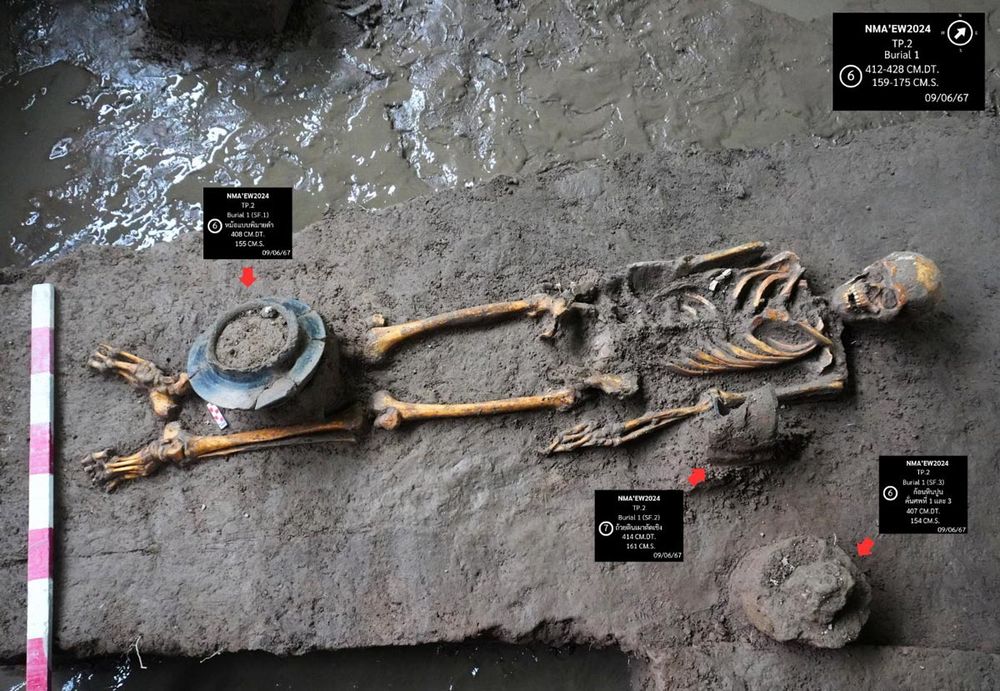
“Many people wonder why objects and utensils were placed with the dead. Anthropology explains that the idea arose from the human fear of death, separation, and loss, and from the search for a way to overcome death through rebirth. People devised a belief system in which death in this life could be followed by rebirth in another. Once that system of thought existed, belongings were offered to the dead for use in the next life. That is why we continually find objects in graves. Even after Buddhism and cremation appeared in some periods, the idea remained. In the Chinese Kong Tek funeral rite, paper offerings are burned for grandparents. The underlying belief persists, though its cultural form has changed. Archaeological methods allow us to explain this continuity.”
The quantity of the offerings—whether many or few—can also indicate a person’s status. A leader might receive a large number of grave goods, while an ordinary person might receive fewer.
Prehistoric remains have been excavated at many sites. Ban Lum Khao in Non Sung District dates to the Bronze Age. Noen U-Lok, also in Non Sung District, was densely inhabited in the Iron Age. Ban Krabueang Nok in Mueang Yang District is another important site with a long history of occupation. It has yielded evidence of what is known as secondary burial: a body was first buried, then, after the flesh had decomposed, the bones were exhumed, placed in a large jar, and buried again. This custom is frequently found in northeastern Thailand.
Somdet also noted evidence of rock-salt production during the prehistoric Iron Age at Non Thung Phi Phon in Bua Yai District, where traces were found of vessels used to filter brine and produce salt. Another important salt-production site is the Non Sung archaeological site at Ban Non Thonglang, also in Bua Yai District. It is a large mound surrounded by widespread salt deposits, and salt production has continued there to the present. This reflects a practice maintained from the Iron Age, thousands of years ago, until today.
Nakhon Ratchasima Enters the Historic Period
As time passed, human culture, technology, and economies developed. This was the era in which people used writing to communicate. Trade and travel expanded; people understood the monsoon wind system and undertook long sea voyages to trade with other communities. Social classes and systems of government also began to emerge.
Nakhon Ratchasima entered the historic period with the Dvaravati era, centered on the ancient city of Sema in Sung Noen District. Sema had moats, earthen embankments, and city walls, as well as inner and outer cities. Archaeologists have found numerous brick-built stupa foundations and several inscriptions there.
Korat has many other Dvaravati sites besides Sema. They include Ku Ban Prasat in Non Sung District, now badly deteriorated as a result of illegal digging for antiquities; Ban Tanot in Non Sung District, a community that produced sema stones, or sacred boundary markers; and Non Hin Tang at Ban Makha in Pak Thong Chai District, a mound where groups of standing stones were found. The site yielded the Khon stone inscription, whose text mentions a monk who served as a leader. This suggests a distinct local community with its own leadership and gives us a clearer picture of communities in the Dvaravati period.
After Dvaravati came the Khom, or ancient Khmer, cultural period.
“Today there is debate over Khmer and Khom. Many people feel that Khom is not Khmer, but if we examine the historical and archaeological evidence, we must acknowledge that today’s Khmer are descended from the Khmer of the past. One thing we must understand is that kingdoms normally rise to a peak and then decline. Sukhothai, for example, had periods of prosperity and decline. The Khmer likewise had a period of great prosperity, when they built many large temples. At the height of the Khmer Empire, its influence spread across our part of the Northeast. Artworks followed Khmer styles, and stone inscriptions clearly name Khmer kings. The word ‘Khom’ is the term used for the Khmer in Thai sources. Thai inscriptions use ‘Khom,’ but the Khmer did not call themselves that. They called themselves Kambuj, and later Khmer. We therefore need to understand that Khom is our term for them. In archaeology, however, we use ‘ancient Khmer’ when referring to the period, because we are studying the past.”
Nakhon Ratchasima contains many sites of Khmer culture, including Prasat Non Ku and Prasat Mueang Khaek in Sung Noen District, where numerous artifacts have been found; Prasat Phanom Wan in Mueang District; and “Mueang Phimai,” which could be described as a center of Khmer culture.
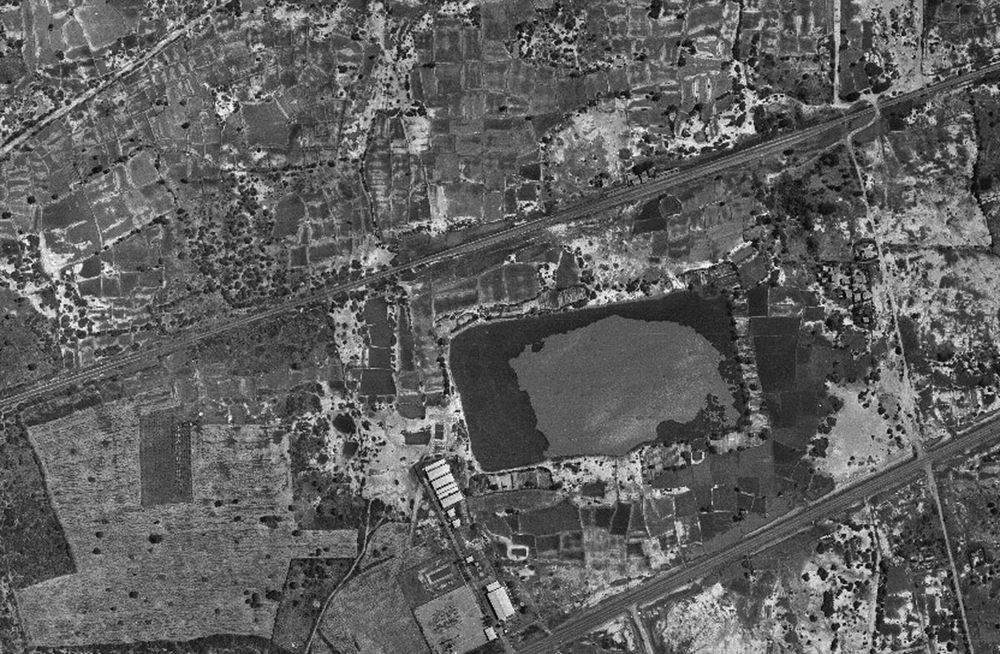
Following the Khmer cultural period, Nakhon Ratchasima entered the Ayutthaya period. During the reign of King Narai the Great, a moat and city walls were built around the city. From then on, the city continued to grow through the Rattanakosin period.
“Some say Nakhon Ratchasima was already located here; others say it was moved from Sema. Opinions still differ. Excavations, however, show that people have lived in this area for a very long time because the land is fertile.”
New Evidence Shows an Iron Age Community in Nakhon Ratchasima’s Old City
Wannaphong Palakawong Na Ayutthaya, a senior archaeologist at the 10th Regional Office of Fine Arts, Nakhon Ratchasima, followed Somdet Leelamanotham with a lecture titled “New Historical Findings from the Past Decade.”
Nakhon Ratchasima has long been recognized as rich in archaeological sites, including important places such as Mueang Sung Noen. The old-city area of Mueang Nakhon Ratchasima District, however, was treated as an exception: on the basis of the available records, it was described as a city founded in the Ayutthaya period. Only within the past two or three years has important archaeological evidence shown that the old-city area originated far earlier, in prehistoric times.
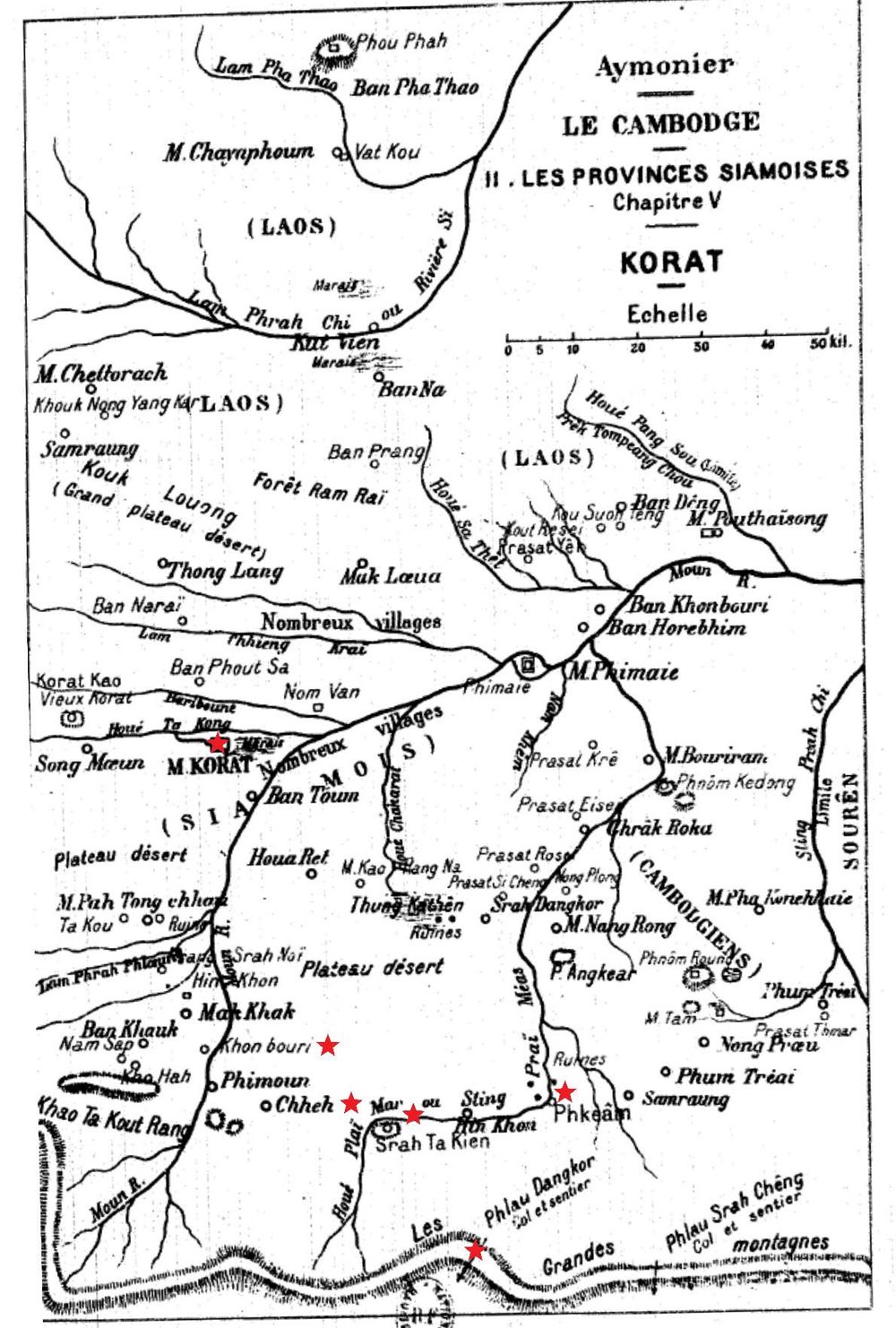
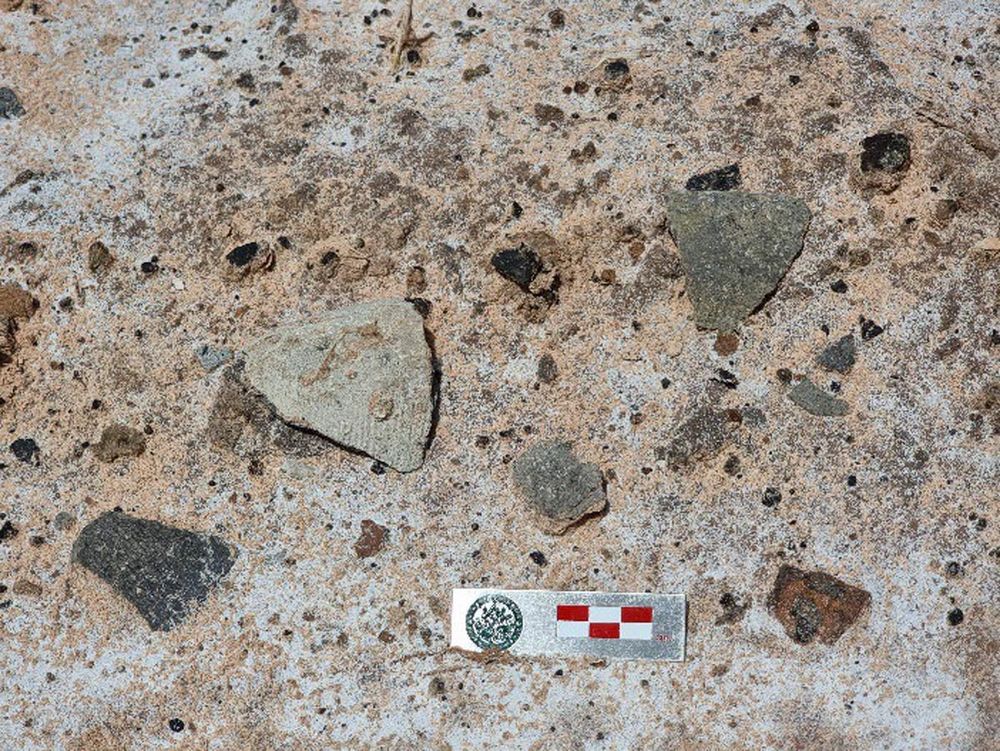
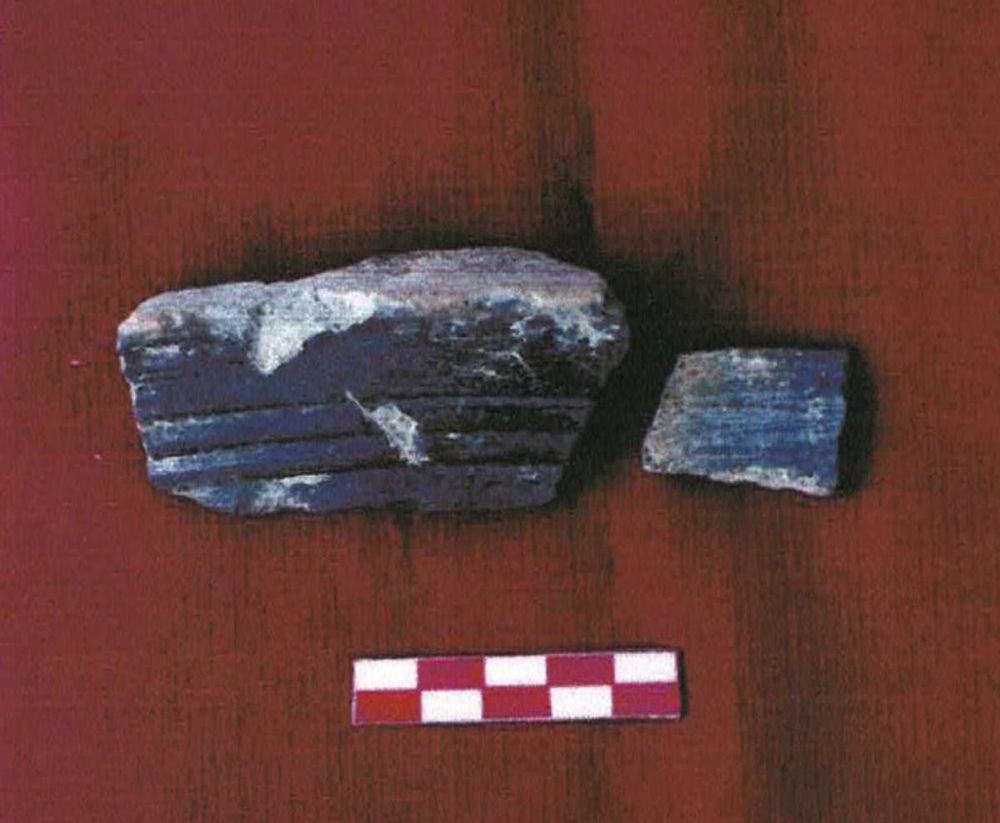
“Under the conventional understanding in 1999, people believed this city had been built in the Ayutthaya period. When archaeological work began, Somdet—then working as an archaeologist—found two fragments of Phimai Black pottery, a material trace of prehistoric civilization, mixed into a soil layer containing evidence of human activity from the Ayutthaya period. This led to the hypothesis that a prehistoric community might once have occupied the area, but the story ended there. No one discussed or revisited the question. Then, in 2010, a human skull from a prehistoric culture was unearthed with Phimai Black pottery near Phon Lan Gate. Even so, no one spoke about prehistoric people in the area, because everyone remained focused on the belief that Nakhon Ratchasima’s old city had been founded in the Ayutthaya period.”
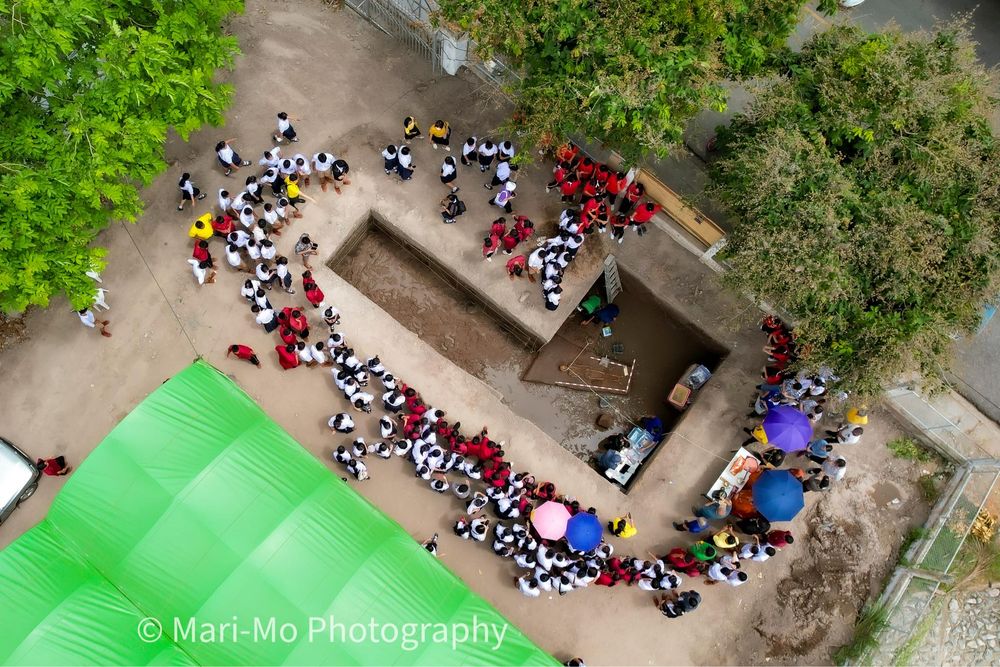
By 2024, the claim that Nakhon Ratchasima’s old city had been founded in the Ayutthaya period was overturned by a sufficient body of new evidence. Archaeologists discovered historical traces within the city wall and moat area near Non Phon Lan that clearly confirmed the old city as a prehistoric archaeological site.
“In 2024, we excavated Nakhon Ratchasima’s city wall with one crucial question: exactly how old was the city? What we wanted most was the deepest, final brick, so we could send it to a laboratory for scientific dating. We had funding for ten days of work, but by the eighth day we had found nothing. We were deeply discouraged and wondered what we were doing with public money. Nothing we had found added to academic knowledge. Then members of the team struck a male skull while scraping the soil with a hoe. It was four in the afternoon—I remember it clearly. When the mayor saw what we had found, he provided funding for seven more days. Those seven days greatly expanded what we know about Nakhon Ratchasima. We were overjoyed, because at last we had not been digging for nothing.”
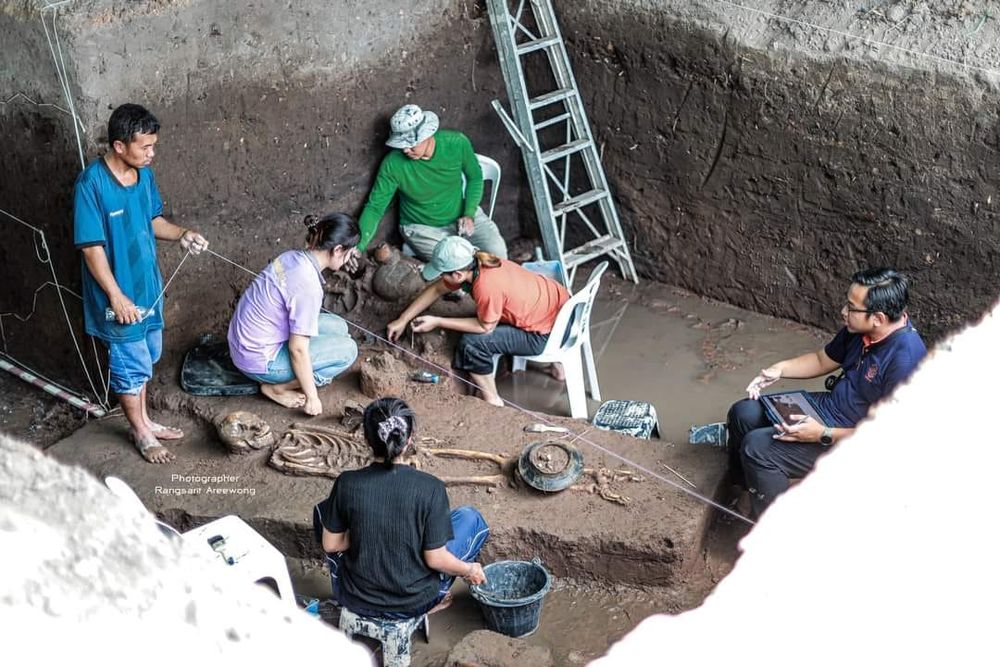
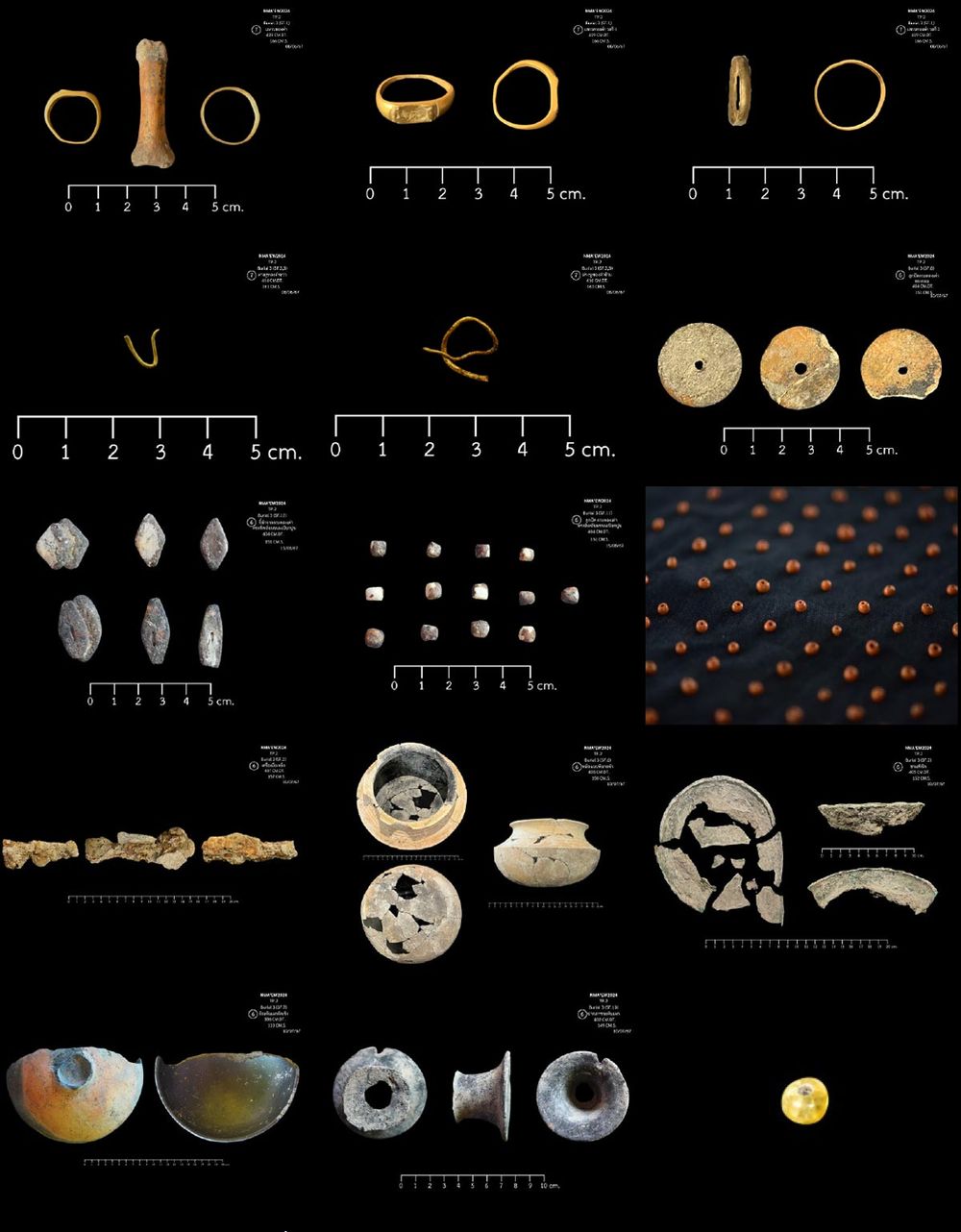
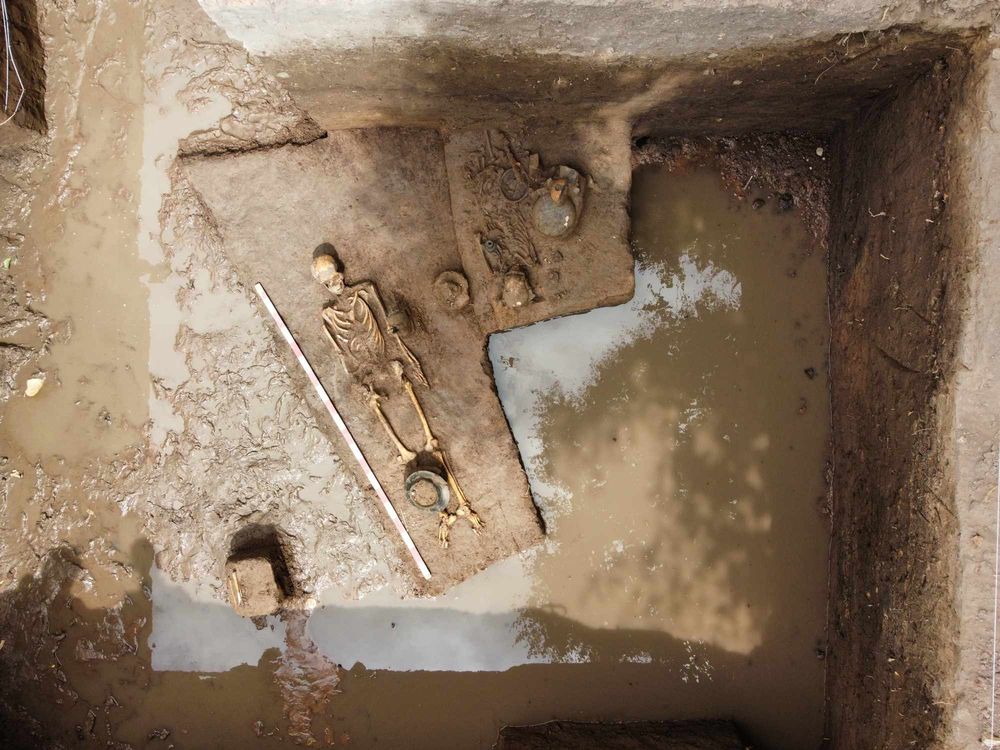
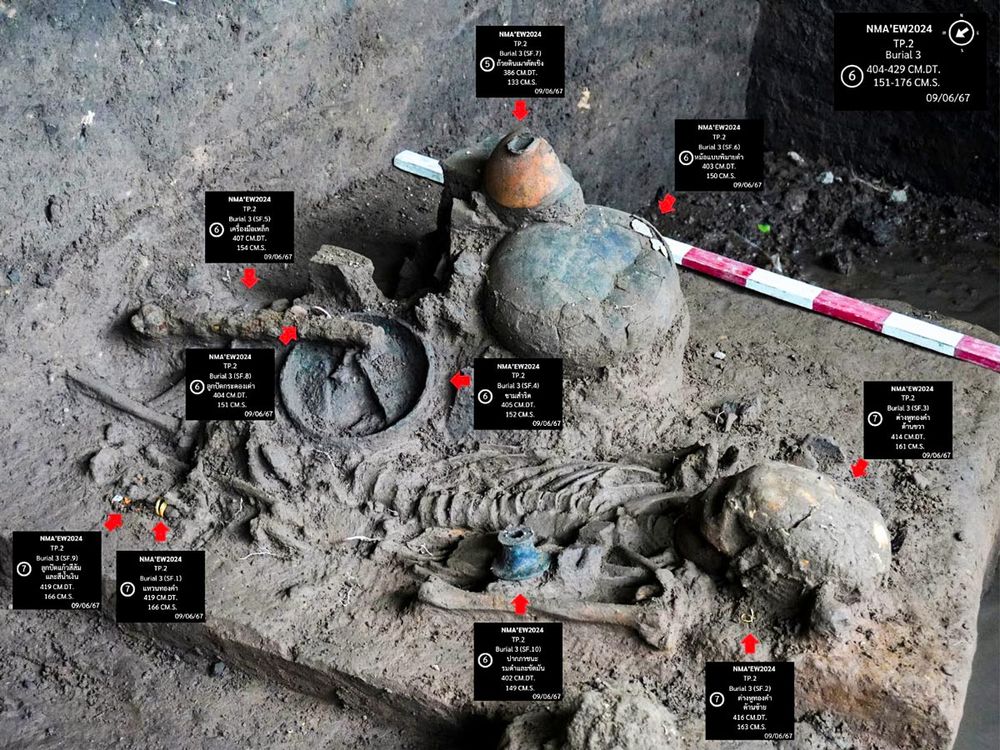
The 2024 archaeological excavation uncovered three skeletons. The highlight was Skeleton No. 3, which was accompanied by an exceptional number of grave goods. In modern terms, one might describe this individual as a bona fide “grand dame of Korat.”
The finds included buried Phimai Black pottery, which established that the skeleton in this grave belonged to a prehistoric Iron Age culture. More than 300 beads encircled the waist, and a gold ring remained on a finger of the left hand. Gold earrings, a bronze bowl, and several other vessels were also found.
“We found this vessel on May 30, 2024. The first person I thought of was Somdet, who in 1999 had found two pottery fragments mixed with other cultural layers and proposed that prehistoric people had lived here. Twenty-five years later, it had proved true. This was the first systematic archaeological excavation of the site.”
Archaeological Work Continues in 2025, Pushing the Evidence Back to the Bronze Age
The overall findings from the 2024 excavation established that people had lived in Nakhon Ratchasima’s old city by at least the late prehistoric period, approximately 2,400 years ago—far earlier than the Ayutthaya period.
Excavation continued in 2025. That year, the knowledge gained in 2024 pushed the timeline back still further, revealing habitation from the Bronze Age, approximately 3,000–2,500 years ago.
“The work in 2025 continued the earlier excavation, but the evidence lay deeper—about 1.6 meters below the footings of a building. We do not know how many skeletons were destroyed when the building was constructed. The remains of the old structure had not been fully demolished, so we chose an alignment beneath the roadway and began excavating a trench measuring 3 by 15 meters.”
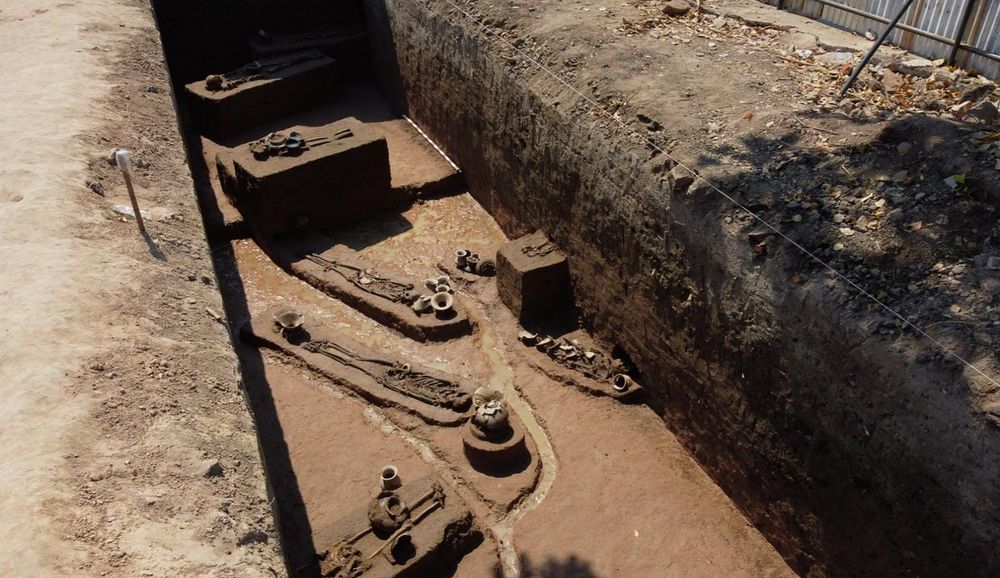
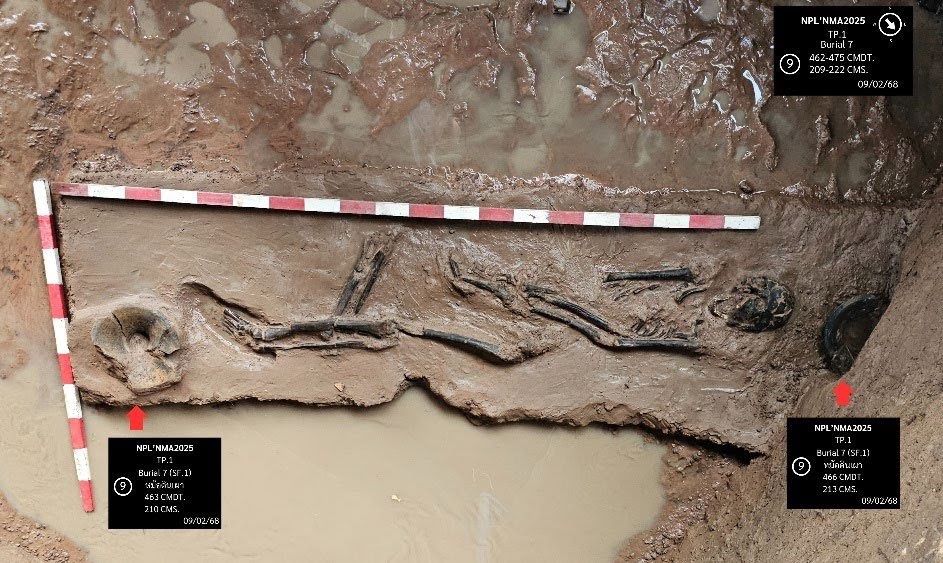
Wannaphong said the 2025 excavation uncovered 11 skeletons. Choosing the road alignment proved advantageous because the evidence beneath the ground had never been disturbed. Skeleton No. 1 was found only one meter below the present ground surface.
“In 2025, we may not have found gold rings or gold earrings, but the evidence pushed our knowledge much farther back, to the Bronze Age. We found a ritual deposit containing a freshwater turtle shell and deliberately broken vessels, laid over a bed of freshwater shells—probably pond snails. We are not yet certain how to interpret the ritual represented by this evidence. What makes it fascinating is that this was a burial ground for people of a prehistoric culture, yet unusual activities were taking place alongside the burials.”
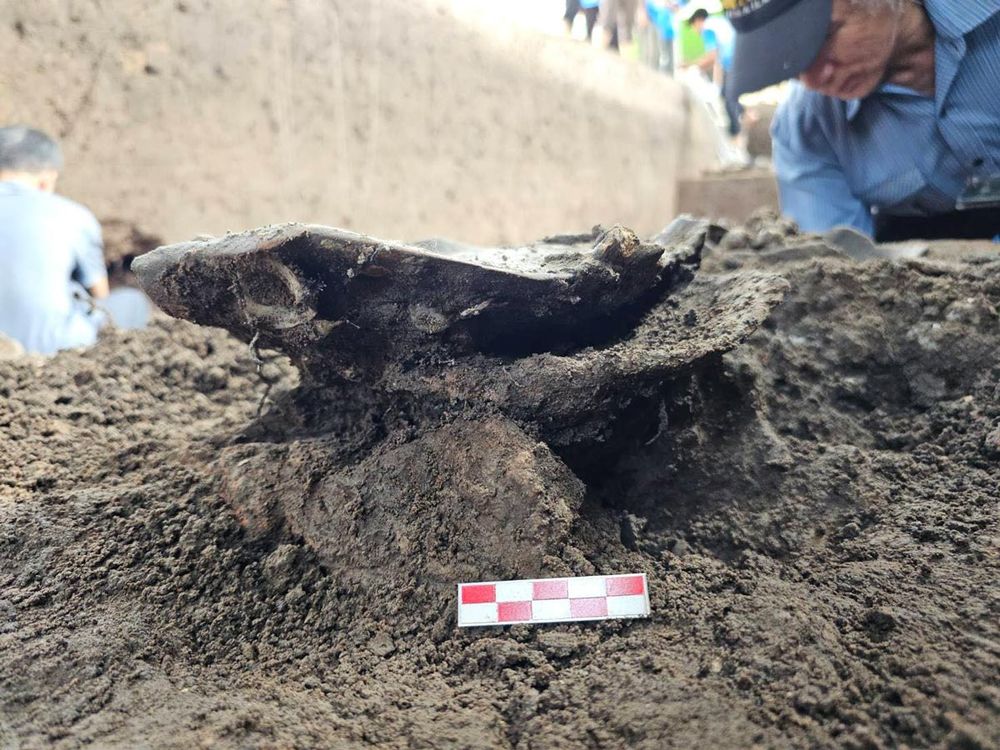
Wannaphong emphasized that archaeologists must always recognize that every excavation of evidence is, in effect, “the destruction of evidence.” All evidence must therefore be recorded in meticulous detail, and its archaeological context must always be understood and remembered.
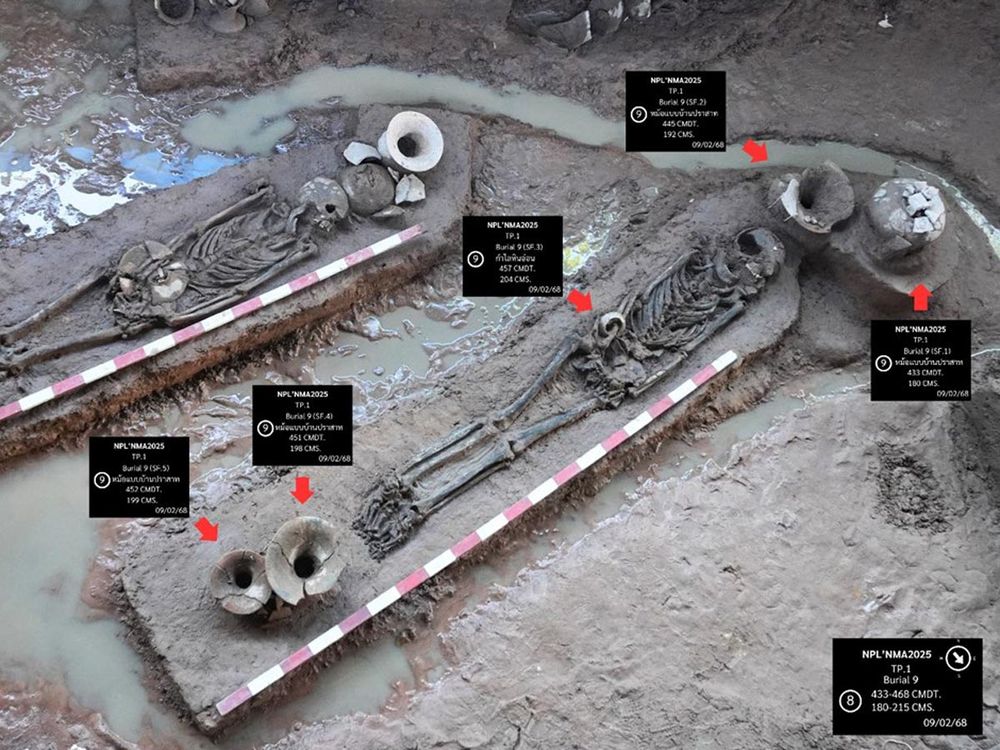
In the Bronze Age layer, Skeletons Nos. 7–11 followed the same burial pattern: the heads were oriented northwest, with pots placed above the head and at the feet. The pattern is contemporary with that found at other archaeological sites, including Ban Non Wat.
Archaeology Is Interdisciplinary
Wannaphong explained that an excavation does not involve archaeologists alone. It draws on every relevant field in an interdisciplinary effort to reconstruct human activity as fully as possible.
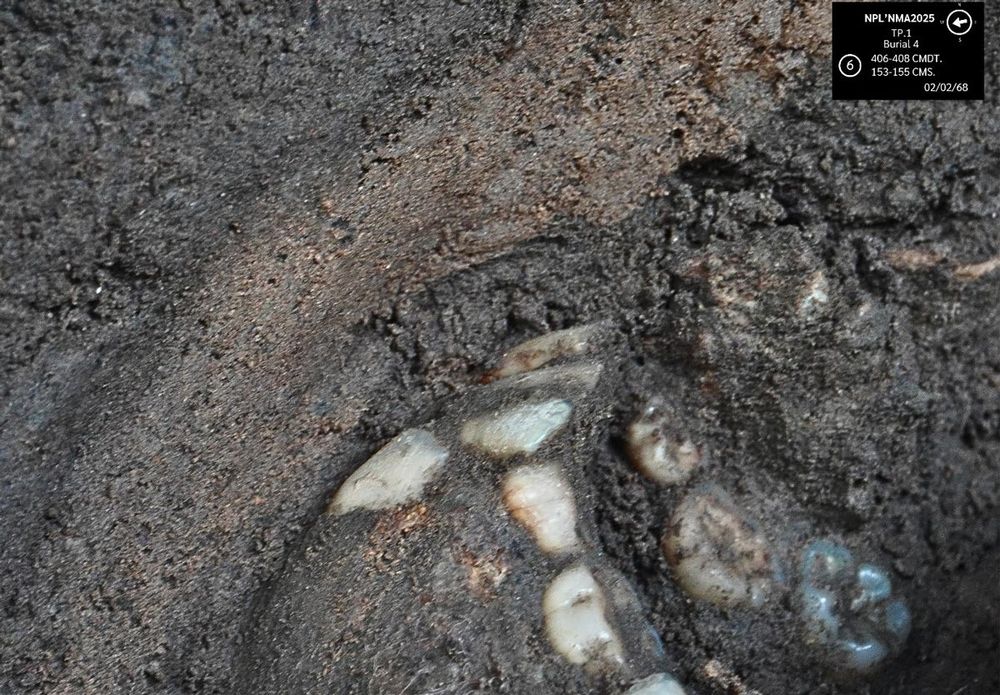
He cited a skull in which the permanent teeth were pushing up beneath the baby teeth. An archaeologist alone might not understand why the mouth appeared to contain so many teeth, but a dentist could identify the permanent teeth emerging beneath the deciduous set and estimate that the child had died at approximately six to eight years old.
Another intriguing case involved Skeletons Nos. 8 and 9, which were buried parallel to one another. Both wore marble bracelets on the right wrist, but the bracelets differed in size. Skeleton No. 8, with the larger bracelet, was a woman approximately 24–34 years old. Skeleton No. 9, with the smaller bracelet, was a man around 35–40 years old. Both followed the Bronze Age burial pattern: the head faced northwest, with pots placed above the head and at the feet.
“Anthropologists or archaeologists might explain that the man having fewer personal objects than the woman could reflect the status accorded to women by prehistoric cultures, which may have valued women more highly because women give birth to the world.”
Biology in Archaeological Research
In a geopark city such as Nakhon Ratchasima, biological research once focused mainly on dinosaurs and petrified wood. More recently, however, it has also turned toward biological work in archaeology.
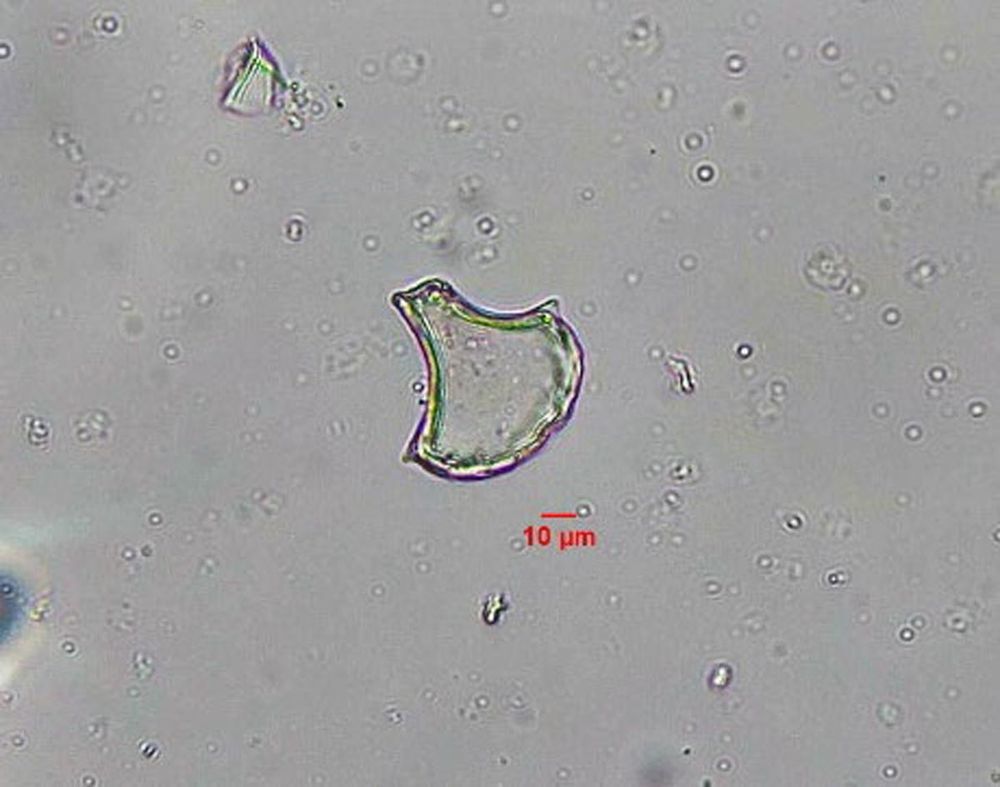
How can biology answer archaeological questions? In studies of Bronze Age cultures, for example, scientists analyze soil sediments. Biologists examine sediment traces under a microscope, looking at the forms of phytoliths and comparing their characteristic morphologies to determine which plants they came from.
Analysis of soil from a Bronze Age vessel—specifically, soil from a pot associated with human Skeleton No. 9—searched for phytoliths, the microscopic mineral particles formed in plants. It found traces of wild rice, Oryza rufipogon, considered an ancestor of the rice eaten today: Oryza sativa japonica, associated here with the glutinous-rice group, and Oryza sativa indica, associated with non-glutinous rice.
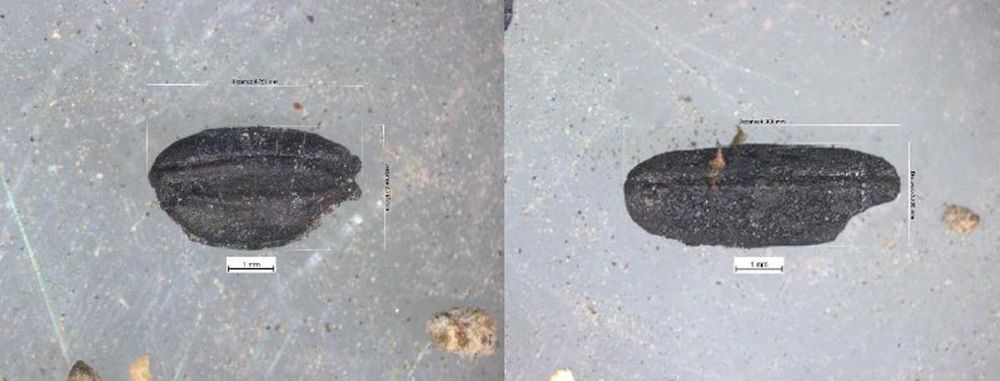
“In addition to examining phytoliths under a microscope, researchers also found rice grains: four grains of Oryza sativa japonica and two of Oryza sativa indica. This tells us that people still ate wild rice during the Bronze Age. By the Iron Age, cultivated rice included both glutinous and non-glutinous varieties. This suggests that Korat’s people may have eaten both types of rice 2,000 years ago. Besides rice grains, biologists also found toothache-plant seeds in a prehistoric Iron Age layer.”
Taken together, these findings show that the timeline of human presence in Nakhon Ratchasima is remarkably broad, extending continuously from the prehistoric Bronze Age to the present. In other words, there was no period when Nakhon Ratchasima was left without inhabitants. This is therefore an important step forward for historical and archaeological research—one that reinforces the understanding that Korat’s people did not come from somewhere else, but have lived here for several thousand years.
© 2025 Khaoyai Connect. All rights reserved.
No part of this content may be copied, modified, or distributed in any form without prior written permission.
