

Unveiling the Roster of Khao Yai’s “Community Wild Elephants” – Part 1
“Getting to Know Plai Chomview or Biang Yai”
Wild elephants that venture outside the boundaries of Khao Yai National Park to inhabit and forage in community areas and villagers' agricultural lands currently number 9 individuals. Every single one of them has a name.
Many people still misunderstand that wild elephants forage outside the forest because there is insufficient food inside. In fact, food in the forest is more than abundant. However, behavioral studies show there are 2 factors why wild elephants leave the forest area: 1. Being pushed out, 2. Attracting food sources.
Being pushed out refers to male calves entering adolescence; they are driven out of the herd to form new groups. Some may still dwell in the forest, but some choose to leave the forest for the wider world. Once they taste sweet, delicious fruits they have never eaten before, causing them to not return to the forest after leaving. Over time, they learn that outside the forest there is plenty of food. Importantly, there is no danger as perceived, plus there are comfortable places to eat and sleep.
Eventually, they transform themselves from “Wild Elephants” into “Community Wild Elephants”.
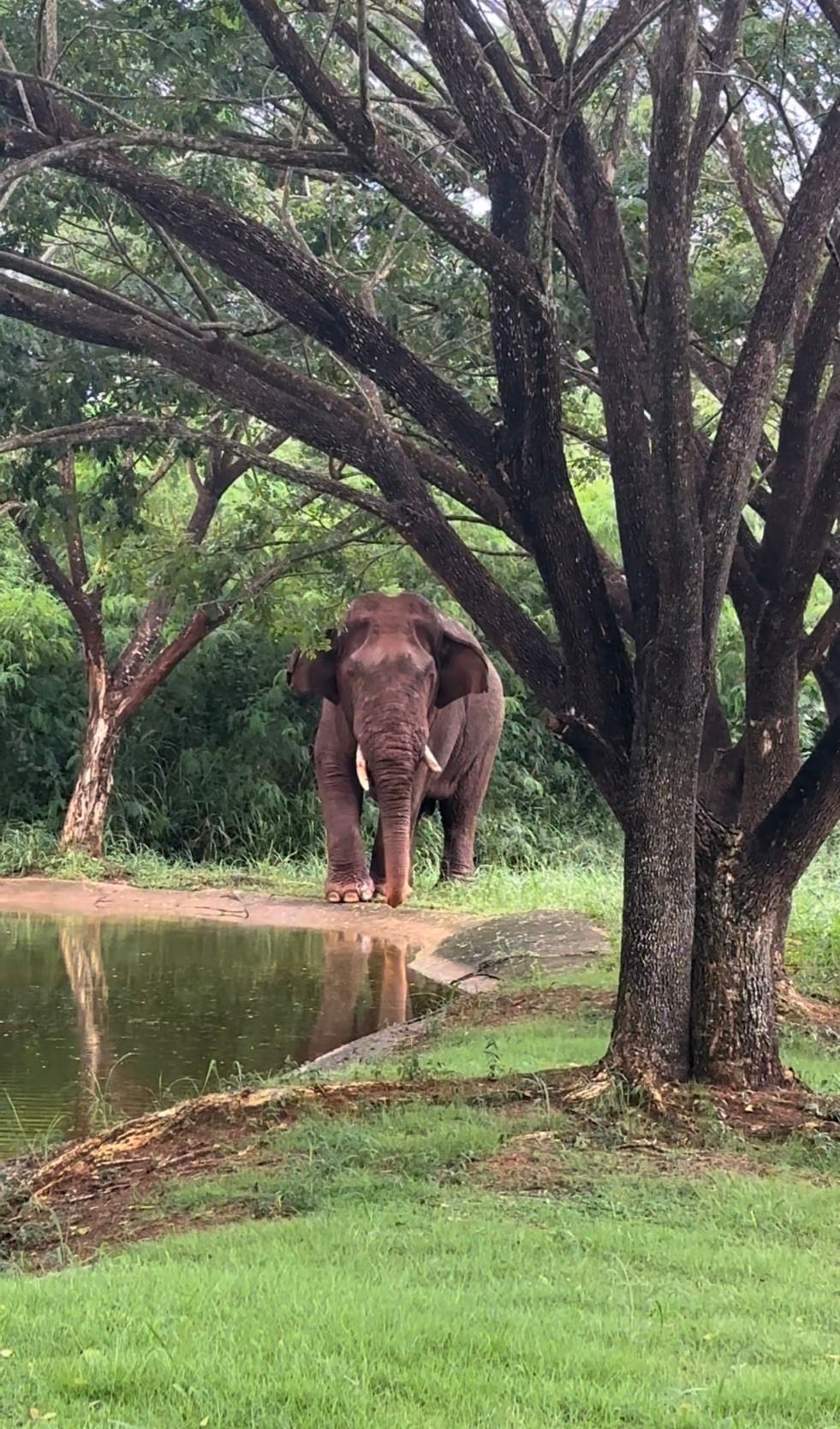
Because elephants are intelligent animals that learn and understand things quickly, there is communication among the male elephants driven from the herds. It resembles older brothers teaching younger brothers about food sources, sleeping spots, and even crossing roads; they learn from generation to generation.
Currently, the issue of elephants venturing outside the national park remains a problem that requires immediate problem-solving. Khao Yai National Park officials and the wild elephant push-back volunteer team receive reports and systematically push them back to the forest line. Meanwhile, long-term solutions remain a matter that requires a joint solution from all parties.
Since the problem persists, at the very least, getting to know the elephants serves as basic data leading to correct prevention methods. Importantly, one must distinguish the appearance and temperament of each individual to understand, memorize, and store specific data.
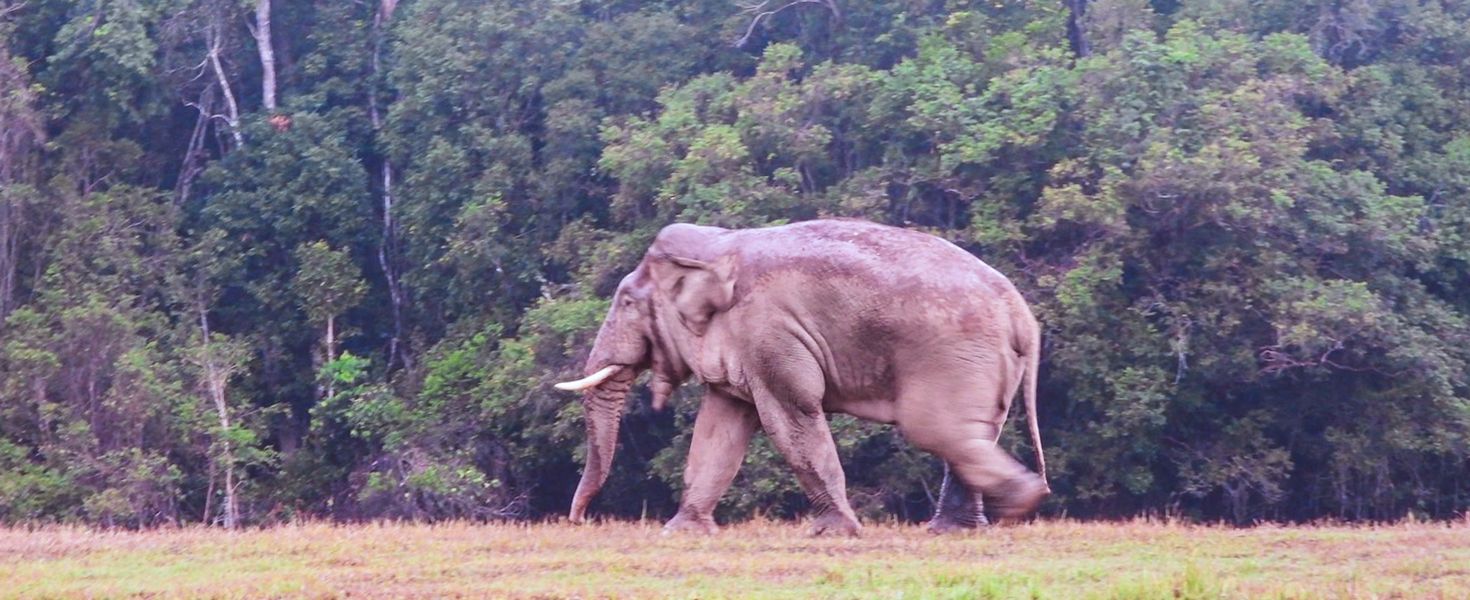
Today, the Khaoyai Connect team presents the first community wild elephant: “Plai Chomview” or “Plai Biang Yai,” who was recently hit with force by a solid box truck in the early morning of January 4th. This caused him to flee into the forest in a panic, requiring officials to mobilize a search.
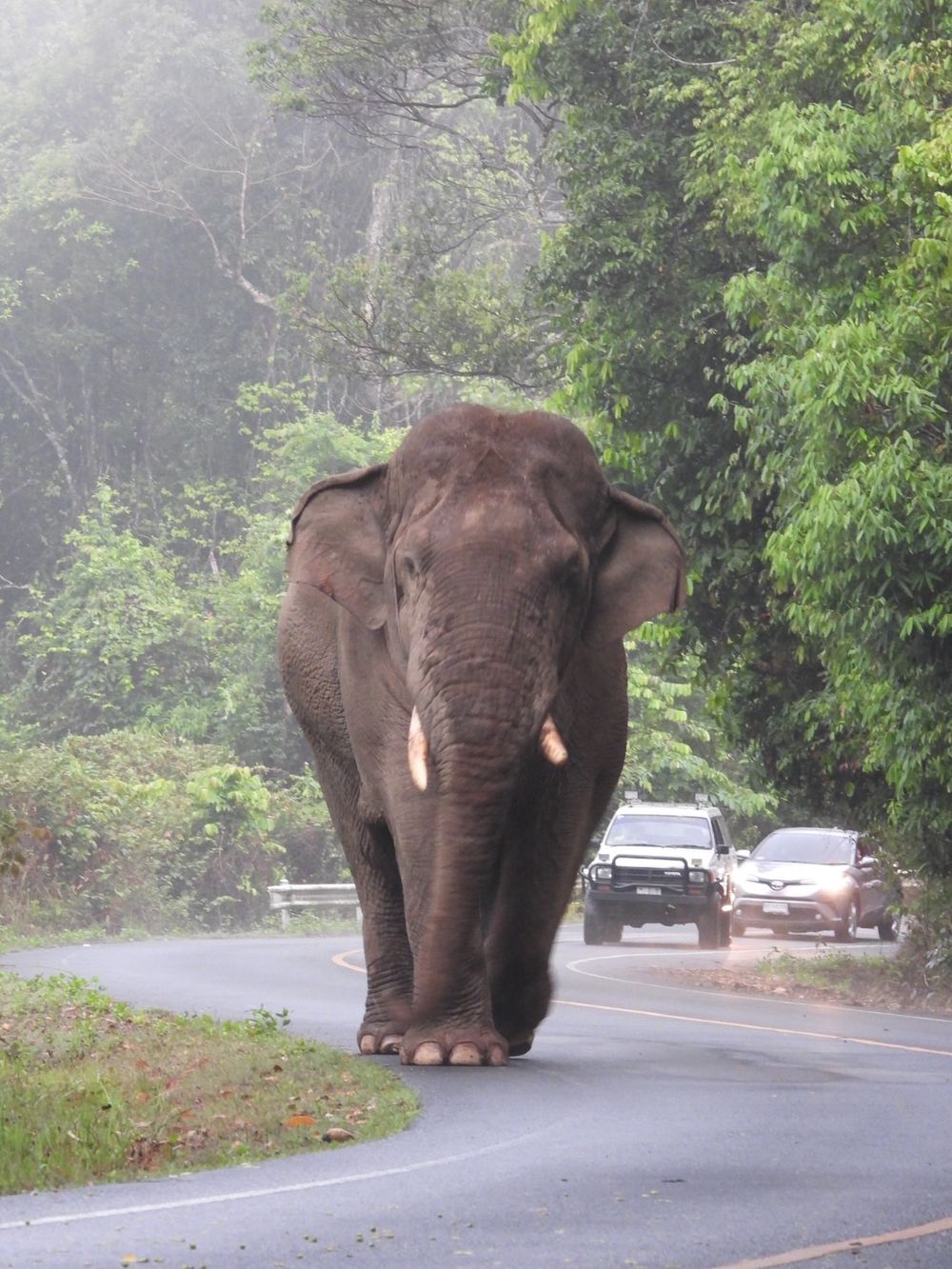
Plai Biang Yai is around 30 years old, with ears starting to fold down with age. He is one of the Khao Yai elephants with a smart physique, standing about 3.5 meters tall, considered large by Thai elephant standards. His spine curves like a banana leaf stalk, considered beautifully proportioned. His tail is long and full of hair, and he rarely has scars on his body.
The volunteer team agrees unanimously that “Biang Yai is the coolest young elephant”.
He got the name “Biang Yai” (Big Deviation) because his two tusks deviate away from each other; the right tusk sits lower than the left. His other name is “Chomview” (View Admirer) because people found him appearing at the Viewpoint (KM. 30), and there are photos of him standing handsomely beside the UNESCO World Heritage sign, earning him the name Plai Chomview.
Regarding his temperament, he is composed. When in a community, he is constantly cautious. He does not yet exhibit behavior of raiding people's houses.
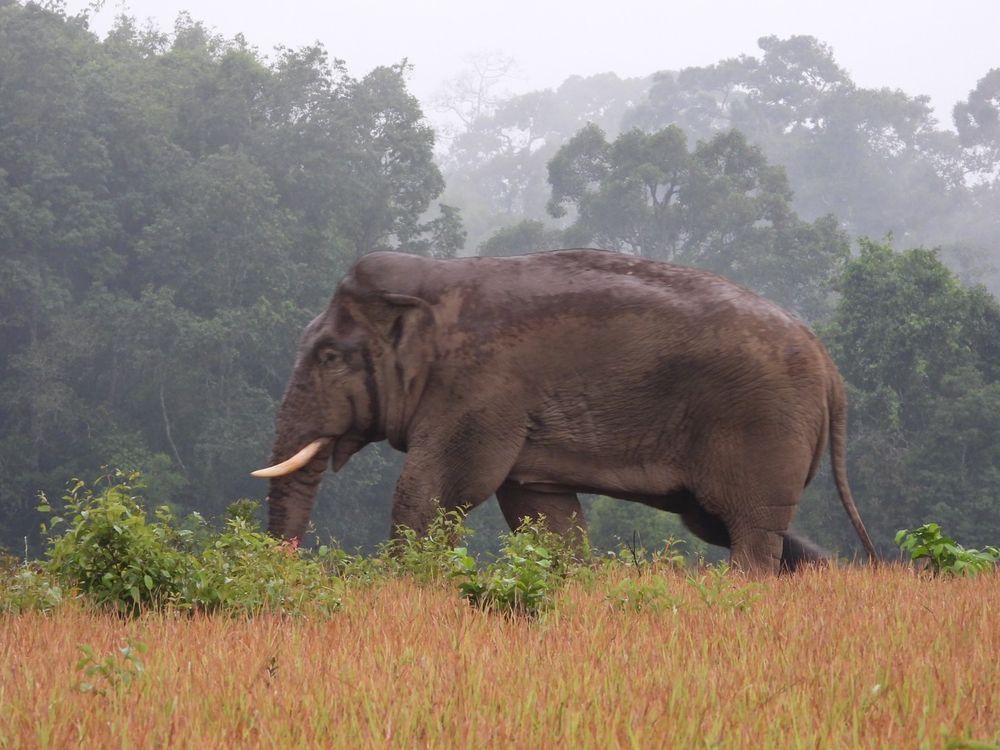
As for aggression (if threatened), on a scale from least to most (1-5 stars), the elephant push-back volunteer team rates his power level at 3.5 stars.
Regarding pushing back into the forest (depending on the area), on a scale from easy to hard (1-5 stars), the volunteer team rates it at 2 stars. This is considered easy to push back because Biang Yai is not familiar with humans and has high anxiety, making the push-back process not very difficult. Based on tracking, the furthest area Plai Biang Yai has reached is Phaya Yen Subdistrict, Pak Chong District.
Most recently, on the night of January 7th, officials finally found Plai Chomview at the entrance of the Mun Headwater Research Station, Mu Si Subdistrict. Initially, no wounds were found, bringing relief to many who saw Plai Chomview appear again. Hopefully, this accident will lead to mutual learning for the future welfare of both humans and elephants.