


Spotting the Secret Figures of Khao Yai
The Snake Tour Foreigners Adore for its Colors and Beauty
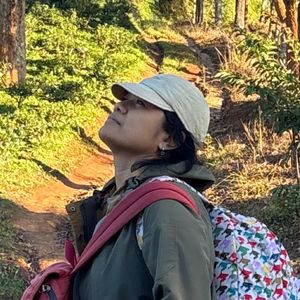
While a young Polish couple steps into the dense forest of Khao Yai, a severe cold snap of -22 degrees is blanketing the city they left over a month ago.
Monika and Piotr are office workers, a husband and wife from Poland, who have fallen for the charm of Khao Yai's nature. They are escaping the cold to visit this place for the second time.
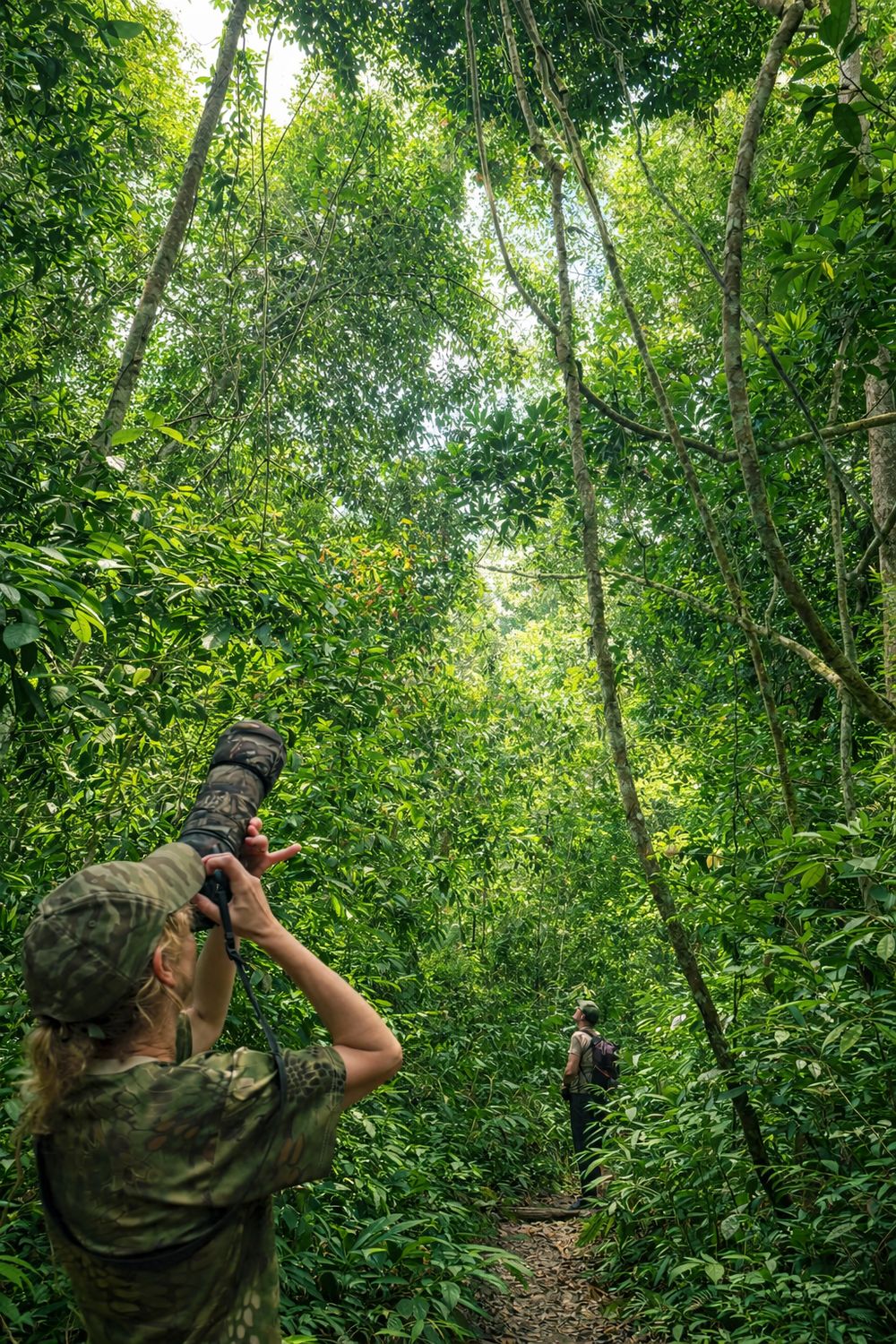
In early February, the weather on Khao Yai starts to get hot. The green forest begins to be interspersed with the brown of leaves gradually falling and piling up along the paths. Even so, wildlife tours on Khao Yai remain bustling, especially for birds and elephants, which never lose their popularity.
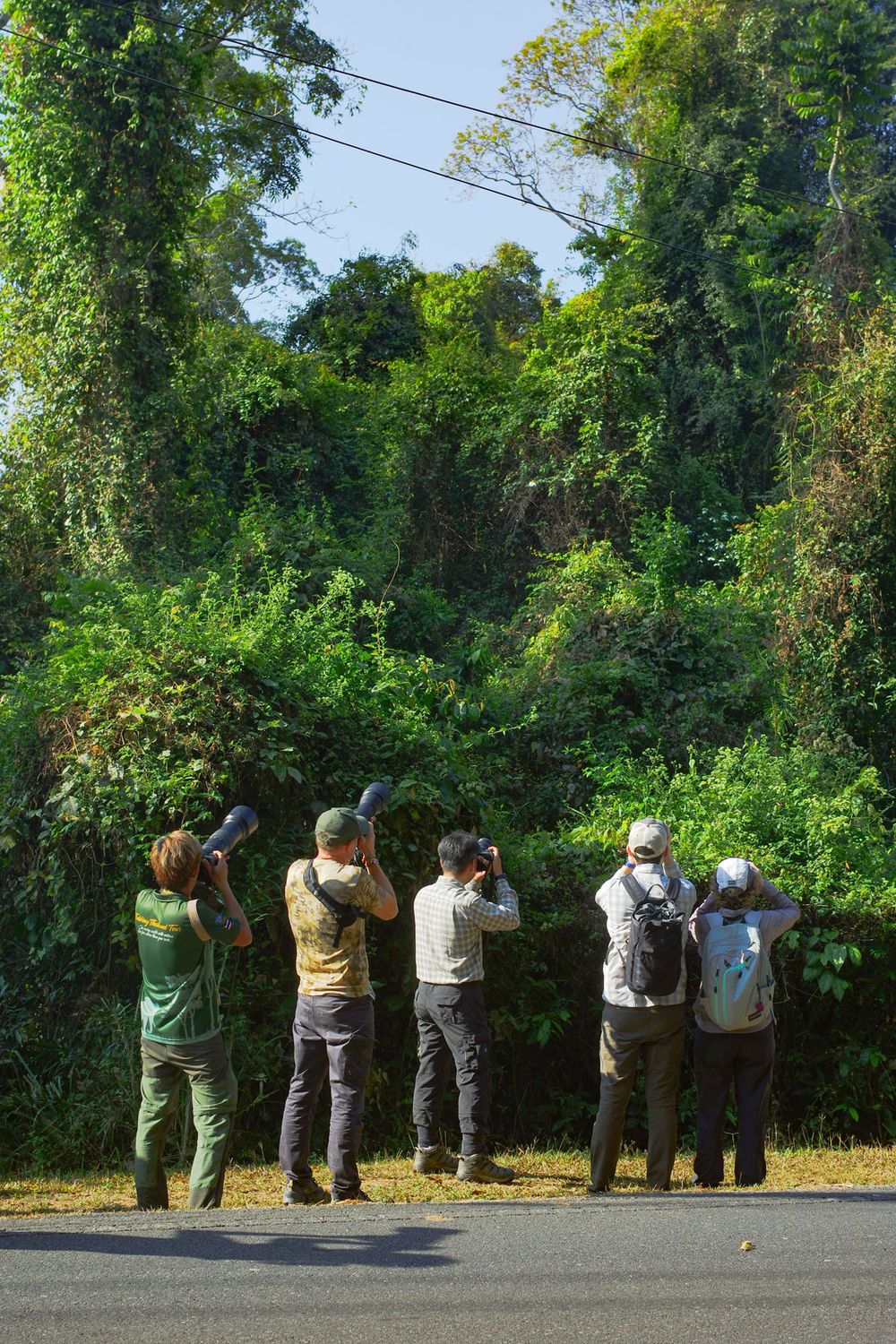
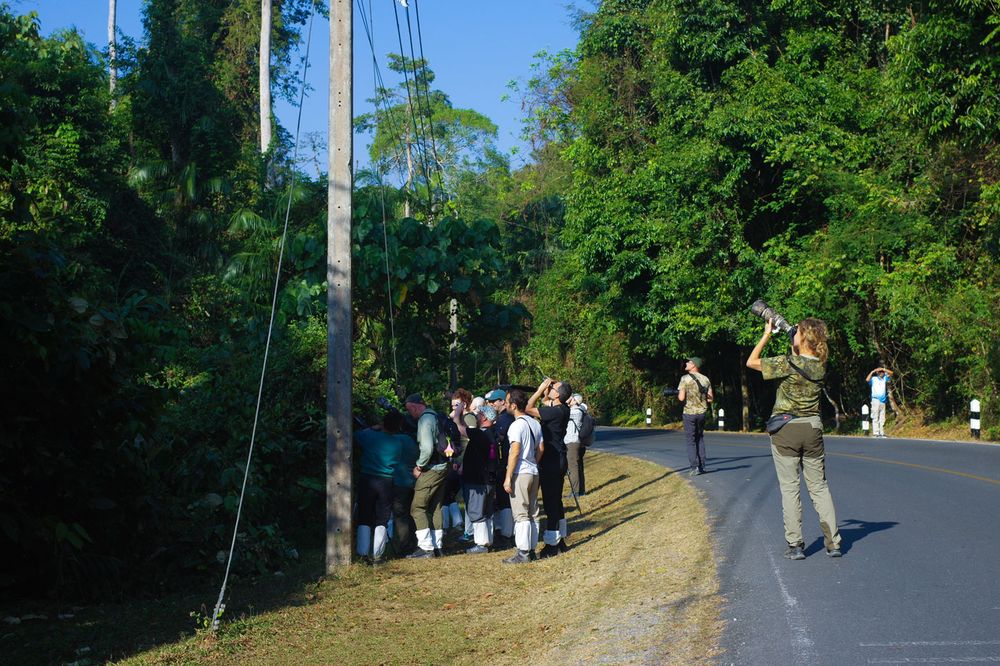
While driving up the mountain, we see small groups of tourists with guides and spotting scopes along the roadside, intently watching birds.
“The clients said this time they want to find the Vogel's Pit Viper, which is an endemic snake in the Green Pit Viper group. In Thailand, it is found in only 2 places: Khao Khitchakut in Chanthaburi and Khao Yai. Apparently, they came before and didn’t see it, so this time they really want to see one. I think we should find one near the water,” Beer-Wirun Chinosang, a tour guide, tells Khaoyai Connect, which was allowed to tag along this time.
The car drives slowly along the road while the trip leader's eyes scan for movement from the forest edge before stopping at the first point at Km. 30, where a large group of tourists is already gathered.
The image before us is a pair of Great Hornbills, the largest species of hornbill, flirting by feeding each other fruit. It is a sight that makes you smile at the cuteness of this pair of birds.
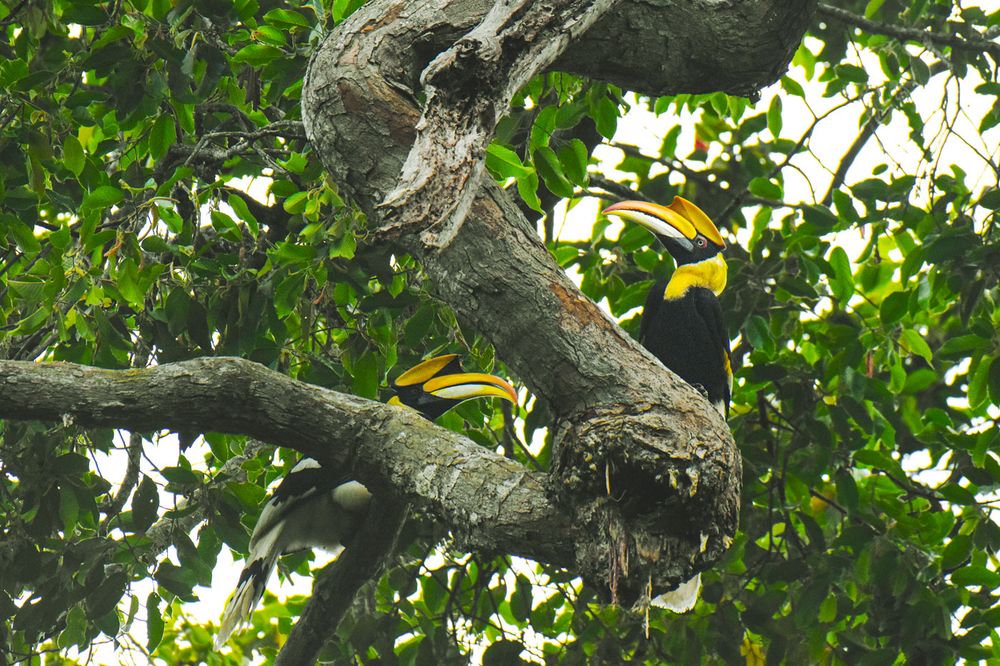
“This Great Hornbill nest is right next to the road. They are getting used to people. Everyone who passes has to stop and look. Normally, researchers would block access because the period when they enter the nest is sensitive, but since this nest is right by the road, avoiding people is impossible,” the young guide explains the background of the hornbill nest at Km. 30.
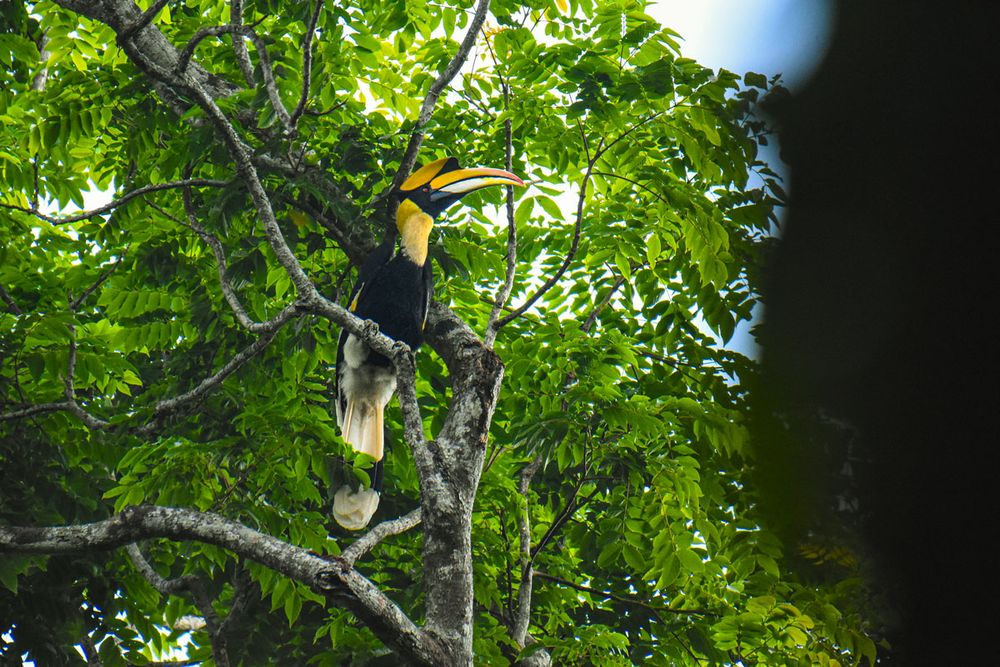
Meanwhile, Monika and Piotr choose a good angle to soak in the atmosphere before lifting their cameras to enjoy photographing the lovebirds in various poses. Once satisfied with the photos, we all get back in the car to head to other spots, with the destination being Haew Suwat Waterfall and the mission to find the Vogel's Pit Viper, the secret highlight of Khao Yai.
We stop for a bathroom break at the Visitor Center, another spot where guides often cross paths.
“Brother Beer, do you have any snakes in stock?” a female guide walks over to ask. It is well known that besides being the founder of Trekking Thailand Tour, Beer has considerable expertise in snakes. Recently, he was appointed as a consultant for the Northeast region by the Herpetology Club.
Beer says the Khao Yai tour community mostly exchanges information. For things like birds or gibbons, if found in the forest, they call to tell each other. But sometimes, in cases where certain birds are nesting, we only tell specific people who can keep the location closed. If we open it up, people will know immediately and go to surround the bird, causing it to abandon the nest.
“Last November, normally a Buffy Fish Owl will sleep to flatten the nest floor before laying eggs. It was sleeping there with just its eyes poking out. A photographer saw just that and wasn't satisfied, so they clapped and made noise. The worst was knocking on the tree until the bird abandoned the nest to build elsewhere. Luckily, it hadn't laid eggs yet, just prepared the nest. If there were eggs, it would have abandoned the chicks,” Beer recounts the other side of getting beautiful photos.
So, does the National Park have rules to prevent this?!
“That’s the thing, how do we fix it? The park emphasizes strictness with tour companies but doesn't focus on independent photographers coming from various places,” remains an open-ended question waiting for an appropriate answer.
Before leaving for Haew Suwat Waterfall, we hear guides telling each other they found elephants at Thung Kwang. Without delay, our group heads straight to the location like everyone else.
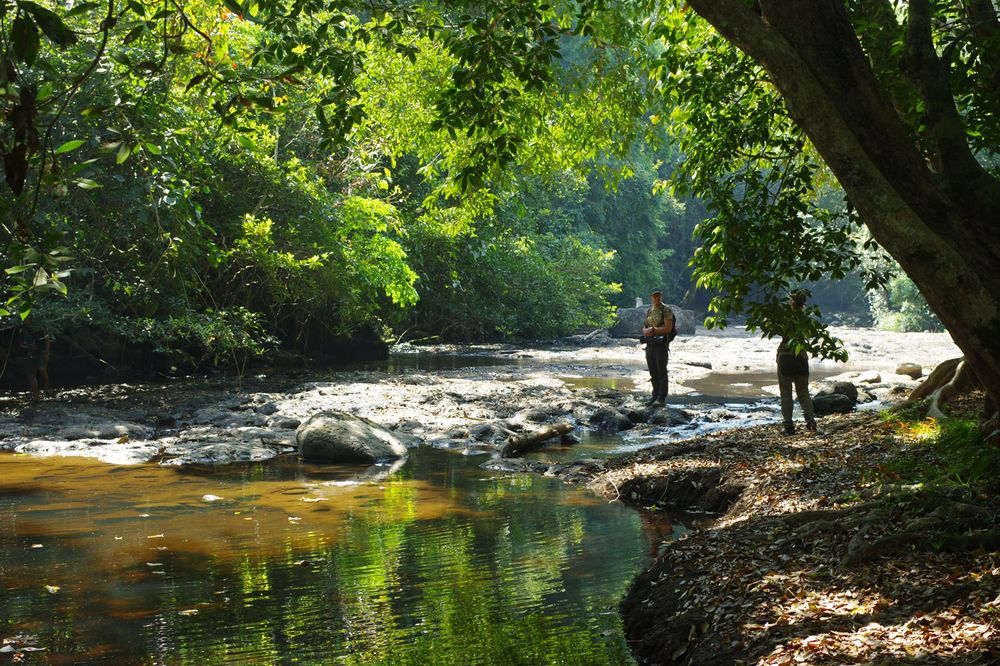
Our tour leader takes us up a small earthen mound before grabbing his binoculars to scan, then points deep into the forest, saying he saw an elephant's head move and it should be walking toward the direction we are standing.
Tourists from all directions stand waiting with the hope of seeing a Khao Yai elephant once, but ten minutes pass without a sign.
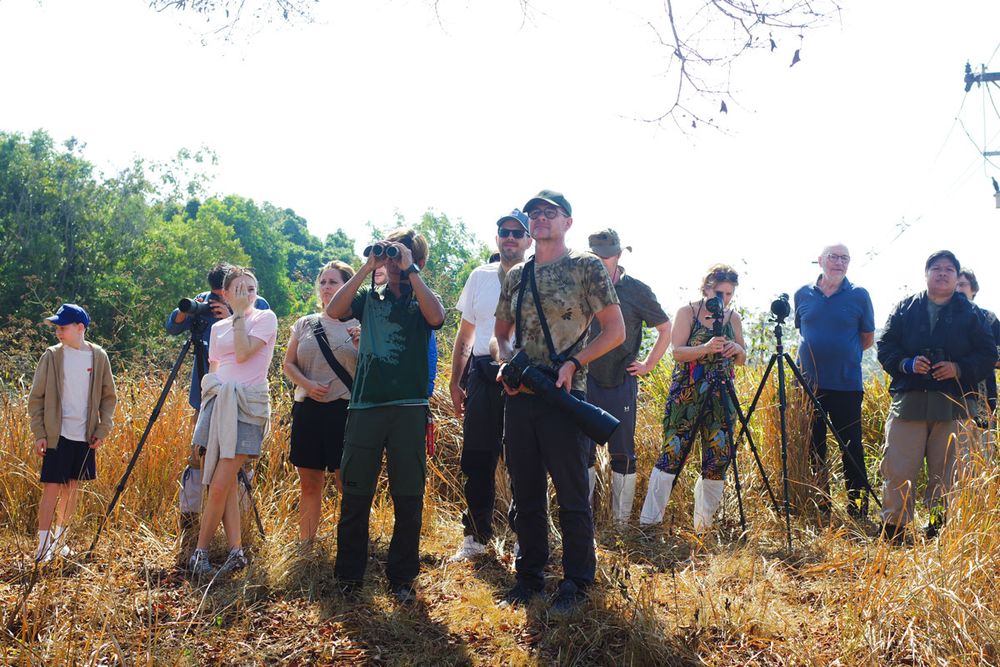
“It's been playing in the water for a long time, come out already,” Beer says with a laugh.
After waiting for a while, the young Polish couple gives up and asks to go to another spot.
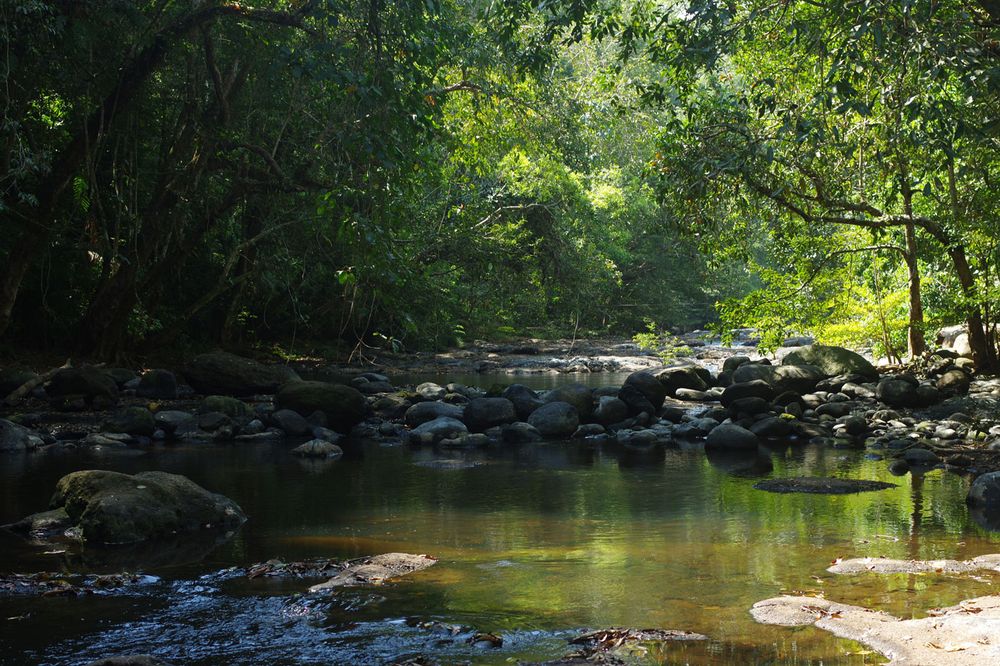
We head straight to Haew Suwat Waterfall, walking along the water's edge without rushing. The sounds of the forest and the water ahead have the power to create peace in the mind.
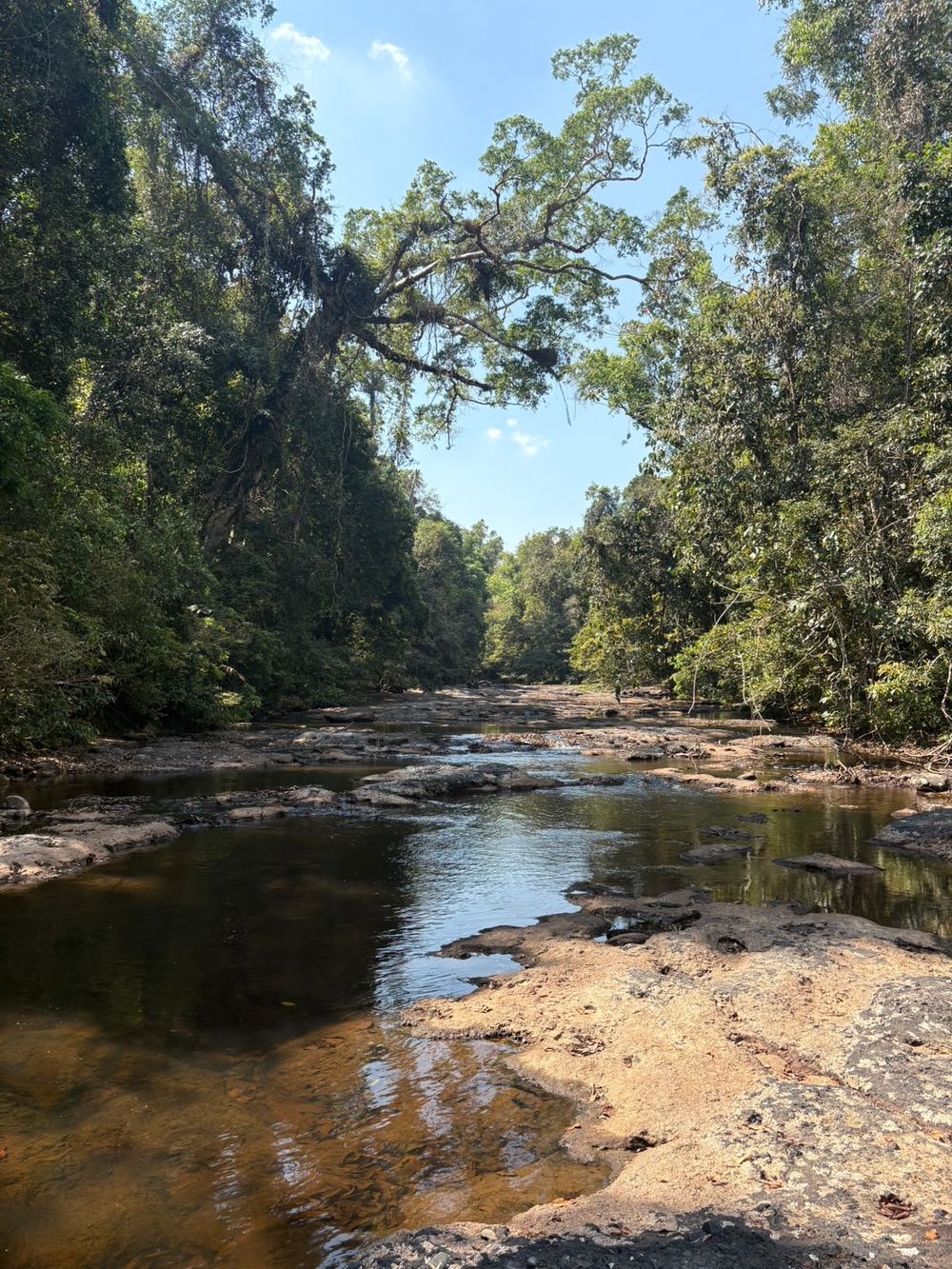
While waiting for the guide to find the snake as requested, the three of us remaining explore the area.
Not long after, there is a call from the tour leader along with a hand gesture beckoning us.
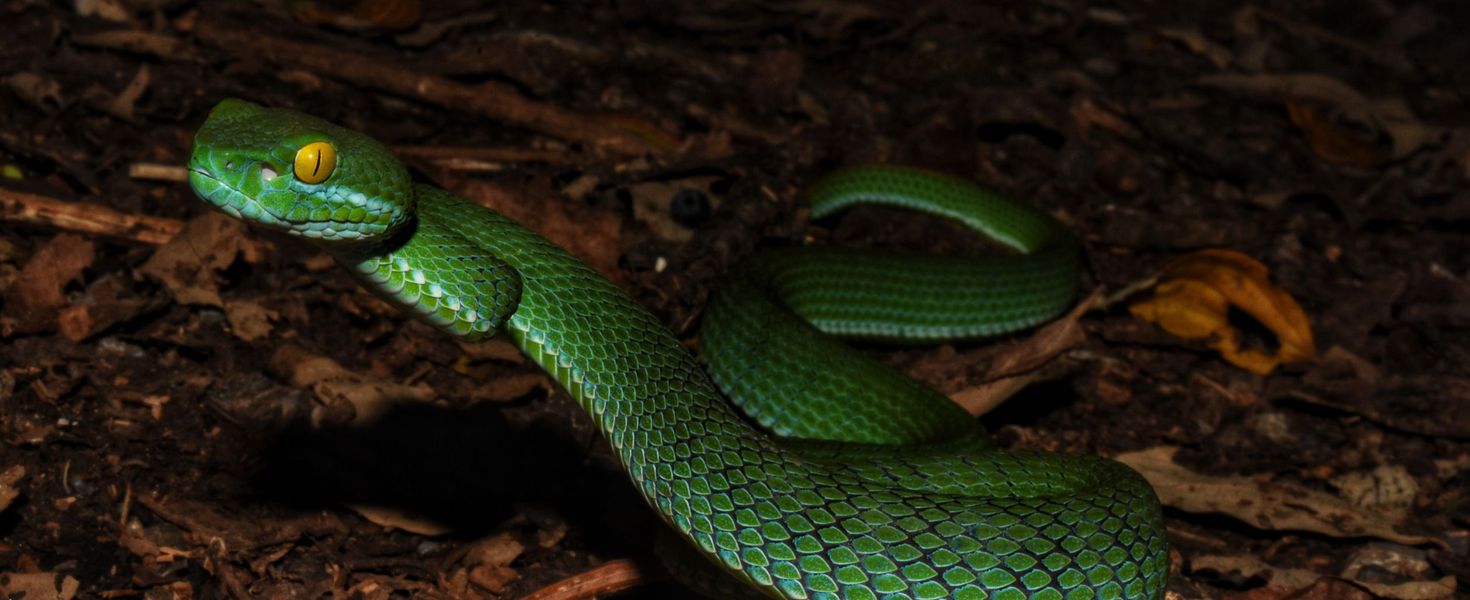
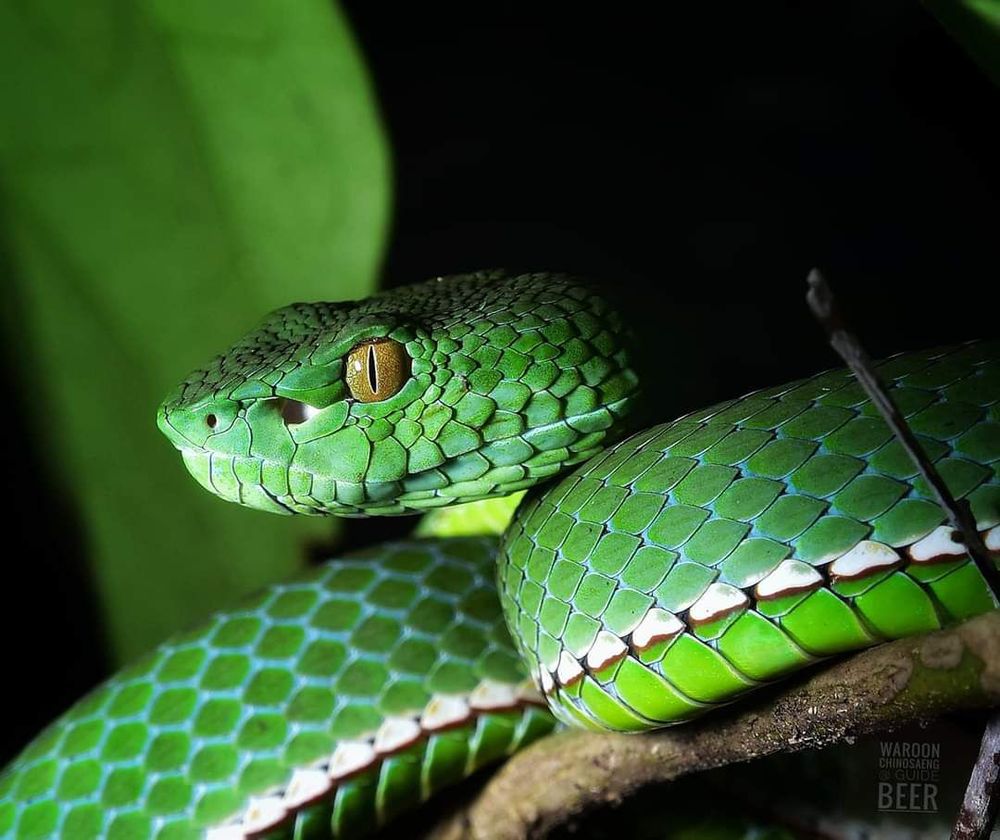
“Found it. It's a Vogel's Pit Viper (Trimeresurus vogeli), a species endemic to Khao Yai. This one is a male; its colors aren't as beautiful as the female.”
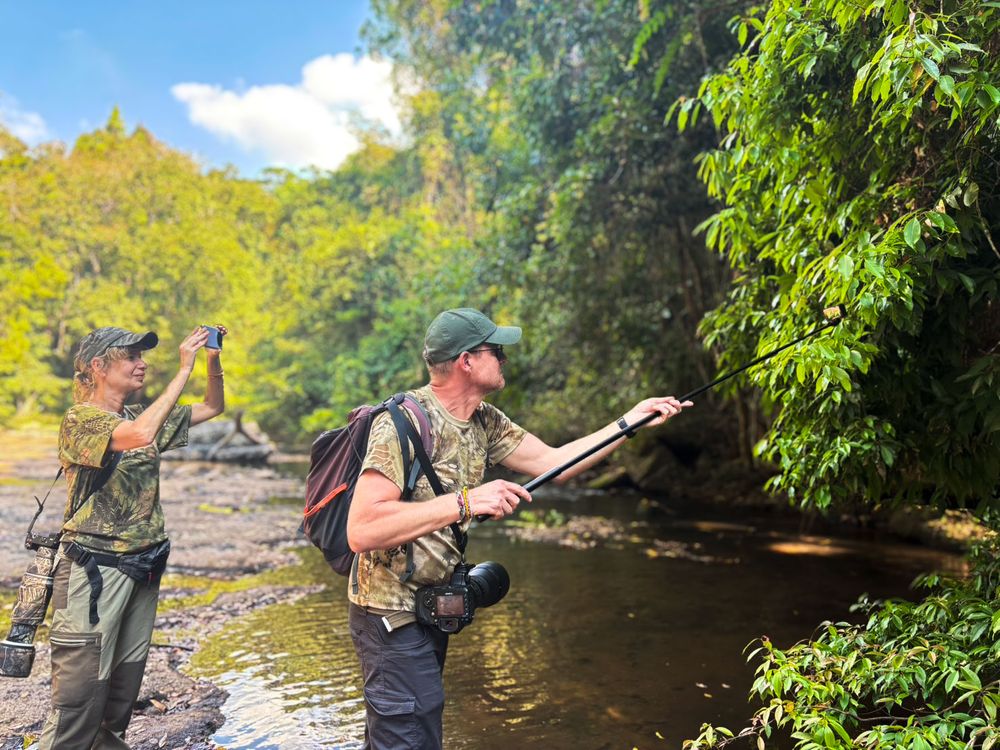
The three of us rush to the spot where the guide is standing in the water, looking where his finger is pointing at the target.
For those who requested to see snakes like the two Polish tourists, there is nothing to worry about because both have some level of knowledge and understanding of snakes. But for those who are still hesitant, it gets a bit exciting to move a mobile camera close to take a picture, even though our guide confirms it is okay because it is sleeping.
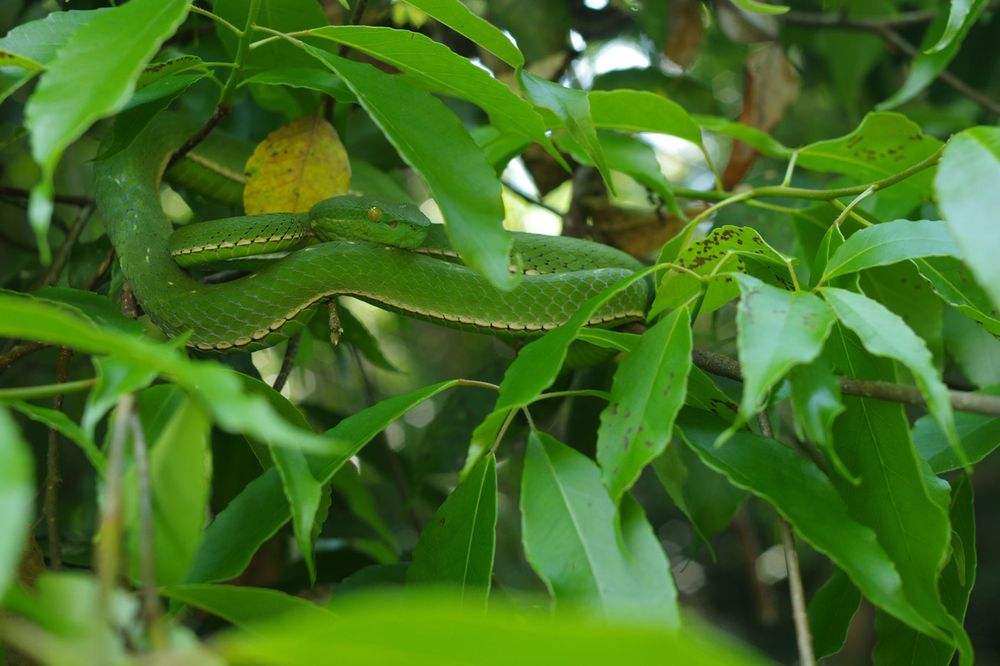
That Vogel's Pit Viper is coiled around the tip of a branch sticking out over the water. Its colors blend in with the fresh green leaves. If you don't observe carefully, you won't see that a snake is living there. But for someone accustomed to serpents like Beer, no matter how much they blend in with the environment, they cannot escape his hawk eyes.
Judging by the expressions on Monika and Piotr's faces right now, it serves as a good answer to the guide's success.
Beer explains further that green snakes in the Khao Yai area are divided by altitude. If it is 600 meters above sea level and up, you will find only the Vogel's Pit Viper. The range of 200-400 meters above sea level is an overlapping area between the Vogel's Pit Viper and the Big-eyed Pit Viper. And if lower than that, two overlapping species are found: the Big-eyed Pit Viper and the White-lipped Pit Viper.
“How do you know where the snakes are?” we ask.
“Each year we have our own records. We observe that if this year's summer is very hot, where the snakes will be. In winter, don't even mention it; you won't find any because snakes hibernate. In the rainy season, they are everywhere. Some we found here this year might disappear, and next year if we are lucky, we might find them again, but maybe not the same individual, but another one following the scent left by the original one,” Beer explains his working method.
Snake Tours: The exotic animal watching trend that is quietly gaining popularity.
Beer says that regular tourists who come to see snakes are from Japan, Singapore, and some from Europe. Those who stay for long periods come from Switzerland. There have been 3 groups already; one group came for 20 days at a time, starting a snake-watching trip from Phuket all the way up to Khao Yai. They list what they want to see, and we design the program for them.
“People coming to see snakes are a niche group. The reason is the beautiful colors, and we can take photos up close. If lucky, we find new records because Thailand misses recording many. Like in Khao Yai, many species are unrecorded because there aren't enough surveys. Once we find one, it becomes a new record. The reason for the lack of surveys is that snake watching requires night walking, but Khao Yai is dangerous with big animals, making surveys impossible. Many juniors found the Blood Python (Short-tailed Python). Some say they are only in the South, but it turns out Khao Yai has them because people have seen them slithering across the road or getting run over. There have been 3-4 records.”
After finding the target, Monika and Piotr chill out, forest bathing without thinking too much.
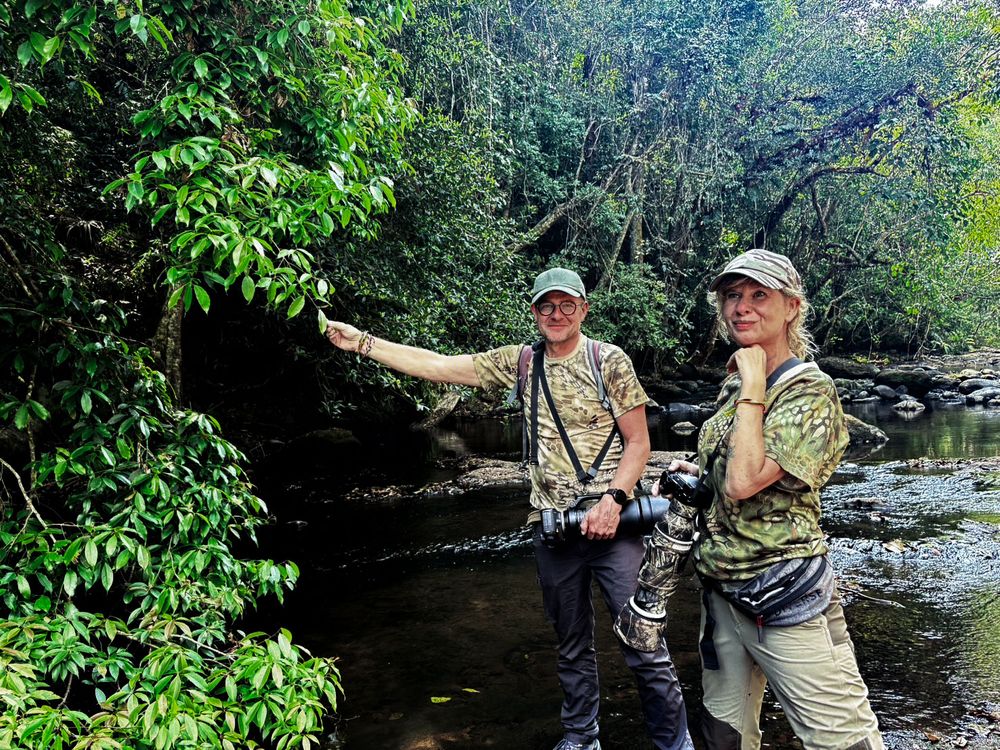
“Most Polish people, when coming to Thailand, come to drink and visit bars. But personally, I like animals. I want to see animals that are different from Poland because the sounds of nature in each place are different,” says Monika. Normally, she works in an office mostly with computers, causing fatigue. Choosing to come to Khao Yai is to reconnect with nature, which is a very effective way to rest.
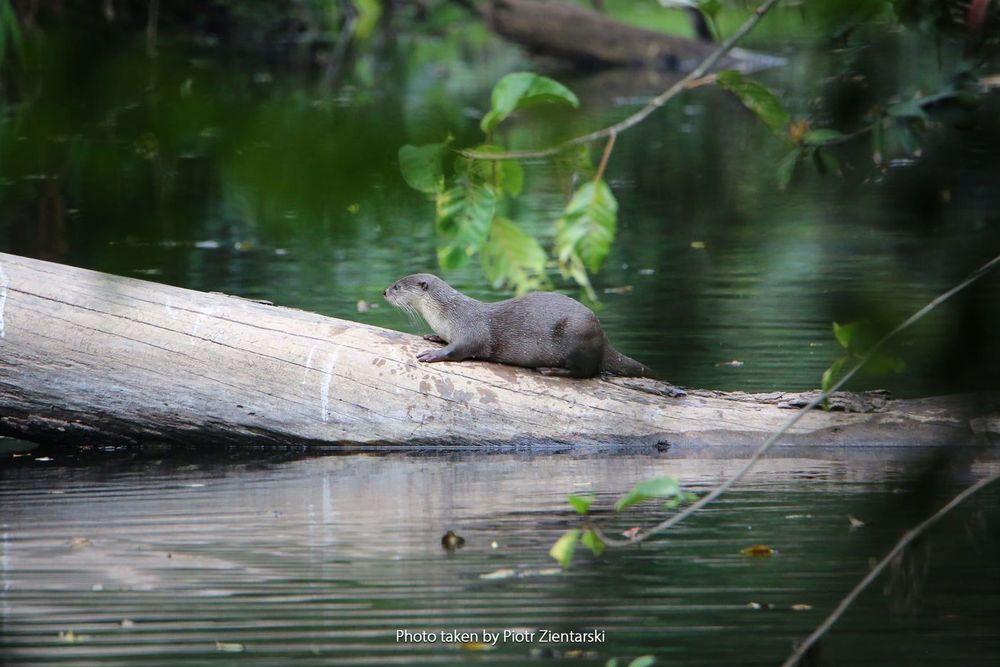
After taking photos of the Vogel's Pit Viper to their hearts' content, on the way back, Piotr is lucky and sharp-eyed enough to see two round otters playing on a log in the middle of the water. He hurriedly points them out to us, turning it into a nice shot of chubby otters to take back to Poland.
Before the day ends, the couple finally gets to see an elephant playing in the water, an atmosphere that is not easily seen.
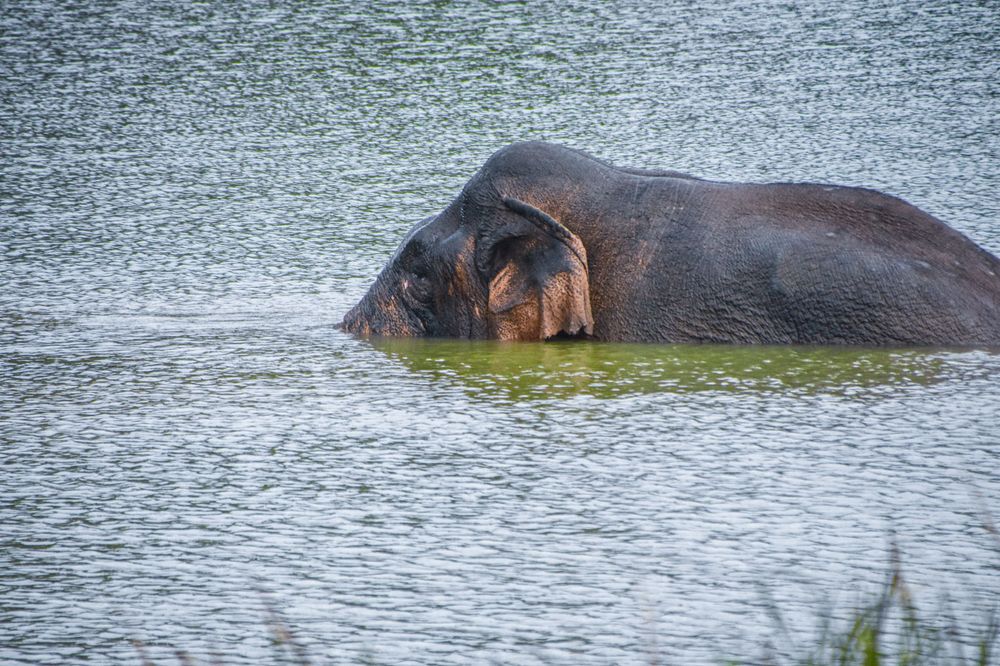
The day ends, but the trip isn't over because the young Polish couple requested a night walk trip outside the national park area too. For a general guide, this might be baffling, but not for Beer, because he has surveyed this area countless times.
Beer selects a limestone mountain location where we can find specific forest geckos: the Green-eyed Bent-toed Gecko and the Butterfly Bent-toed Gecko.
“Some people call 'Tuk-kai' (Bent-toed gecko) a forest gecko. It has the body of a gecko but the feet of a lizard. Small body but beautiful patterns,” says Beer.
At the appointment time, everyone is in concise gear. Indispensable are personal flashlights to light the way and spot targets for photos.
At this limestone cave, we haven't been inside long when the tour leader's sharp eyes catch a glimpse of the Butterfly Bent-toed Gecko's tail. He quickly runs to intercept it from the other side. When seeing it clearly, this gecko is about 2-3 times the size of a house lizard. Not very big, but it has beautiful patterns like a butterfly.
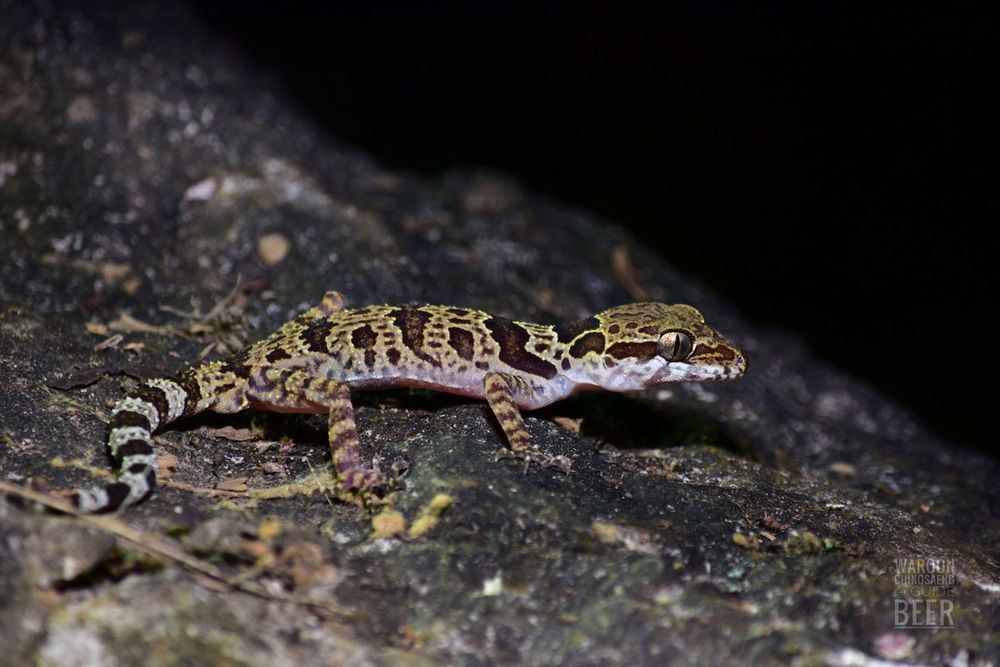
The little gecko is so good, as if it knows the job, staying still and lifting its head for us to record images until we are satisfied.
That’s not all. Walking a bit further, the two Polish tourists get wide-eyed and say "Wow" again with a second Butterfly Bent-toed Gecko, capped off with 2 more Big-eyed Pit Vipers, making for a fulfilling night.
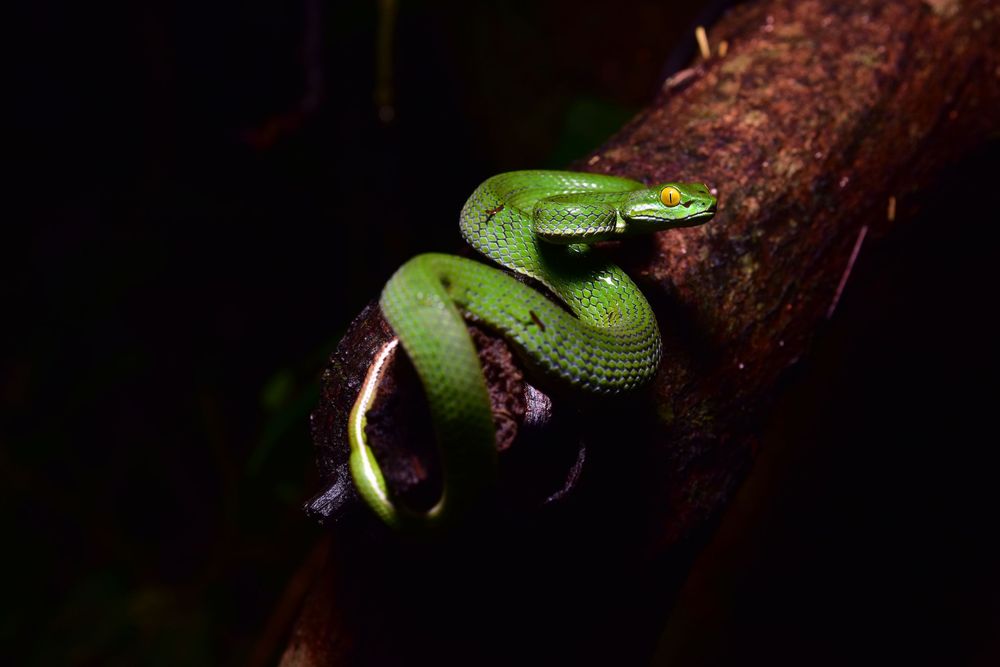
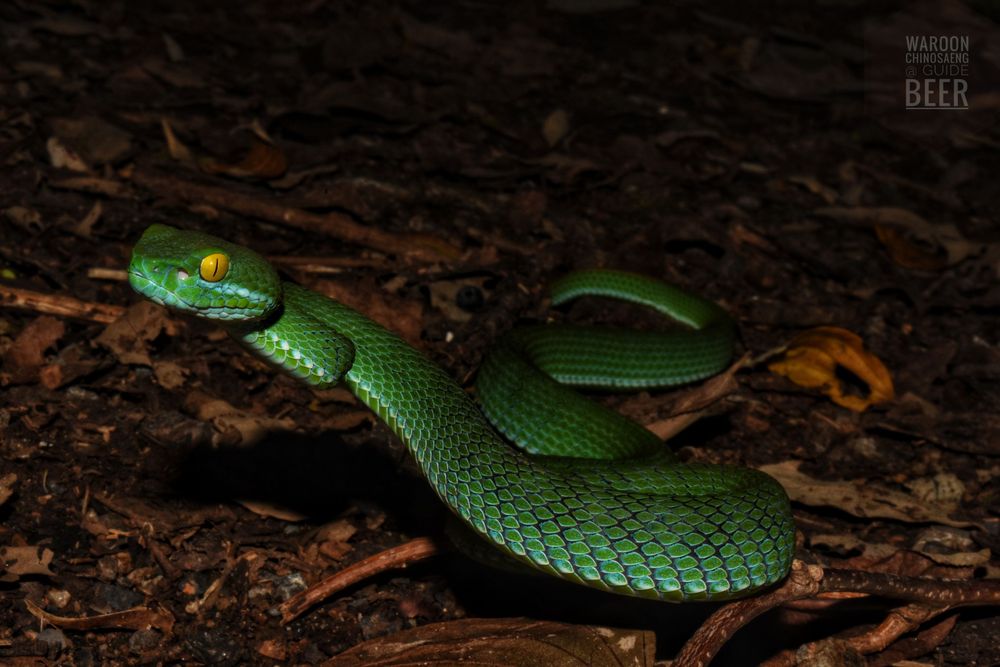
This is just a fraction of the strange animals living in the Khao Yai area that many overlook. But if you look deeper, this is a major destination for ecotourism with diversity, the kind that foreigners quietly travel to see, but in numbers that increase every year!
© 2025 Khaoyai Connect. All rights reserved.
No part of this content may be copied, modified, or distributed in any form without prior written permission.
