

Gemini said When a Traveler Learns to Stay Put
Sawang Thongdee and a Year of Staying Still
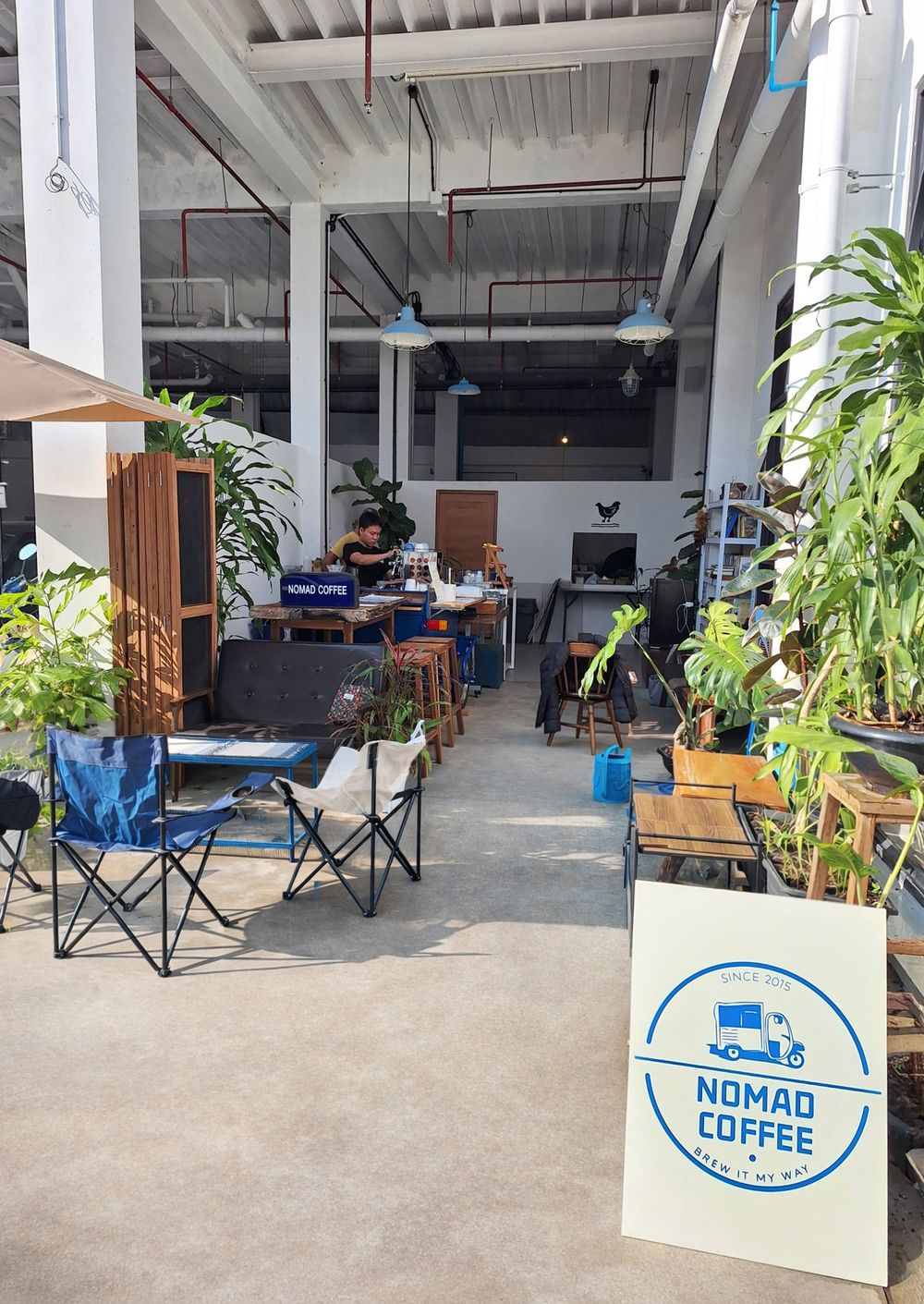
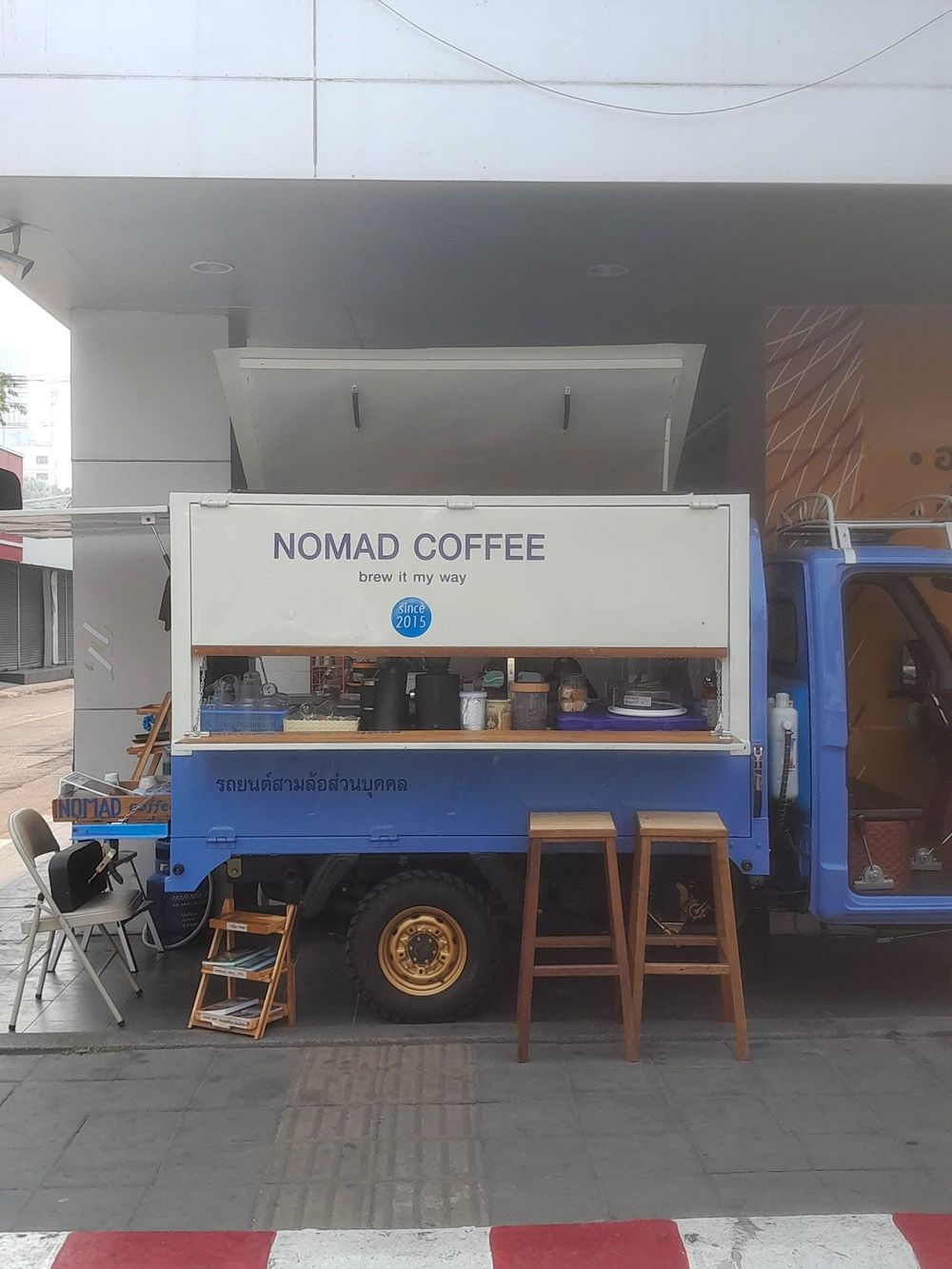
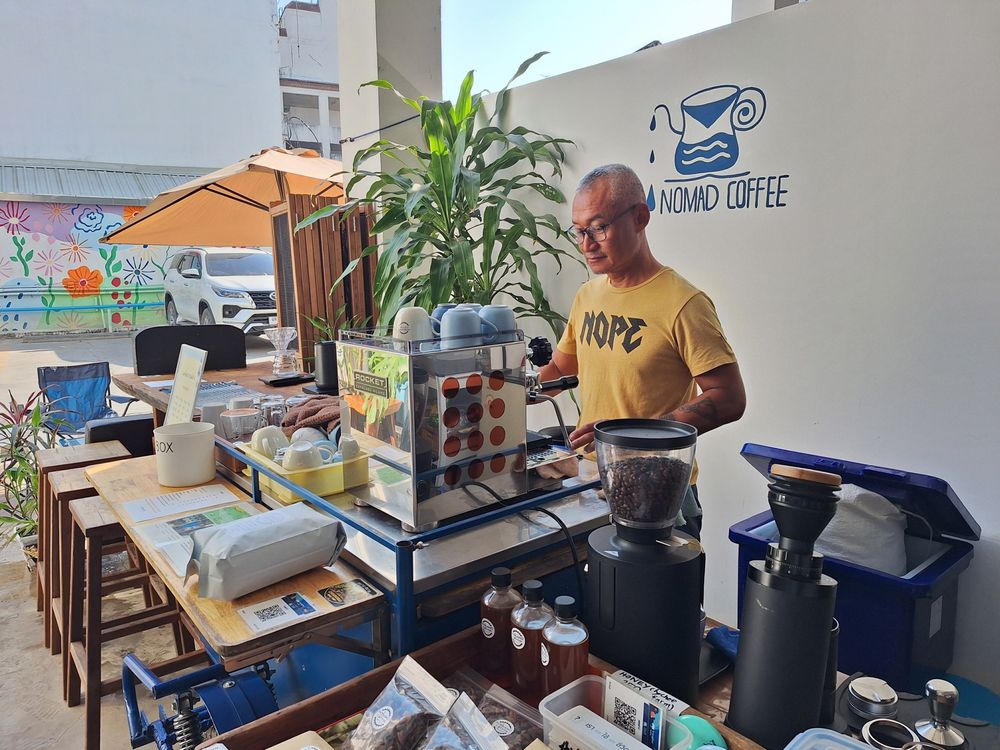
The air in Chiang Mai on a weekday morning in early February remains pleasantly cool. Tourists bustle through every nook and cranny of the Old City's streets. Today, we have an appointment with Sawang Thongdee at Nomad Coffee, his first permanent brick-and-mortar cafe. Although the shop is new, his journey with coffee is anything but; Sawang has been immersed in the world of coffee for a decade. Previously, he sold coffee at various festivals across Chiang Mai, starting with a self-designed bicycle sidecar and eventually moving up to a small food truck tricycle parked at Tha Pae Road three days a week. Now, he has settled down under the Darley Hotel, right next to a friend’s restaurant who invited him to share the space.
The name "Nomad Coffee" stems from a lifestyle that never stayed still. His heart has always yearned for the road, a travel bug he caught as a child while following his father on trading trips to the border.
"I was born and raised in Mae Sariang, Mae Hong Son province, and I am Pga k’nyau (Karen). After finishing high school, I studied at the Faculty of Science, Khon Kaen University. Upon graduation, I spent nine years as a science teacher at Sammuk Christian School."
He recounts a life lived within the frameworks and conventions of society—a life that stands in stark contrast to what he is doing today.
"I didn't want to be a teacher. I didn't want to study science; I wanted to study art. I had already secured a quota spot at Chiang Mai University’s Faculty of Fine Arts, but my parents didn't want me to go. They thought an art degree wouldn't put food on the table. So, I forced myself to study something I didn't like. While studying, I felt an idealistic urge to do something for society, so I chose science and became a private school teacher. If you study science without an education degree, you can't teach in government schools, but for private schools, it was fine.
At first, it was okay. But by the fifth or sixth year, I started feeling it wasn't me. Deep down, I've always liked thinking outside the box. By years seven through nine, I could do the work, but my heart wasn't in it. I felt like I was a burden to the organization because my energy was gone. When your heart isn't there, it affects those around you. Why stay just for a paycheck? So, I resigned. As soon as I left, I followed my own desires. I had some savings... and I decided to go bike touring."
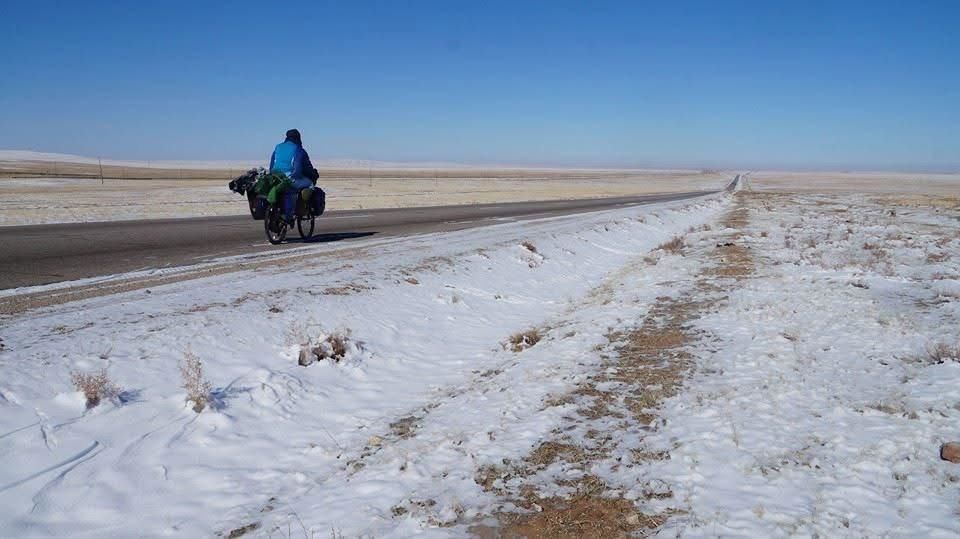
That was the beginning of his life as a full-time traveler.
"Before that, when I started my regular job as a teacher, I began backpacking through Southeast Asia. During school breaks, I had time to travel. But if you go back to my university days, I was already hitchhiking—to Phu Kradueng and elsewhere. The 'traveler gene' has been there since I was a kid. Back then, there were logging concessions; my father would take me on logging trucks to sell goods in border villages or up on the mountains. Every stage of my life has involved travel to some extent. Once I quit my job, I just went for it. You don't think much when you're young, right? I was in my early 30s with about 100,000 Baht. I cycled through Laos, China, Tibet, Nepal, and India.
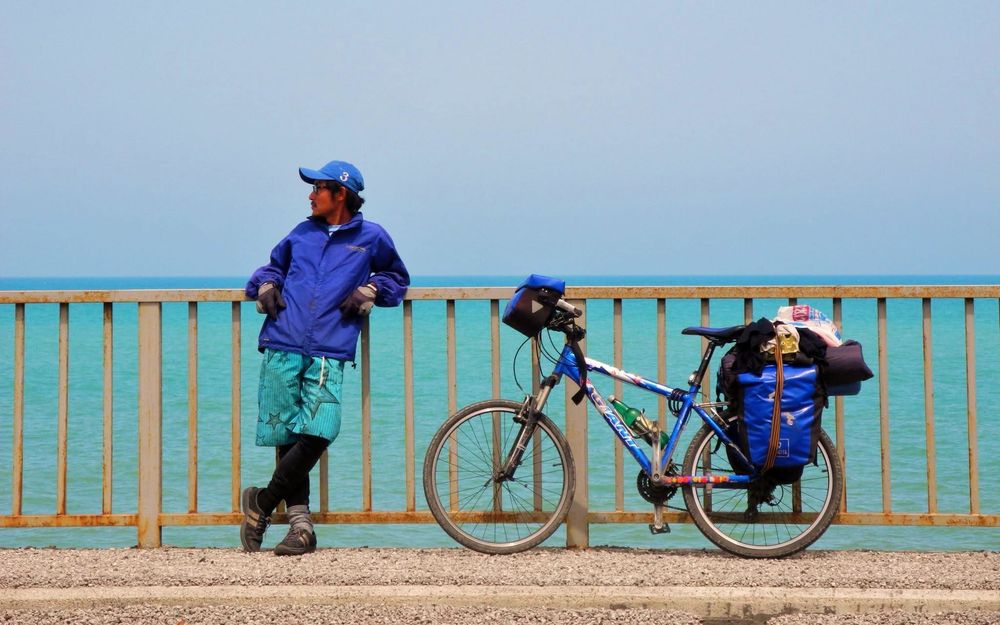
The advantage of choosing a bicycle is that it's cheap and saves money. You can sleep wherever you end up. All your senses are wide open to the experience. Your skin feels the air temperature, your nose catches the scents, and your ears hear everything. You feel every bump in the road, the heat, and the cold directly. I love adventure. Backpacking and hitchhiking in college weren't as thrilling as cycling. I felt the bike was the answer. Later, it became an addiction—to the excitement and to the state of not staying in one place."
Thanks to his language and writing skills, he earned an income during his travels by writing monthly articles for Sport Street, a magazine about bicycle touring. While the pay wasn't much, it was enough for daily expenses. These journeys also sharpened his English skills, allowing him to work as a guide upon returning to Thailand.
"After cycling for 10 months, my money ran out, so I had to start from zero. Tour work, interpreting, and guiding jobs came through word of mouth from friends in NGOs and the tour industry. I was based mainly in Chiang Mai. I’d work about five to six months a year. Interpreting wasn't constant. Since everything was seasonal, it worked out perfectly: I’d work no more than seven months, earn enough to travel for five or six months, and still have savings left. Even if there was no work for six months, I could survive without a problem. It took two or three years for things to settle and for me to figure out how to live without struggling."
When asked to share a memorable travel story, his expression and eyes light up as if the past were playing vividly before him.
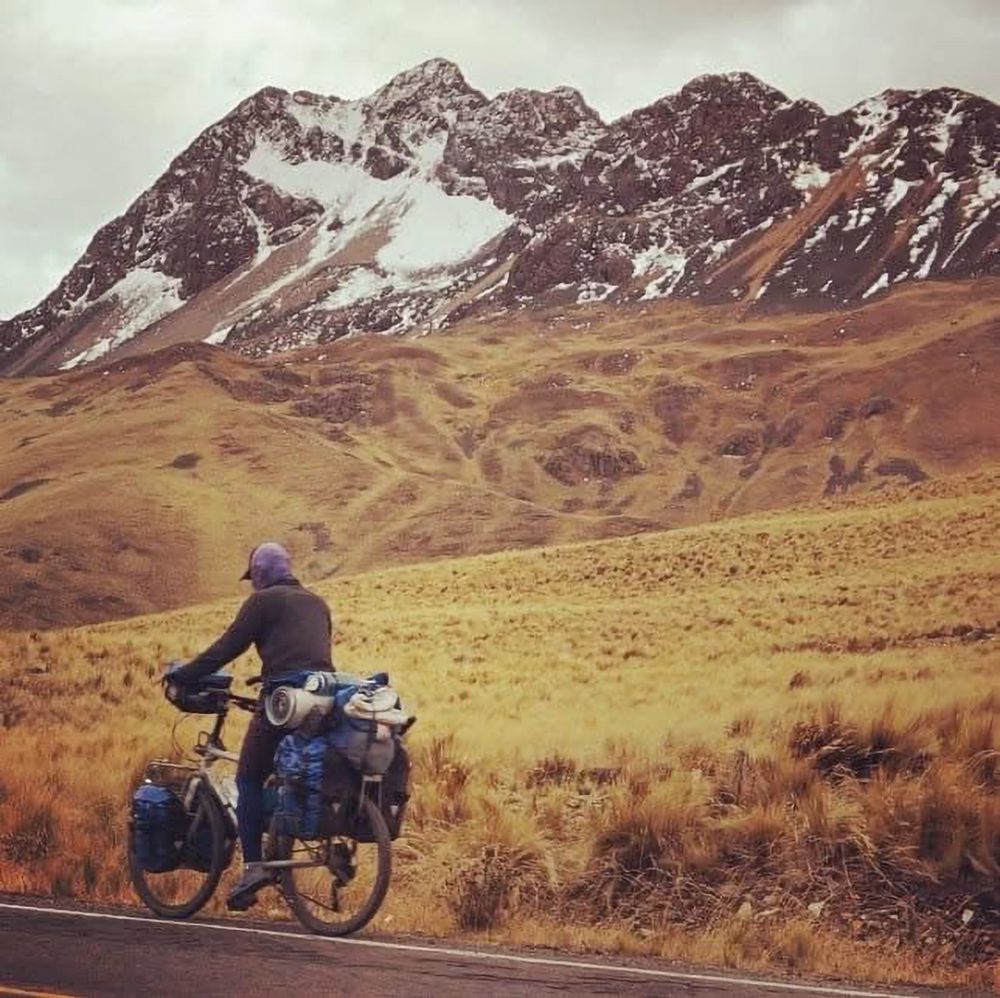
"There are so many stories. But the important thing is that I think travel connects us to the greatness of nature. Once, I was cycling up a mountain in China. I kept pedaling until I saw a view of a pyramid-shaped mountain. I don't know what kind of power that mountain hit me with, but suddenly, tears just started flowing. I thought it was so strange. When I told a friend, he said maybe it was just because I was exhausted from cycling all day and seeing the beauty made me emotional. Then there was my body's reaction in Tibet. I was at 4,000–5,000 meters above sea level. There was so little oxygen that I moved very slowly. Usually, when people face something heavy or painful, they cry, right? But at the point where I felt so exhausted I couldn't take it anymore, instead of crying, I burst out laughing. I didn't know what that emotion was.
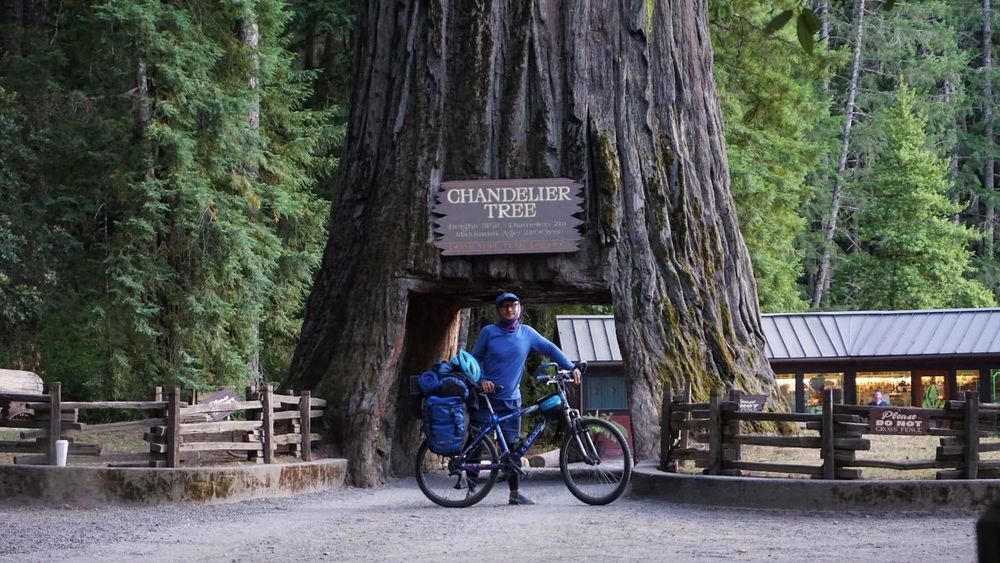
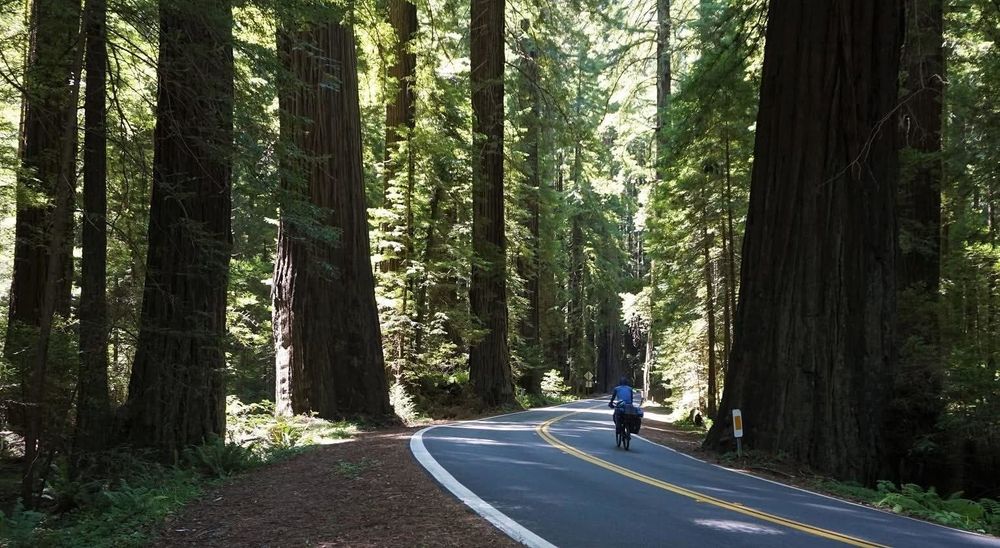
When I cycled in America, I went through the Redwoods. Those trees are 1,500–2,000 years old. I felt like I was touching the gentleness of ancestors. I don't know how to explain it to others. Another example was cycling up in Washington state near Canada. I was heading to Mount St. Helens. At first, there was a normal breeze, but as I approached the entrance, everything went still. Not a leaf moved. It was as if the place was telling me I was about to see something special. When I got there, I saw a pine forest flattened like a field of matchsticks from the eruption 40–50 years ago. It had exploded sideways over a massive area. The bogs still had logs floating in them. I felt this internal understanding that I was meant to see this strange, beautiful sight. It sounds weird, but I don't know how to explain to others that I felt connected to nature in some way. The beauty of Yosemite was so intense it moved me to tears just standing before it.
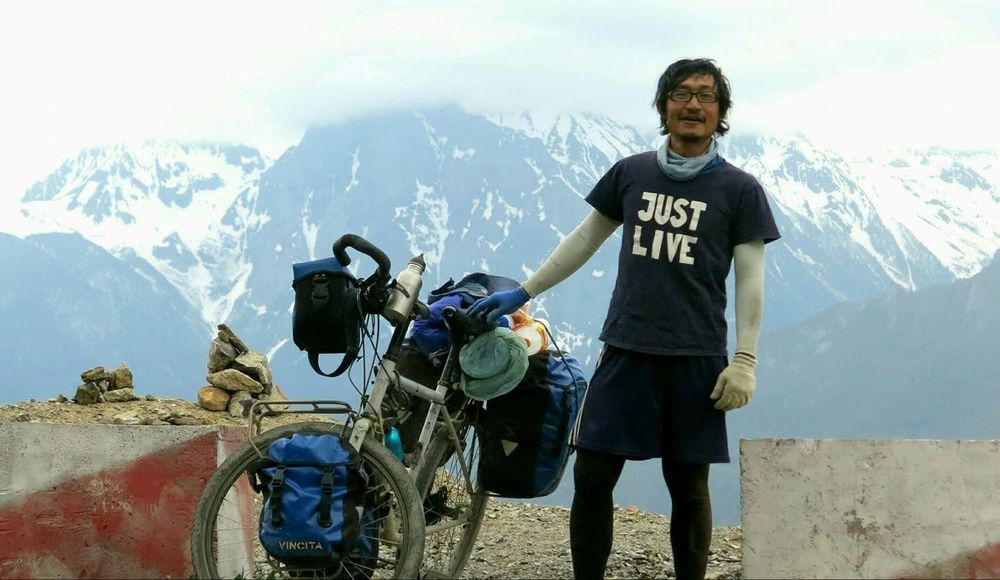
Also, traveling taught me that I have more potential than I thought. It pushes you beyond your perceived limits and teaches you how to live simply. That is the greatest takeaway from my past travels."
Every journey into the world involves not just impressions, but moments where one faces the presence—and absence—of life.
"While cycling in Colorado, it was autumn, and I hadn't prepared enough cold-weather gear. At 3,500 meters, the ascent was fine. But at the summit, as I started to descend, I hit a blizzard. Everything went black. The wind was fierce, the snow was falling, and my jacket couldn't hold up. There were no houses or villages. I started to panic, thinking I might lose my life there. Eventually, a pickup truck passed by, but I was too stubborn to wave for help. I kept pedaling until, about 10 minutes later, that same truck circled back to pick me up. I survived.
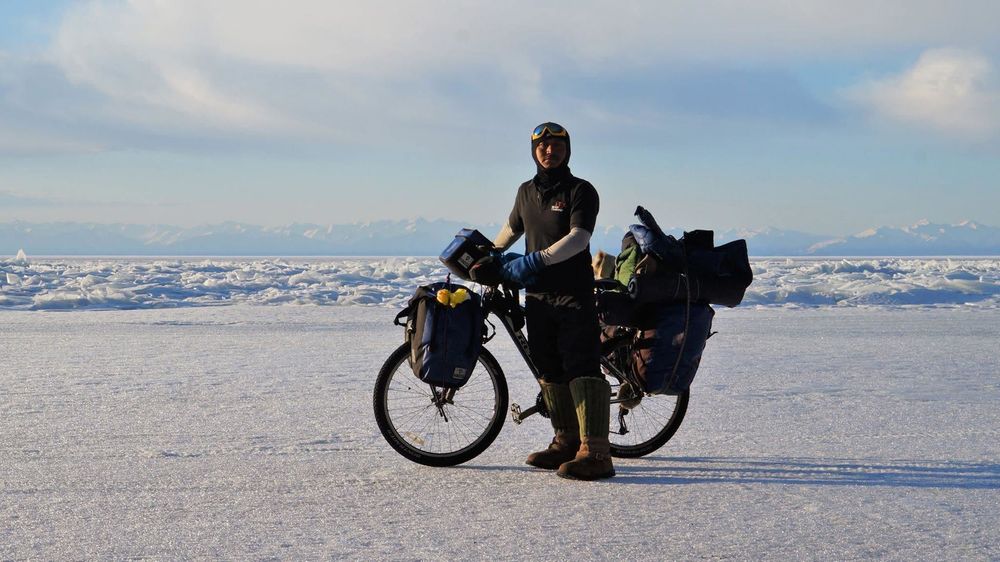
In Kyrgyzstan, I was traveling alone. One day, I met Canadian and French cyclists on the road, so we teamed up and camped together. Late at night, three robbers with knives attacked us. We scrambled in the dark, throwing rocks at each other. At one point, they threw a rock that I dodged just in time—even though it was pitch black, I saw a shadow. If I hadn't moved, it would have hit me square in the forehead. When they got close, they tried to stab me. I had no weapons, but it felt like nothing was a coincidence, like everything was arranged for me to meet this challenge. People were sent to be my friends and help me fight. We fought for hours until dawn when the robbers finally fled. We were in shock, but we quickly packed our tents and left. That was another time I cheated death.
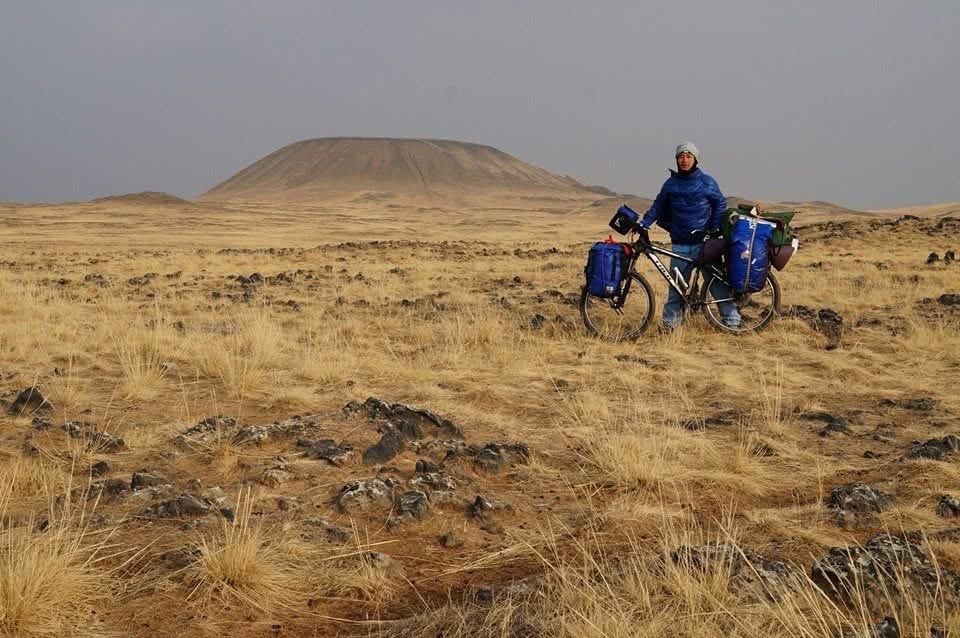
Another trip, I planned to cycle to Laos and India, but I stopped at my coffee farm first. Going down Mae Khachan hot springs, my bike hit 60 km/h and the rear brakes failed. It was too fast, so I had to press my shoe against the front tire to slow down. It was dangerous, but I had to stop the bike. Later in India, I got severely ill with food poisoning in Kolkata. I was so sick I felt like giving up and flying back to Thailand. I had been traveling for six or seven months. I was staying in a cheap room with just a barred vent for air, lying there alone with no one to care for me. I felt so sorry for myself, but I had to cheer myself up.
Eventually, I pushed myself to keep cycling even though I was still sick. After three or four days, I reached Bodh Gaya. I’m Christian, but the moment I sat under the Bodhi tree—a descendant of the one where the Buddha attained enlightenment—while Buddhists from all over the world were meditating and chanting, a strange energy of faith worked on me. My illness just vanished, even though we had different beliefs. When I tell people these travel stories, they sound unbelievable, but they happened to me. I was so sick and demoralized, but I recovered instantly. Perhaps it was the positive energy I absorbed that made me feel better.
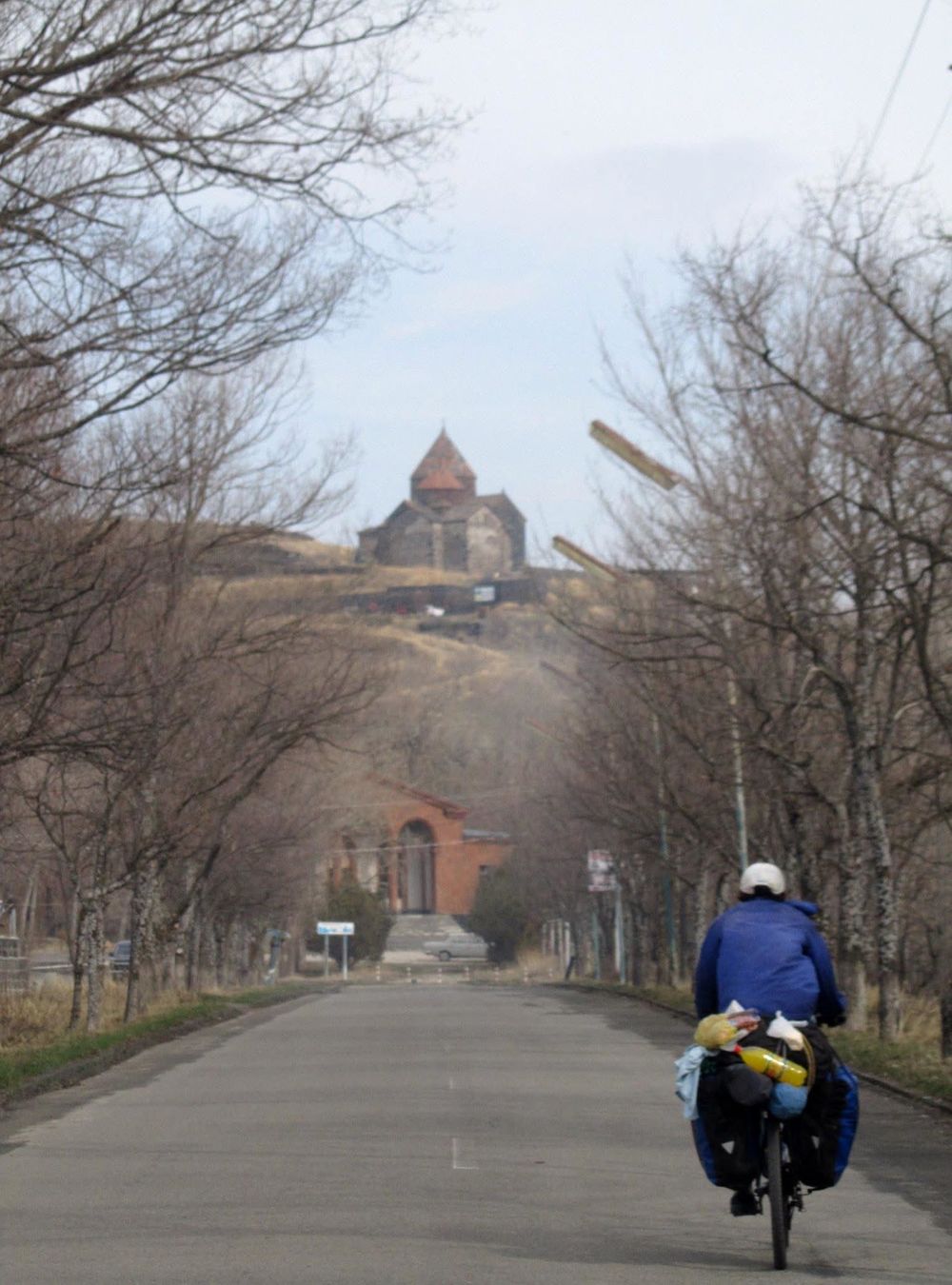
After returning from India, I spent two or three years adjusting before starting annual trips: work half a year, travel half a year. Before COVID, I spent a year in South America—my longest trip ever. Mexico and Central America was my post-COVID trip. Since finishing that three or four years ago, I haven't traveled again."
When asked what made him want to stay put, it seems that thought doesn't really exist in his life's vocabulary. Though he defines himself as "rootless," we are all seeds grown from great trees that once anchored us.
"The last trip to Mexico and Central America lasted six months. My mother was starting to get unwell. That's one reason I didn't finish the journey. I felt guilty for not being there to care for her. Before that trip ended, I asked myself: if I had to stop traveling due to external factors, how could I stay in one place without going through withdrawal? So, I looked for a way out. I experimented with a lifestyle that mimicked travel. First, sleeping in a tent. Second, living simply, which I already do—a self-reliant life. I tried gardening and growing vegetables to see how it fit with being forced to stay put. Third, I'm passionate about coffee, so why not give it a real shot? These past three years have been okay. Not traveling hasn't been terrible, but if you ask if this can beat traveling, my answer is no. Travel is still a deep passion.
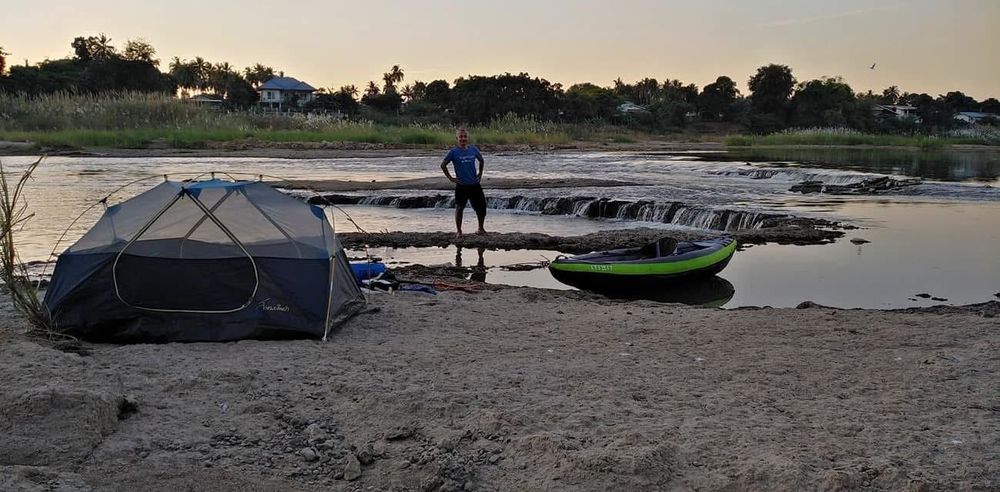
The urge to travel never disappears. When the time comes, I'll go again. But if I set a clear goal, I should head straight for it without getting distracted. So, my goals for this year are: one, make coffee; and two, work on the garden—both vegetables and coffee. Traveling is off the table for now; I don't even think about it.
Life should be enjoyable and pleasant whether you are traveling or staying still."
Even if he isn't traveling far, his work as a guide still keeps him in the spirit of a traveler, even in nearby areas like Mae Taeng, Cho Lae, or Chiang Dao.
In addition to cycling, he once kayaked down a river in Thailand, despite never having done it before.
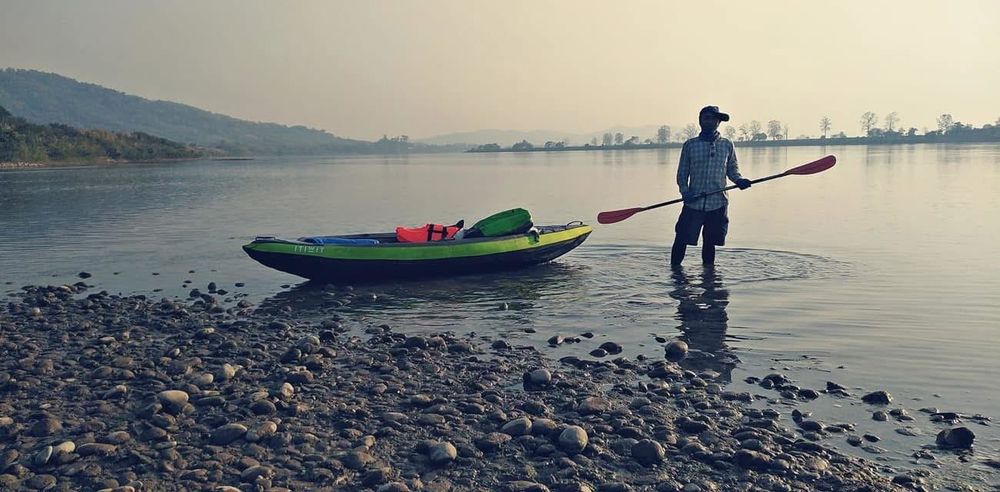
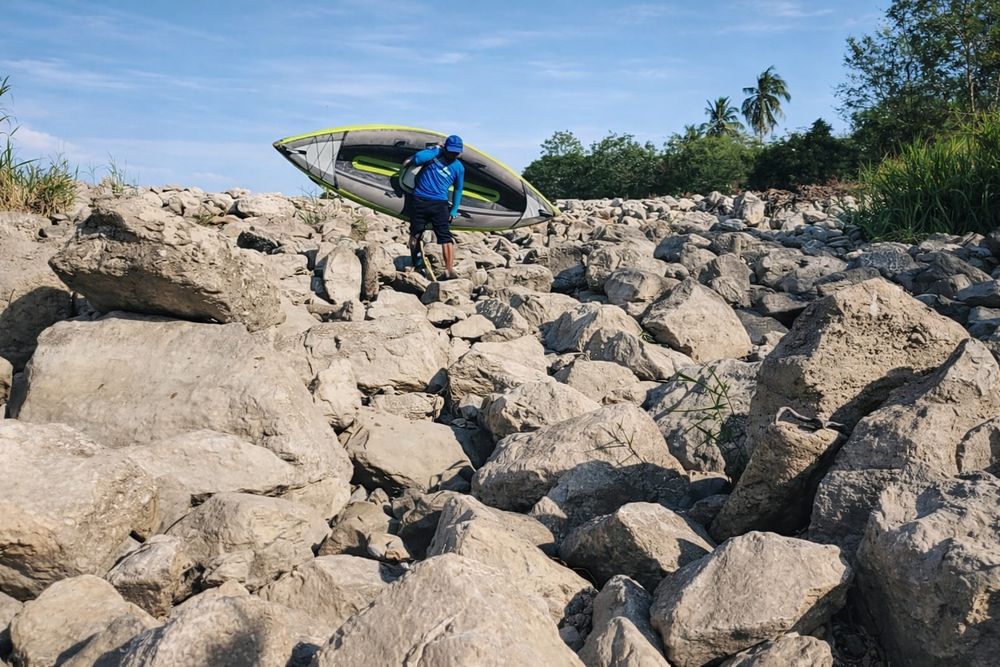
"During COVID, I couldn't go anywhere, and I was really starting to lose it. So, I bought an inflatable kayak and paddled from the Ping River in Chiang Mai down to Pak Nam Pho. it took about two weeks. It satisfied my need for adventure—not knowing where to sleep, how to stock supplies, or if the next village had a shop. The Ping River has many dams; when I hit one, I had to find a way out and carry the boat for two kilometers to the other side. At night, I had to find a spot for my tent. It was a different kind of adventure.
Later, I paddled the Mekong, starting from the Golden Triangle in Chiang Rai down to Kaeng Pha Dai. Beyond that, the Mekong flows into Laos, a distance of about 100 kilometers. The Mekong isn't as easy as the Ping. It felt like flirting with death. I was a novice, not a pro. Those 100 kilometers have bends, whirlpools, and numerous rapids that are not beginner-friendly at all."
Despite his boldness and love for adventure, he isn't recklessly stubborn. He survived dangerous spots by asking locals for advice before proceeding.
"Villagers would tell me which bends to watch out for. I'd just carry the boat over the hills instead. When I saw the whirlpools with my own eyes, they were truly terrifying, especially before Kaeng Pha Dai where the water enters Laos. That rapid was the scariest, but I made it through."
Throughout his travels and now while staying put, he lives an eco-friendly and modest life—not an easy feat in a high-tech society full of conveniences that make us forget the environment.
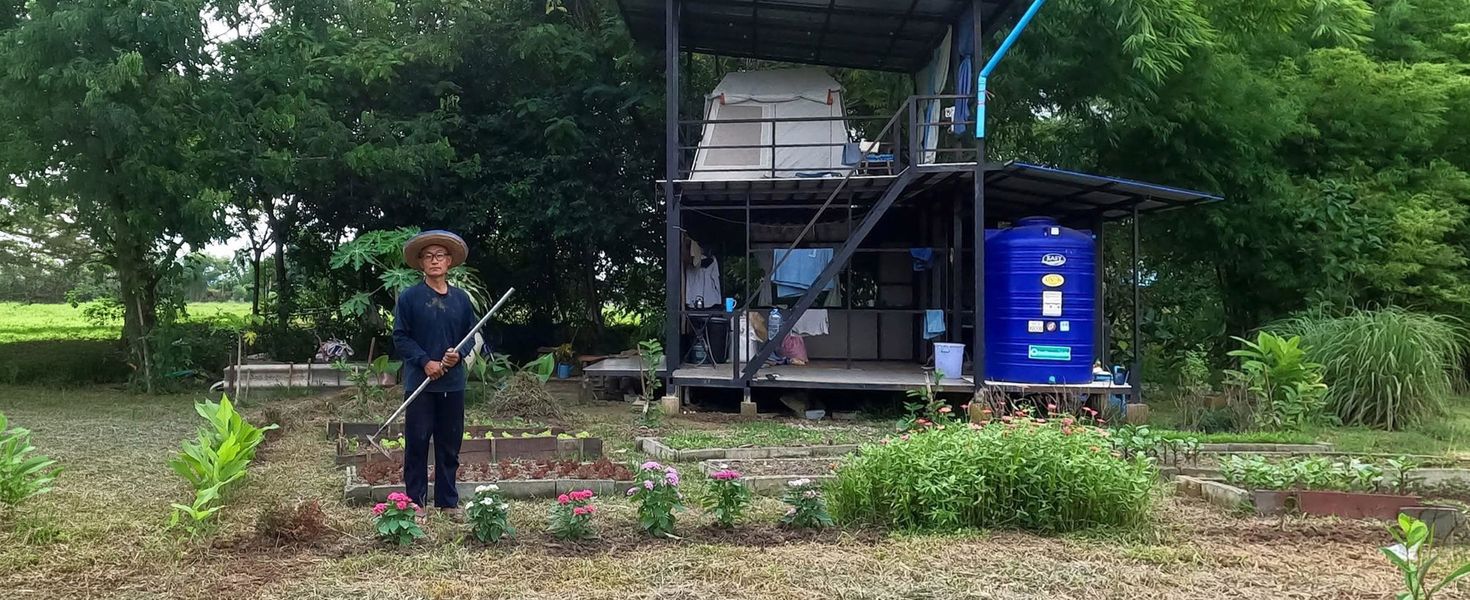
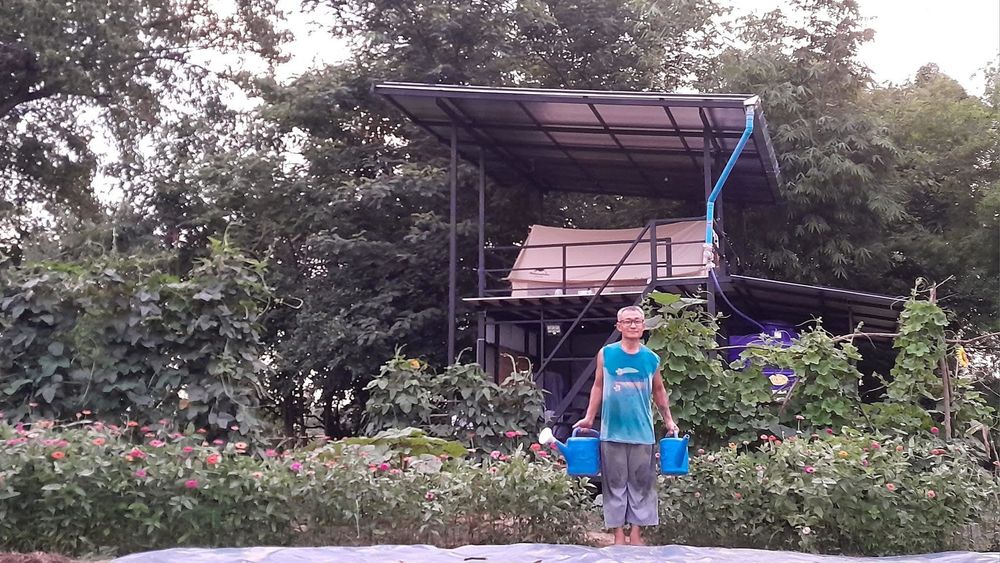
"Sustainable and eco-friendly living is something people talk about a lot, but whether they actually do it is another matter. Everyone's version of sustainability is different. But if you believe in yourself, others, and the environment surviving together, you have to do something. For me, I'm comfortable living like this: staying in the garden, sleeping in a tent, no electricity. I use solar cells and a power box to charge my phone, for lights, and a speaker for music. I use a pit latrine, but with a toilet seat over a hole dug about a meter deep. After use, I don't flush with water because that makes a mess; I use sawdust or rice husks to cover it, so there’s no smell. For water, I collect rain and canal water for bathing. I'm learning to grow vegetables and make organic compost using coffee husks, grounds, food scraps, rain tree leaves, cow manure, and straw. That's the gist of it. I also raise ducks and chickens for eggs and meat, and sell the surplus."
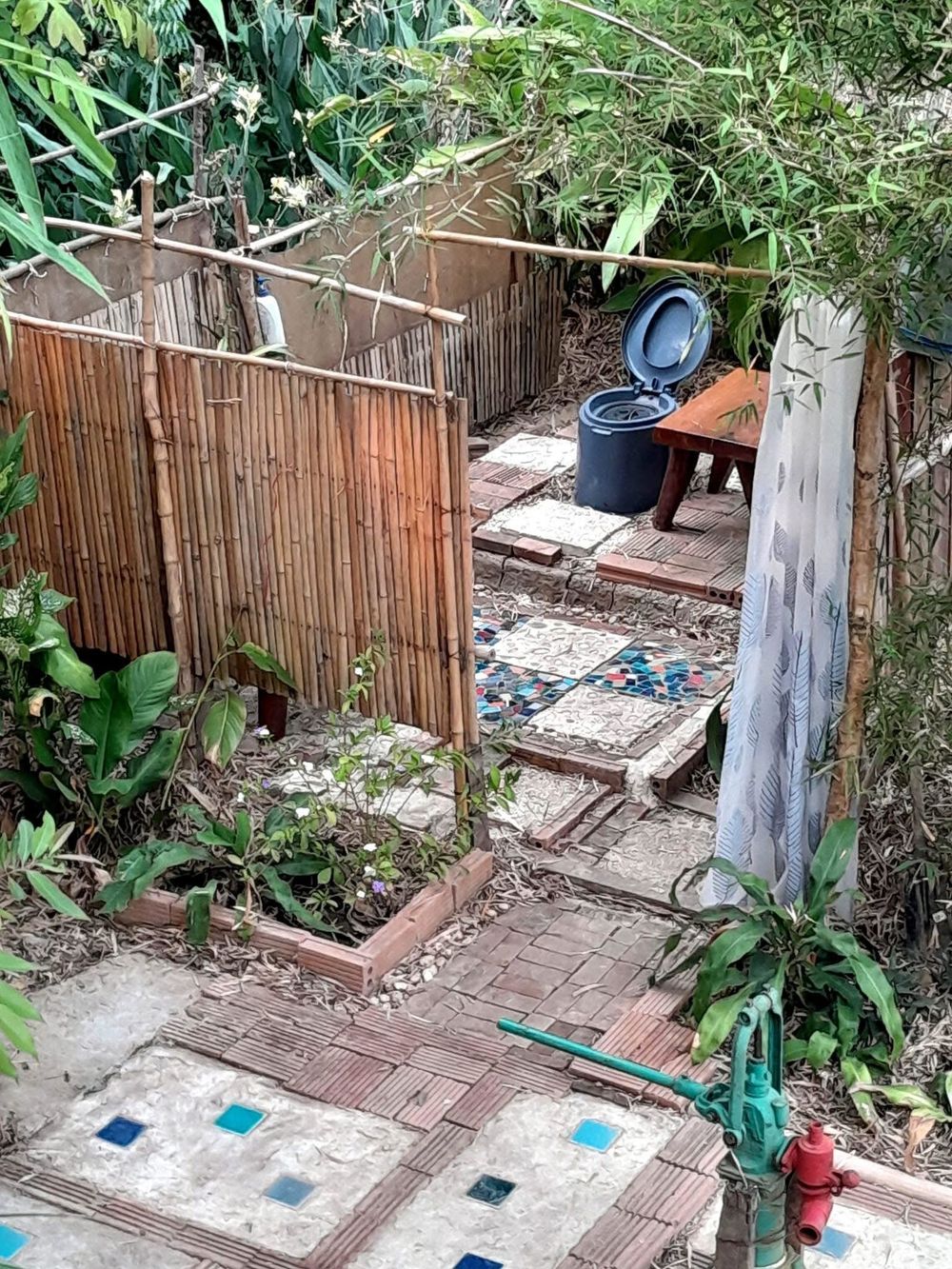
He applies this eco-friendly philosophy to his cafe as well.
"What we try to make most sustainable is knowing the origin of our ingredients. The coffee comes from my garden and four other families. If customers ask, I can explain exactly where and how it was grown. It's forest-grown coffee. We use chemical fertilizer alongside organic ones because if the yield is high, the nutrients aren't enough and the trees suffer. We use milk from a local dairy farm in Lamphun. It's a bit more expensive than market prices, but using local ingredients helps the environment by reducing transport and supporting small-scale farmers.
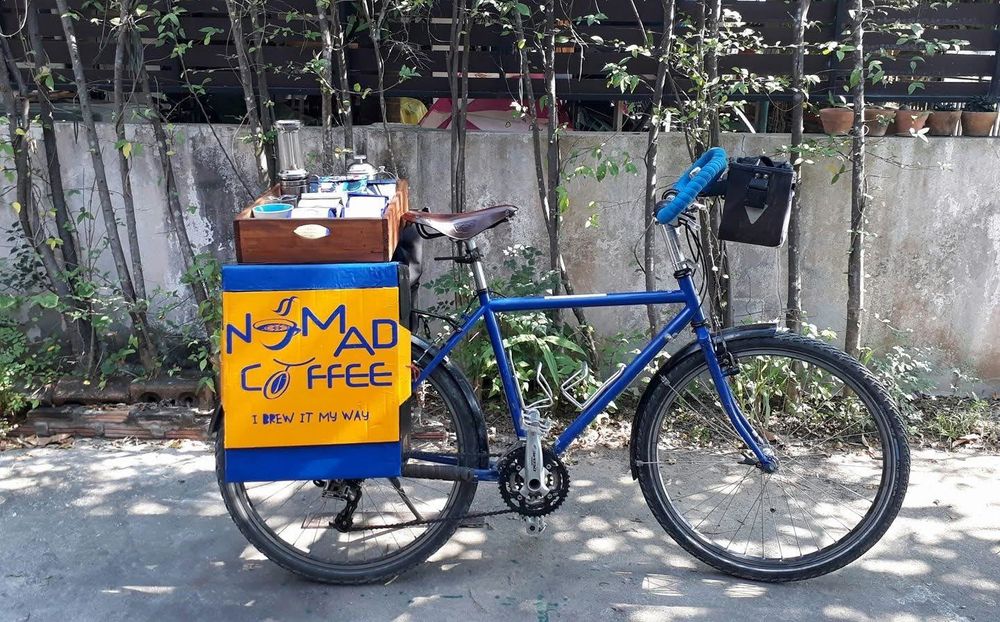
When I had the coffee cart at Tha Pae, I tried a 'no takeaway cup' policy to stay eco-friendly. It was very hard. Marketing-wise, instead of 30 cups, I’d sell 15 because I didn't have takeaway cups. The solution wasn't perfect, but it was better than plastic: paper cups. In reality, paper cups are lined with plastic anyway, but I didn't know how else to solve it. For sustainability, if the environment and others survive but you can't, it's not sustainable. I switched from plastic to paper straws, but paper straws come from factories too, and I don't know how safe they are. If I wanted truly biodegradable cups and straws, I’d have to find a producer I can trust."
Do we really need straws, though, when the world once got along without them?
"Ultimately, the customer is the variable. I get asked why there are no straws because people are used to them. I have to be strong enough to keep my stance while being flexible by using paper straws and cups until a better option exists."
Now that he's planting trees and raising ducks and chickens, he is practically forced to stay put. When asked if he still thinks of traveling, his answer remains clear: the desire hasn't left, but his current goals are clearer. He seems to be a high-energy person who likes multitasking, making one wonder how he balances it all.
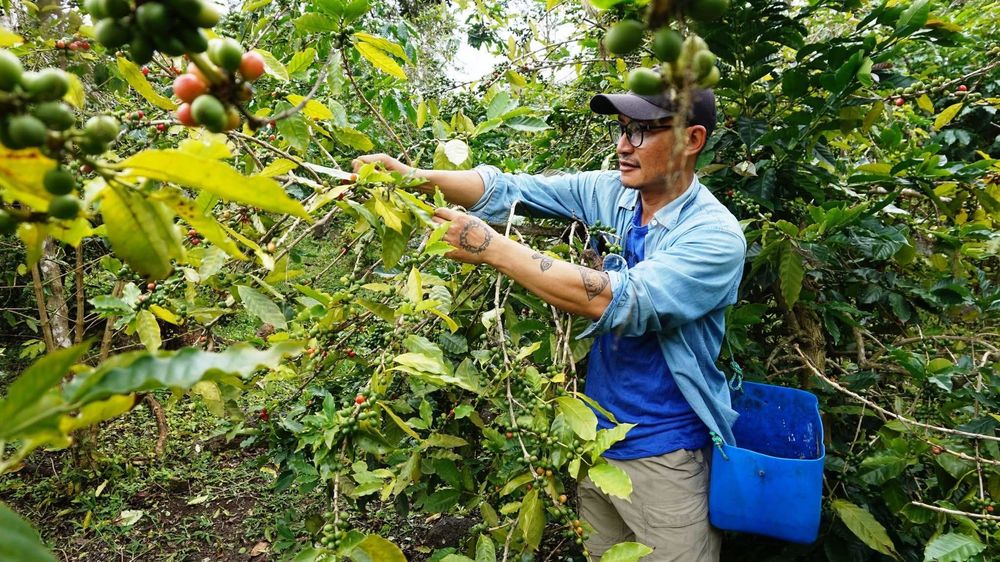
"The garden is my home and personal space. When I go out to do tours or run the cafe, I have to interact with people. If they give off good energy, that's great. When I sold coffee on the street, the street energy drained me because it was uncontrollable—homeless people, drug addicts, all sorts of tourists. Returning to the garden feels like recharging. I was lucky I only sold three days a week back then. At the new shop, I only close one day. It’s not bad. If the customers here don't bring positive energy, at least they don't drain much of mine.
This year I'm lucky to partner with Maadea. They didn't want to run a coffee bar, so they invited me to open next to them. Their customers can order my coffee to drink in their shop, and my customers can eat there—it's a win-win. I’ll still take the cart out to the street if I can. But if I'm focusing on making coffee profitable—because after 10 years, it still doesn't support me entirely—this year the goal is to make it self-sustaining. If I want to save up for another trip, it has to be profitable."
Those who know him might be amazed at how much he can do. But of course, one cannot do everything alone. For the coffee business, he has two partners—his younger brother and a friend. But when it comes to a partner in life, he completely declines.
"A partner is not important to me; it's not necessary. You'd be taking away time, freedom, flexibility, and personal space from my life. If another variable entered, it would disrupt the balance I'm satisfied with now."
Living his way requires planning. Doing many things at once isn't easy and requires self-discipline.
"If you like something and want to do it, you have to plan and try. If it doesn't go to plan, figure out how to fix or develop it next year.
If your lifestyle is very different from mine, doing what I do is quite hard. Can you use a pit latrine? Can you bathe in rainwater? Sleeping in a tent sounds romantic, but in real life, if you don't like those things, it becomes a forced burden.
Regarding gardening, I learned I don't like short-lived vegetables. These past two years taught me to plant perennials. Lettuce and kale need constant replanting. Instead, I grow Ceylon spinach, chili, roselle, winged beans, or climbing wattle (Cha-om). I also grow basic kitchen herbs like ginger, galangal, lemongrass, kaffir lime, lime, turmeric, basil, and dill. And I raise ducks and chickens.
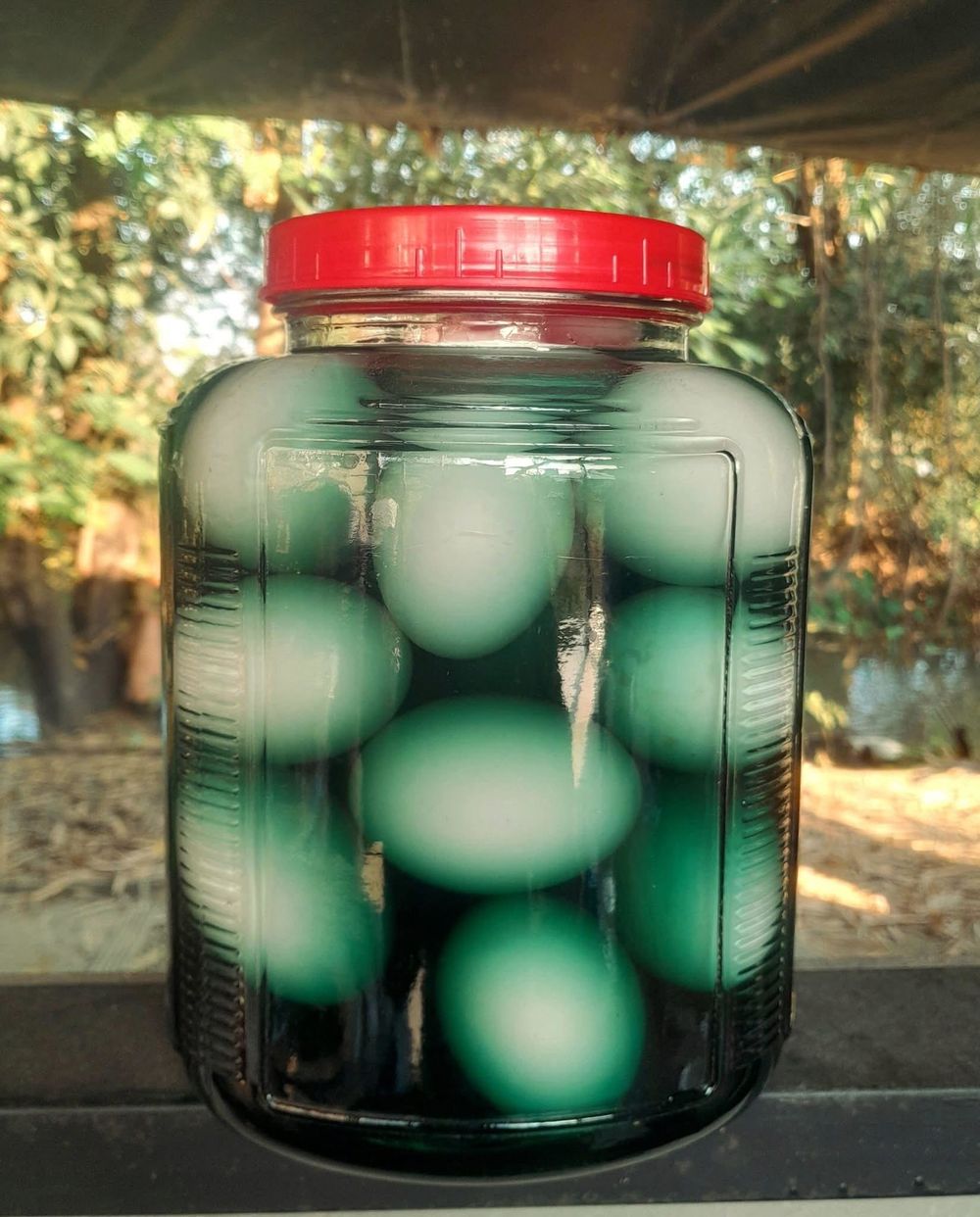
Now, we're adding value to garden products. I make tea from roselle and butterfly pea to sell at the shop. I’ll make tea bags too. Duck eggs are also for sale; they’ve just started laying. I calculated that this month they brought in 5,000 Baht. It's a daily income. Since I have butterfly pea, I make butterfly pea salted eggs—dying them blue. They are 'Uncle's Blue Eggs' because I love the color blue. There's so much fun stuff to do. I have many male ducks; I could butcher and sell them. I can sell chicks. I’m serious about the compost too; I bag it and sell it here, while communicating the message of turning waste into value.
In the future, I might host workshops—maybe starting with one day, then moving to two days and one night, or three days and two nights to learn about farming and composting."
What has a life spent mostly traveling rewarded him with?
"What I still believe in is a simple way of life. It hasn't gone anywhere. Travel hasn't gone anywhere either. But compared to 25 years ago, I know how to stay put better. I have a new perspective on staying in one place. Before, I thought traveling was the ultimate and staying put was the opposite. Now, having had time to reflect, I realize life isn't only good when traveling; life while staying put can be just as good.
Personally, I feel that traveling is one of the purposes of my existence—it’s how I found the meaning of being born. You might find you love cooking; that could be your meaning. You might find you love just staying home, watching series after work, and having a routine; that is your meaning. For me, my meaning is that I've traveled to my heart's content. It makes being born human this time around worth it."
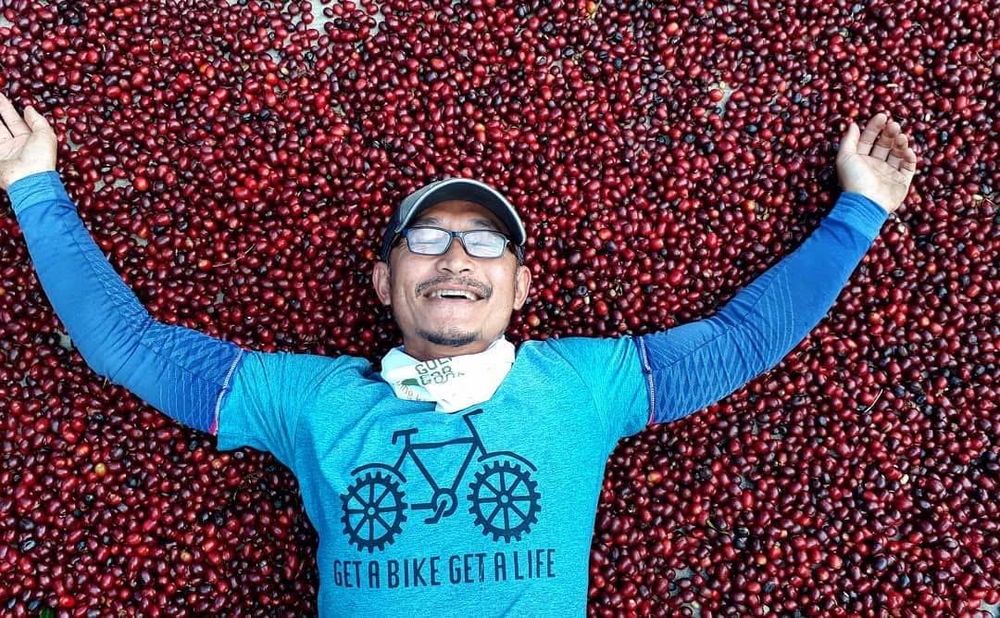
From a traveler who has seen almost every corner of the globe, he has returned to learn how to stay still—like a journey into himself. His blended experiences have created a colorful way of life. Even if others see it as unconventional, it is a complete life in the way he has chosen to be.
Support Sawang's coffee and garden products at:
Nomad Coffee
Hours: 9:00 AM – 4:00 PM (Closed Wednesdays)
Location: https://maps.app.goo.gl/kyyCyK9wxq6huTt99
© 2025 Khaoyai Connect. All rights reserved.
No part of this content may be copied, modified, or distributed in any form without prior written permission.
