


“Dok Lao, Silver-Grey”: The Charm of the Korat Cat
a National Identity in the Pet Category

Before the name “Korat Cat” was officially declared a national identity, and before the silver-grey cat-patterned pants became a nationwide viral sensation, the story of this feline breed had been deeply rooted in the land of Korat for much longer than many might realize.
The Korat cat, also known as the “Si-Sawat” cat, has a clear origin in Nakhon Ratchasima Province, particularly in the Phimai District. Its name is derived directly from the old name of the city, "Korat," as if to proclaim its identity as the true cat of this city.
In the ancient Thai manuscript Tamra Maew (The Cat Book), believed to date back to the Ayutthaya period, the Si-Sawat cat was recorded as an auspicious animal. It is believed to be a symbol of love, kindness, and good fortune. In ancient times, it was customary to give Korat cats to newlyweds as a blessing for a happy and prosperous marriage.
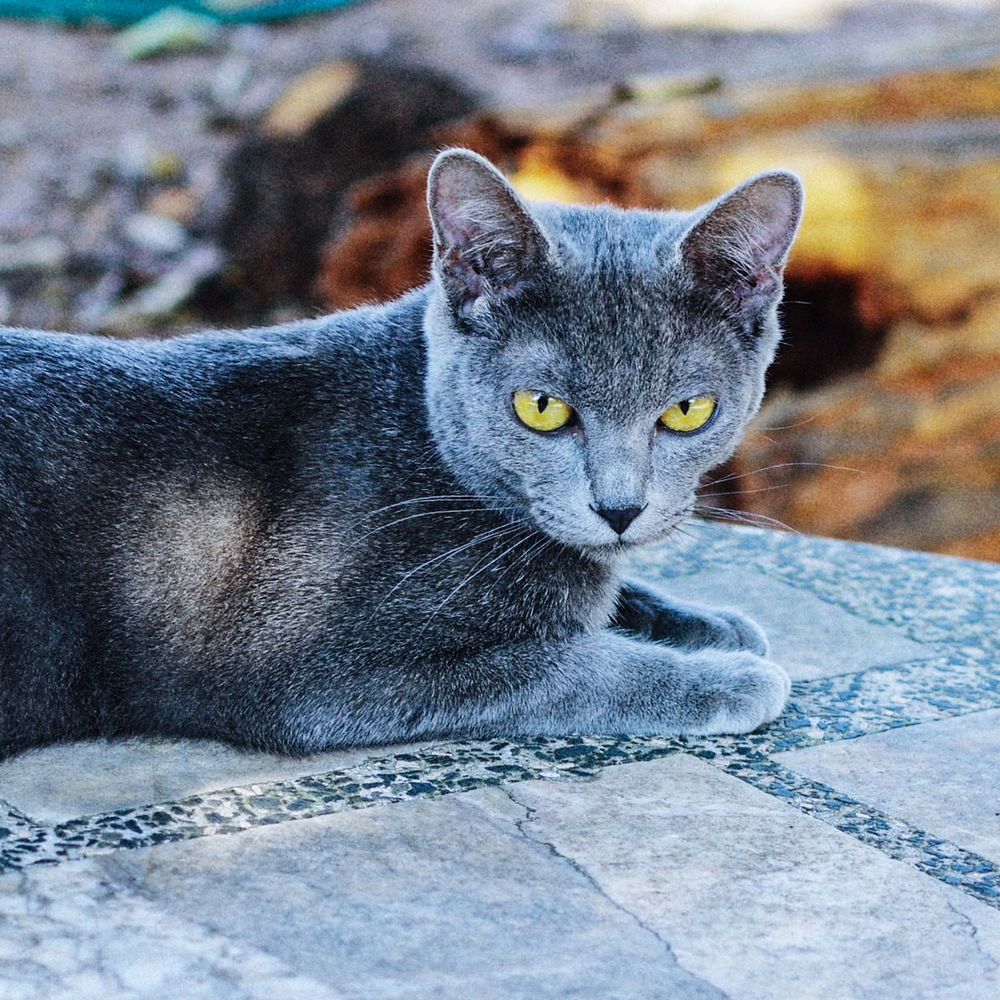
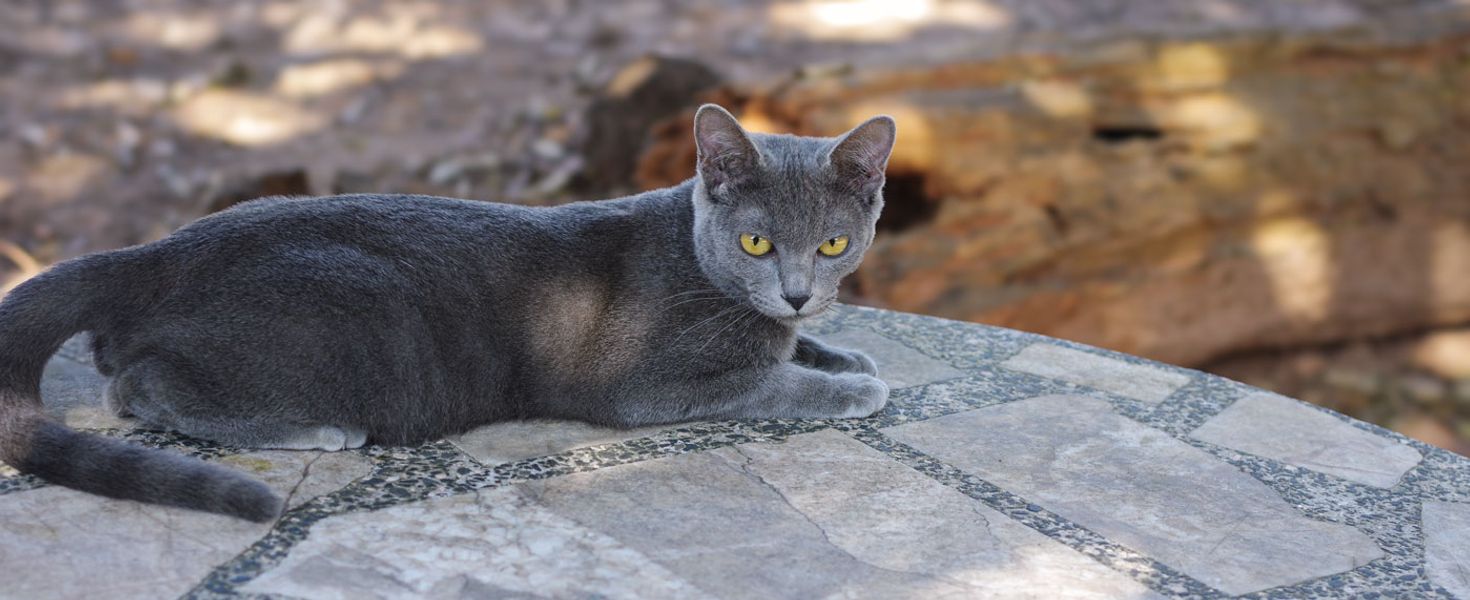
The charm of the Korat cat lies not in flashy colors, but in its simple elegance. It features short, silver-grey fur known as “Dok Lao” (the color of dried reeds), where the roots are dark and the tips shimmer with a silver glow when they catch the light. They have heart-shaped faces and green or yellowish-green eyes that intensify in color as they grow older. This effortless beauty has earned the Korat cat recognition both in Thailand and internationally, with global organizations such as the Cat Fanciers' Association (CFA) and The International Cat Association (TICA) officially registering the breed.
The Korat cat is therefore not just a pet, but a living cultural heritage—a representative of the stories, beliefs, and the bond between the people and their land.
As time passed, evolving from an auspicious cat in ancient texts to a household companion for the people of Phimai, and eventually becoming an iconic image of modern Korat, the journey of the Si-Sawat cat has reached another significant milestone.
Following the Cabinet’s resolution to approve five Thai cat breeds as national identities in the pet category, as proposed by the National Identity Board at the end of 2025, the news has brought great joy to "cat slaves" across the country.
The five Thai cat breeds approved as national identities are the Suphalak, Korat, Wichien Maat (Siamese), Konja, and Khao Manee.
On the surface, Korat or Si-Sawat cats might still appear in general households. However, looking deeper into the details, purebred Korat cats that strictly match the characteristics described in ancient texts are actually quite rare.
For this reason, the Phimai Korat Cat Conservation Club, currently led by Mr. Pornthep Chusakthanadej as president, has begun promoting the breeding and expansion of the Korat cat population.
The Khaoyai Connect team traveled to Mr. Pornthep Chusakthanadej’s farm in Phimai District—one of the most famous Korat cat breeding farms in Nakhon Ratchasima—to discuss the current situation of the Korat cat.
From Indifference to Love and Passion for the Korat Cat
Mr. Pornthep was sitting and enjoying a cool breeze in front of his house when the team arrived. The host greeted the guests with a warm smile right on schedule.
Although the farm's location isn't marked on Google Maps, it was easy to find following the host's directions. Even if one gets lost, locals can easily point the way, as few in the area don't know "Arjan Pornthep’s Farm."
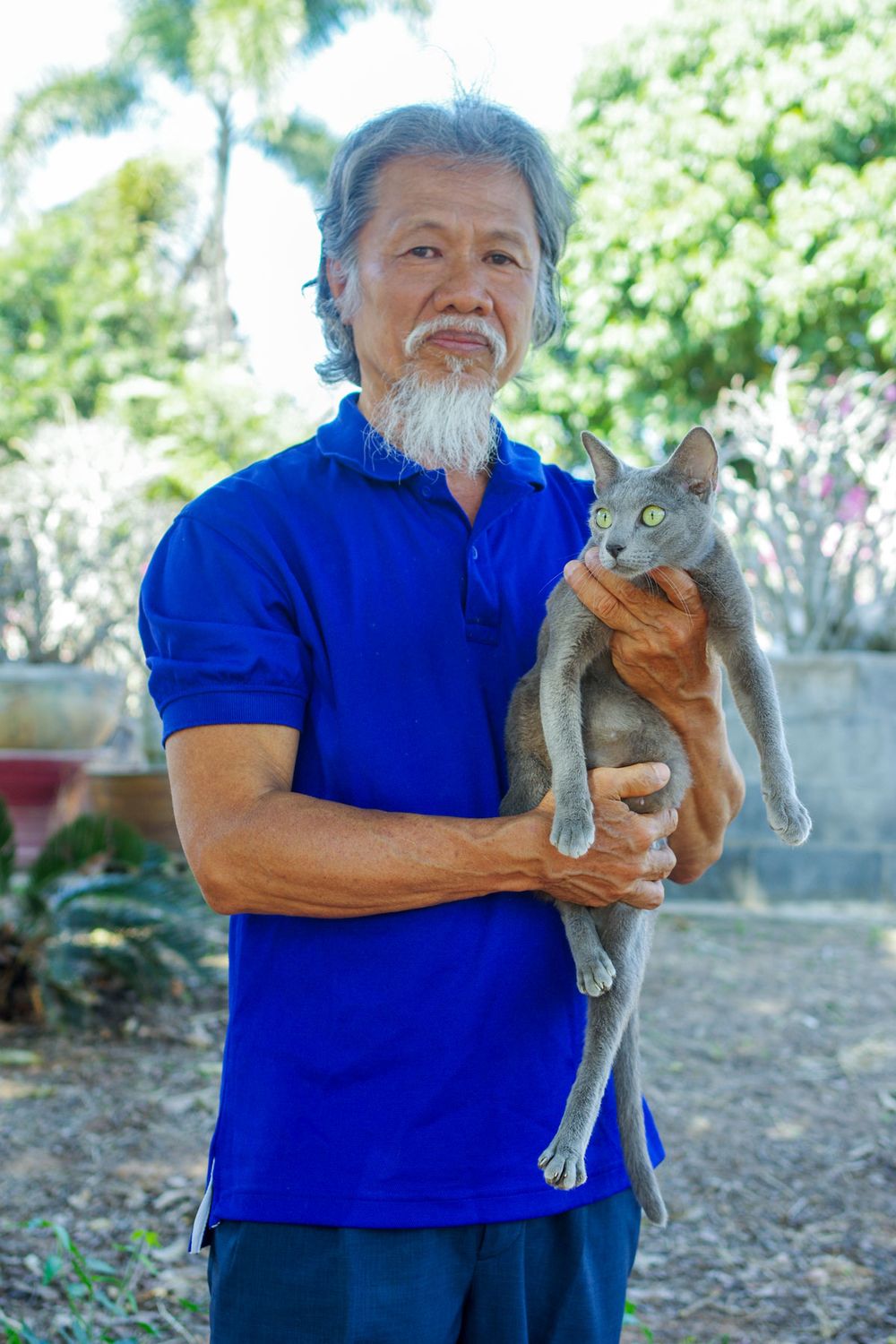
Mr. Pornthep is a 65-year-old retired civil servant who formerly taught 6th grade at Kulano School in Phimai District. His involvement with the cat farm began through his friendship with Mr. Chuchai Wisetchindawat, the club’s president at the time. They shared a hobby of growing Desert Roses (Poy Sian). When the Phimai Korat Cat Conservation Club held activities, Mr. Chuchai invited him to participate, leading Mr. Pornthep to meet more than 35 other club members.
“To be honest, my family didn't like cats at all before. My parents especially disliked them because they’d vomit or make a mess in cardboard boxes. They didn't like dogs or cats. As for me, I was indifferent,” he shared.
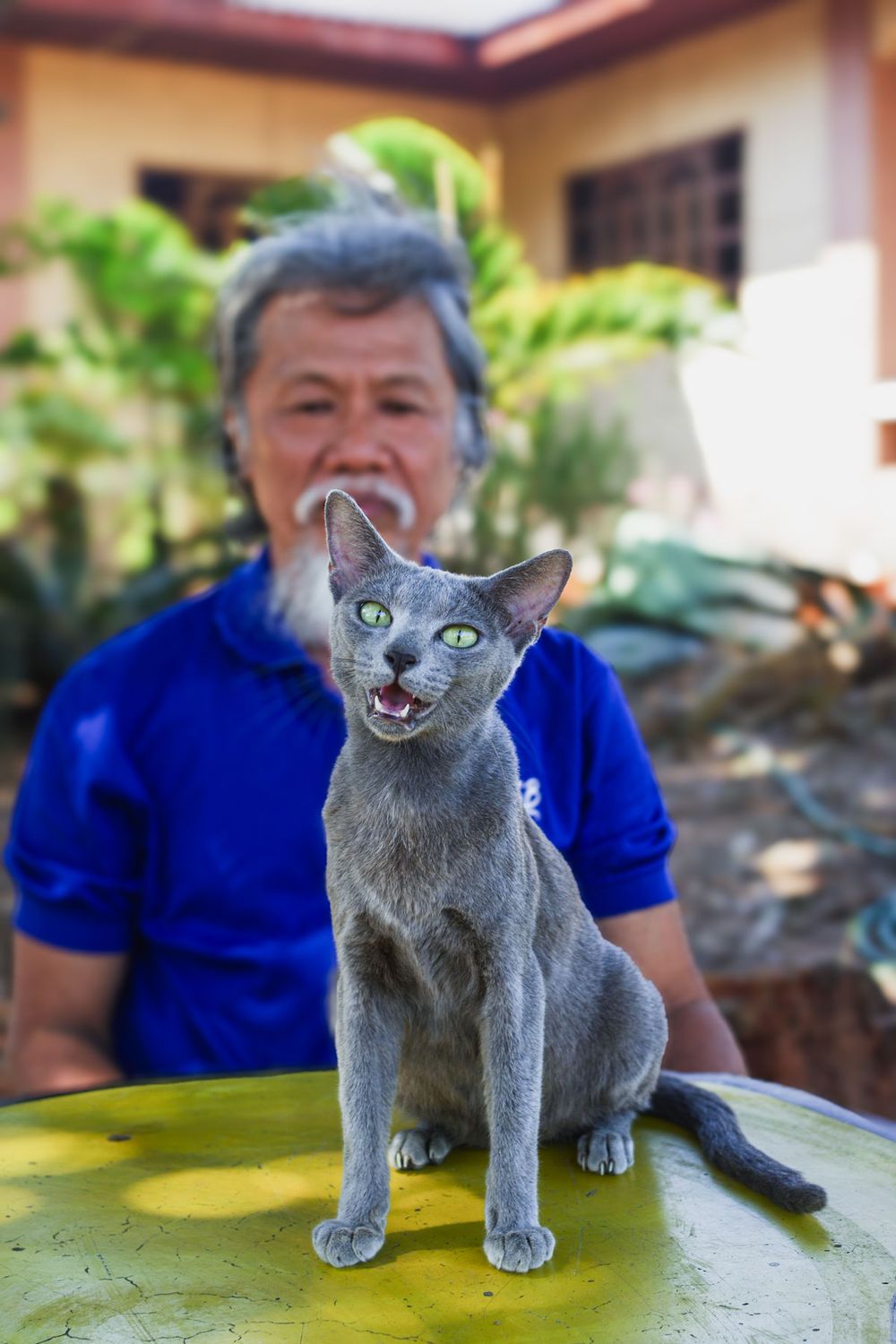
However, as Mr. Pornthep participated more frequently in club activities, he got to know the co-founder, Dr. Thaiboon Jongjitsathitman, the Phimai District Livestock Officer at the time, who was a driving force behind the club's establishment. Later, Mr. Pornthep was appointed as the club's secretary. One day, while visiting the home of Mr. Seksit Lohmaneerat, then the vice president, he saw a group of 6 or 7 Si-Sawat cats grazing on grass near the house. It was at that moment that Mr. Pornthep immediately fell in love with the silver-grey Thai cat.
“When I saw them, I felt they were beautiful. They were classic—just silver-grey with no other colors mixed in. I was fascinated and wanted to raise them, even though I had never liked cats before. Around 1999, I asked to adopt some from Mr. Chuchai and others to develop the breed. Since then, I’ve kept raising them, growing from ten to twenty, then thirty.”
When President Chuchai passed away, Mr. Pornthep took over the role of club president, which he holds to this day.
Dok Lao Silver-Grey: The Distinctive Identity of the Korat Cat
Evidence of the Si-Sawat cat dates back to the Ayutthaya period. Thais continued to raise them until their popularity faded during the middle of the Rattanakosin period, before recently becoming popular again. Si-Sawat cats are most commonly found in Phimai District. Small groups began breeding and holding private competitions around 1980, and the official club was established in 1995, with activities continuing ever since.
What defines a true Si-Sawat cat according to the ancient texts?
“Dok Lao Silver-Grey” is the standout feature of the Korat cat in Phimai. The color is quite distinct, with darker fur at the base and lighter, silver tips.
The eye color comes in three variations: green, yellowish-green, and "rice-grain yellow."
“Actually, all three colors have good meanings. Green represents abundance, yellow represents prosperity, and yellowish-green represents both. However, according to the original ancient characteristics, the eyes should be deep green. In competitions, deep green eyes score the highest, followed by yellowish-green, while yellow scores the lowest.”
The Korat cat's face must be heart-shaped.
“If the face is round, short, and has a snub nose, it’s a crossbreed. A Si-Sawat cat must have a visible bridge to the nose—it shouldn't be flat. The ears must be large and upright. Males will have a strong jawline and a clear indentation in the middle of the forehead.”
The body must be balanced with the tail. When the tail is curved upward, the tip should reach the shoulders. The tail should be thick at the base and taper to a point at the end.
Regarding temperament, Mr. Pornthep—who has been closely involved with Korat cats for nearly 30 years—says that they are playful, affectionate, and charming. They are active and don't like to sit still, especially the younger ones who jump around all day. They love to be close to people; if you sit down, they’ll come to sleep on your lap or touch you with their paws. When you leave the house, they often walk you to the door and then head back.
“The Korat cat is quite intelligent and perceptive. Owners have told me they can even open doors themselves. They are always alert and wary of danger.”
If he were to compare the Si-Sawat cat to anything, Mr. Pornthep says it is a cat of good fortune, luck, kindness, wisdom, and love.
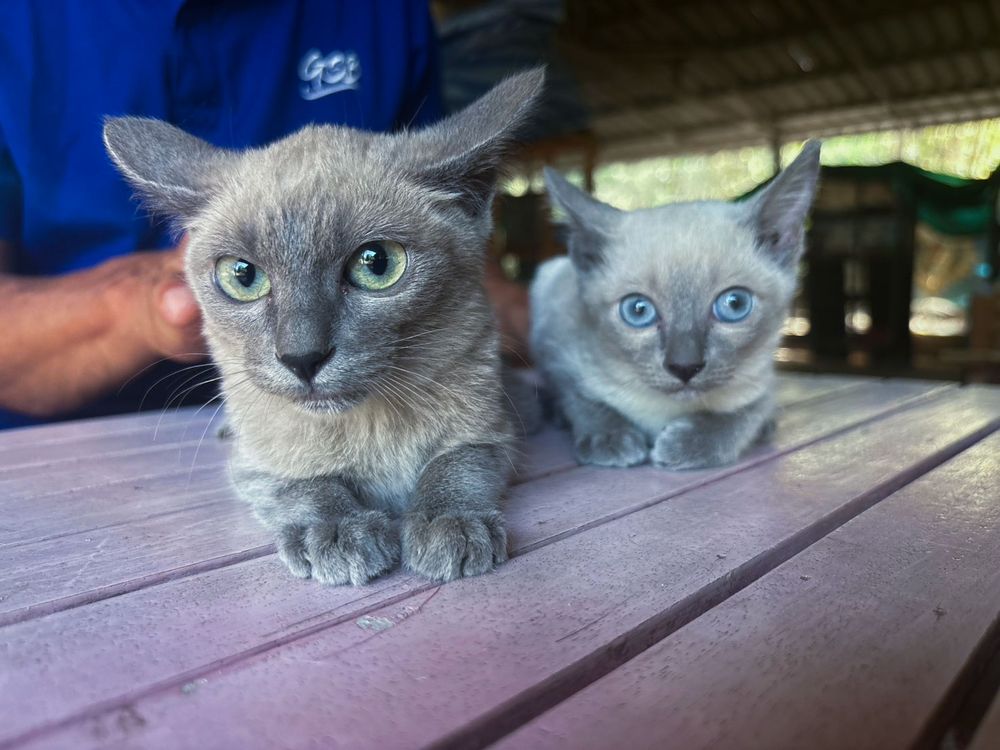
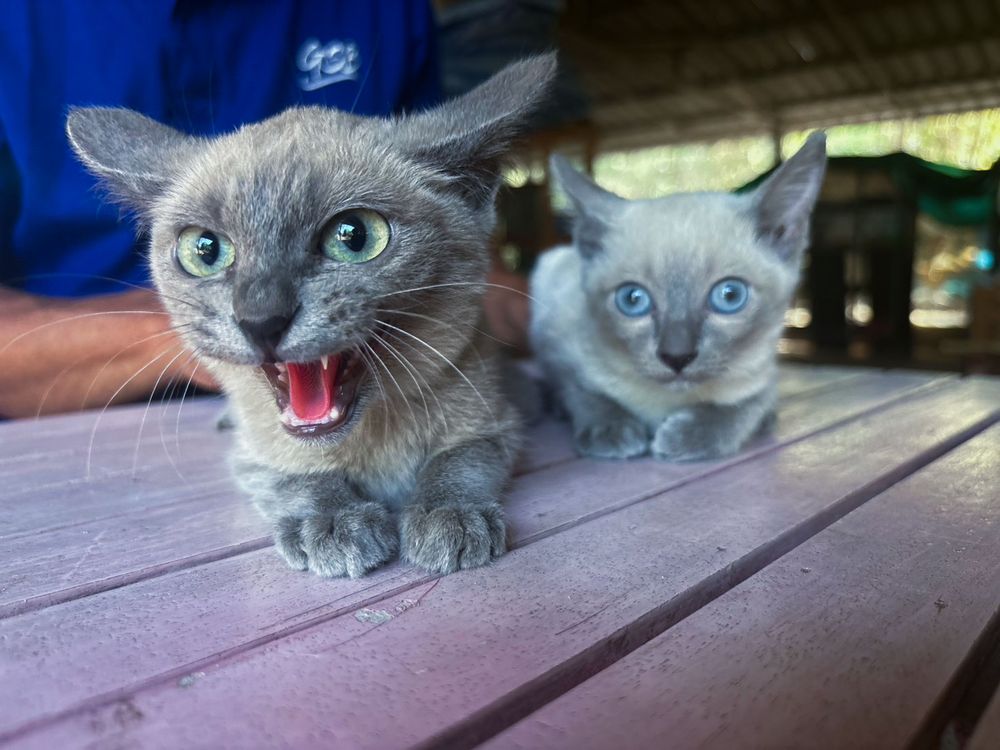
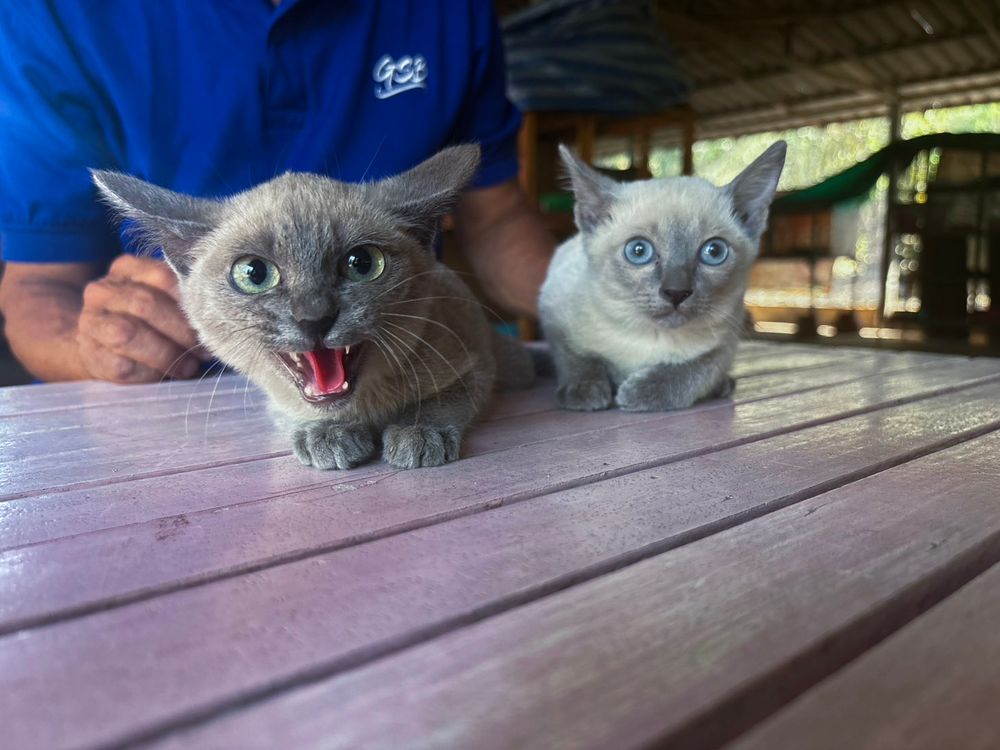
“Owners have truly experienced these qualities. Many who pray for luck after getting a cat actually receive it. I often see people who raise these cats winning the lottery. People in Phimai say their businesses have improved and flourished, enhancing their prestige. This is a belief proven by those who see them as true lucky cats.”
Nowadays, beyond passion and belief, cats serve as emotional healers for humans during discouraging times. It is often reported that cats can provide therapy and companionship to relieve suffering, though it takes time.
“Sometimes when I’m tired from work or overthinking things, seeing the cats makes it all go away. In other countries, they use them as therapy pets as well,” Mr. Pornthep added.
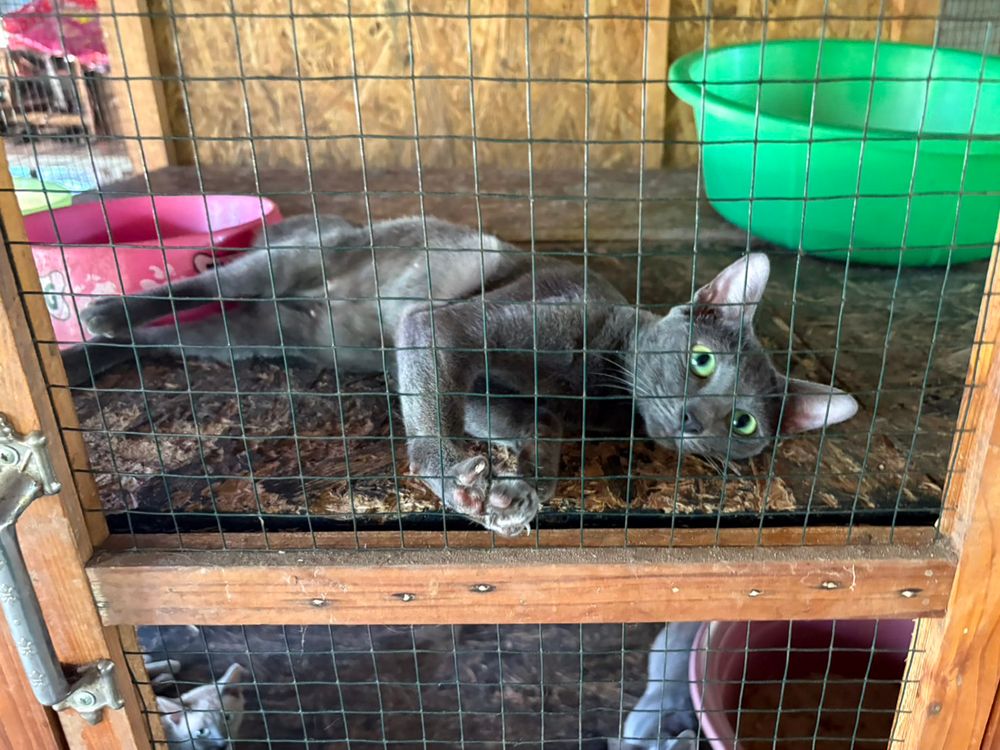
The Future of the Korat Cat: Still Seeking Government Support in Funding and Knowledge
No matter how hard the private sector tries to develop the Korat cat breed, they may not have enough strength to reach their ultimate goals alone. Breeding requires significant funding and academic knowledge.
Mr. Pornthep noted that since the Cabinet has approved the Korat cat as a national identity, he wants the government to provide assistance, such as providing knowledge, funding sources, and market development, or creating clear projects.
“Simply put, it’s about generating income for the city.”
For purebreds, the average price for a Korat kitten ranges from 7,000 to over 20,000 THB, depending on beauty. Those with minor imperfections might be priced lower, around 2,000 to 3,000 THB.
“Because of their charm, people from many professions are interested in raising them—from Deputy Governors and Permanent Secretaries to judges, merchants, and teenagers. People of all ages and genders. Foreigners love Korat cats too; just the other day, someone visited the farm and was very impressed.”
Recently, Arjan Pornthep’s farm discovered a new variation: the "Golden Korat Cat." People in Bangkok call them "exotic-colored Korat cats." As they grow, their fur becomes a brownish-gold with grey undertones. They are currently selecting and breeding them for further development.
When asked about the current scale of breeding, Mr. Pornthep counted fewer than five major locations on his fingers. This is because the cost of breeding Korat cats is very high.
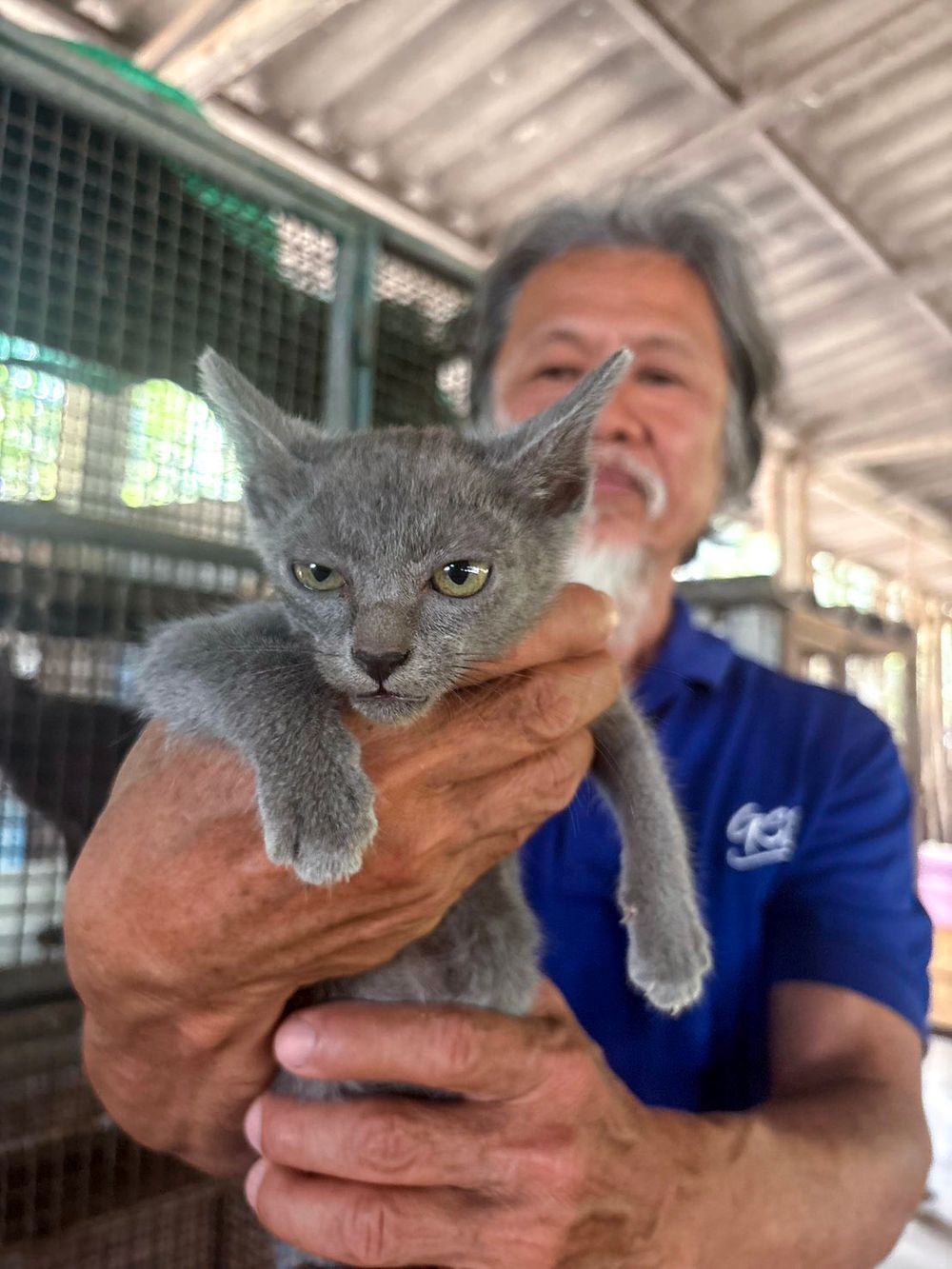
“In reality, the cost of breeding is very high. For example, with medical treatments—if you don't know basic care, it's over. If the Livestock Department could join in, it would be great. Without funding, it’s a dead end. Even those with money complain about the cost of medicine and food. If we use low-grade food, the cats won't be strong or grow well. On my farm, with so many cats, I use mid-grade quality; owners who buy them can then provide extra supplements. We even do our own vaccinations by buying in bulk at wholesale prices, because clinic prices are double that. It's expensive. Without funding, it’s difficult, which is why there aren't many breeders. If the government steps in to help, we can keep developing, because alone, we can only go so far.”
Today, no one can deny the cuteness of the Korat cat. However, the key question is how to conserve and stabilize the breed. The benefit is not just keeping the Korat cat with the Thai people, but also boosting the local economy through a "soft power" that is as adorable as it is unexpectedly powerful.
© 2025 Khaoyai Connect. All rights reserved.
No part of this content may be copied, modified, or distributed in any form without prior written permission.
